
Soil conditions, plant health, animal diseases and climate changes are among the most pressing issues agriculture producers face.
Experts at the University of Texas at Arlington want to help the industry through modernized solutions: artificial intelligence and data science.
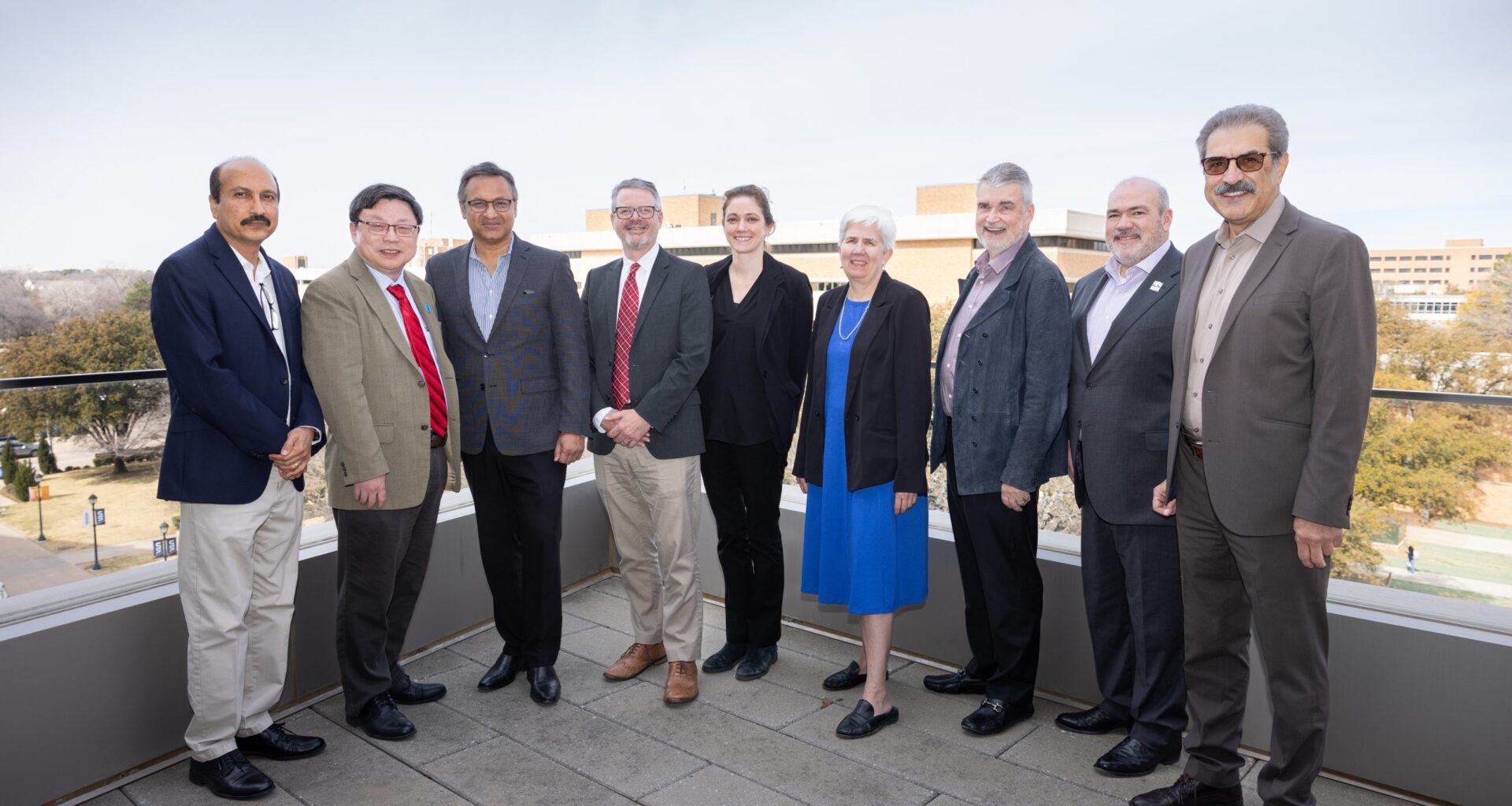
On Feb. 9, university officials celebrated the grand opening of the Smart Agriculture Research Center, launched by the school in partnership with the U.S. Department of Agriculture.
UTA — an agriculture college a century ago — has worked with federal agriculture officials since 2017. However, the new facility comes at the perfect time, accelerating farm research to “the next level” as North Texas continues losing open space and farmland, said Jianzhong Su, UTA mathematics professor and the center’s co-director.
“Using some of the agricultural data that’s available, we can continue fully optimizing the agricultural practice to produce more food,” Su said.
The center combines UTA student and staff expertise in computer science and mathematics to construct models that assess agricultural data collected by the USDA.
Gautam Das, associate professor of computer science and the center’s co-director, said agriculture is one of the best industries to apply data science.
UTA’s expertise in data science spans every pillar needed to deploy scientifically backed tools.
“Our researchers can make sure that whatever knowledge we learn through our AI systems can actually be deployed in the field,” Das said.
For example, the center’s team may use AI to interpret federal data on harvesting that could then be used to let farmers and agricultural officials know what time of year is the best to pick certain produce.
AI can also take data on existing soil conditions to forecast land health as early as a year ahead, Su said. Such projections can assist farmers and local officials in their decision-making.
UTA professors already are working with USDA researchers to explore how different planting processes, fertilization techniques and crop rotations impact harvests.
These factors can reduce the risk of exposure to plant and animal disease, such as avian flu, and to toxins.
The center’s research and tools will be primarily focused on agriculture issues unfolding in the southeastern portion of the country with Texas at the forefront of that focus.
“Texas has been one of the more challenging parts of the project because of the vast land we have and the different climate conditions, from the Panhandle to all the way to the coast,” Su said.
North Texas has experienced rapid growth and development, leaving little room for farmland. However, the region still has a lot of space for urban farming — or hydroponics — that can benefit from UTA’s research and data tools, officials said.
This research is largely powered by and possible due to UTA’s recent $2.1 million investment in its supercomputing hub, Das said.
The campus launched its cluster of supercomputers last year to support the university’s data-intensive research, including projects powered by AI.
Das and Su have two main goals for the center: broadening its ties with the farming industry and inspiring students to pursue AI- and agriculture-adjacent careers.
“AI is starting to have an impact in lots of different sectors of industry, and agriculture is no different,” Das said.
Nicole Lopez is the environment reporter for the Fort Worth Report. Contact her at nicole.lopez@fortworthreport.org.
At the Fort Worth Report, news decisions are made independently of our board members and financial supporters. Read more about our editorial independence policy here.
This <a target=”_blank” href=”https://fortworthreport.org/2026/02/24/ai-data-backed-solutions-for-farmers-focus-of-utas-new-research-center/”>article</a> first appeared on <a target=”_blank” href=”https://fortworthreport.org”>Fort Worth Report</a> and is republished here under a <a target=”_blank” href=”https://creativecommons.org/licenses/by-nd/4.0/”>Creative Commons Attribution-NoDerivatives 4.0 International License</a>.<img src=”https://i0.wp.com/fortworthreport.org/wp-content/uploads/2021/04/cropped-favicon.png?resize=150%2C150&quality=80&ssl=1″ style=”width:1em;height:1em;margin-left:10px;”>
<img id=”republication-tracker-tool-source” src=”https://fortworthreport.org/?republication-pixel=true&post=423183&ga4=2820184429″ style=”width:1px;height:1px;”><script> PARSELY = { autotrack: false, onload: function() { PARSELY.beacon.trackPageView({ url: “https://fortworthreport.org/2026/02/24/ai-data-backed-solutions-for-farmers-focus-of-utas-new-research-center/”, urlref: window.location.href }); } } </script> <script id=”parsely-cfg” src=”//cdn.parsely.com/keys/fortworthreport.org/p.js”></script>