
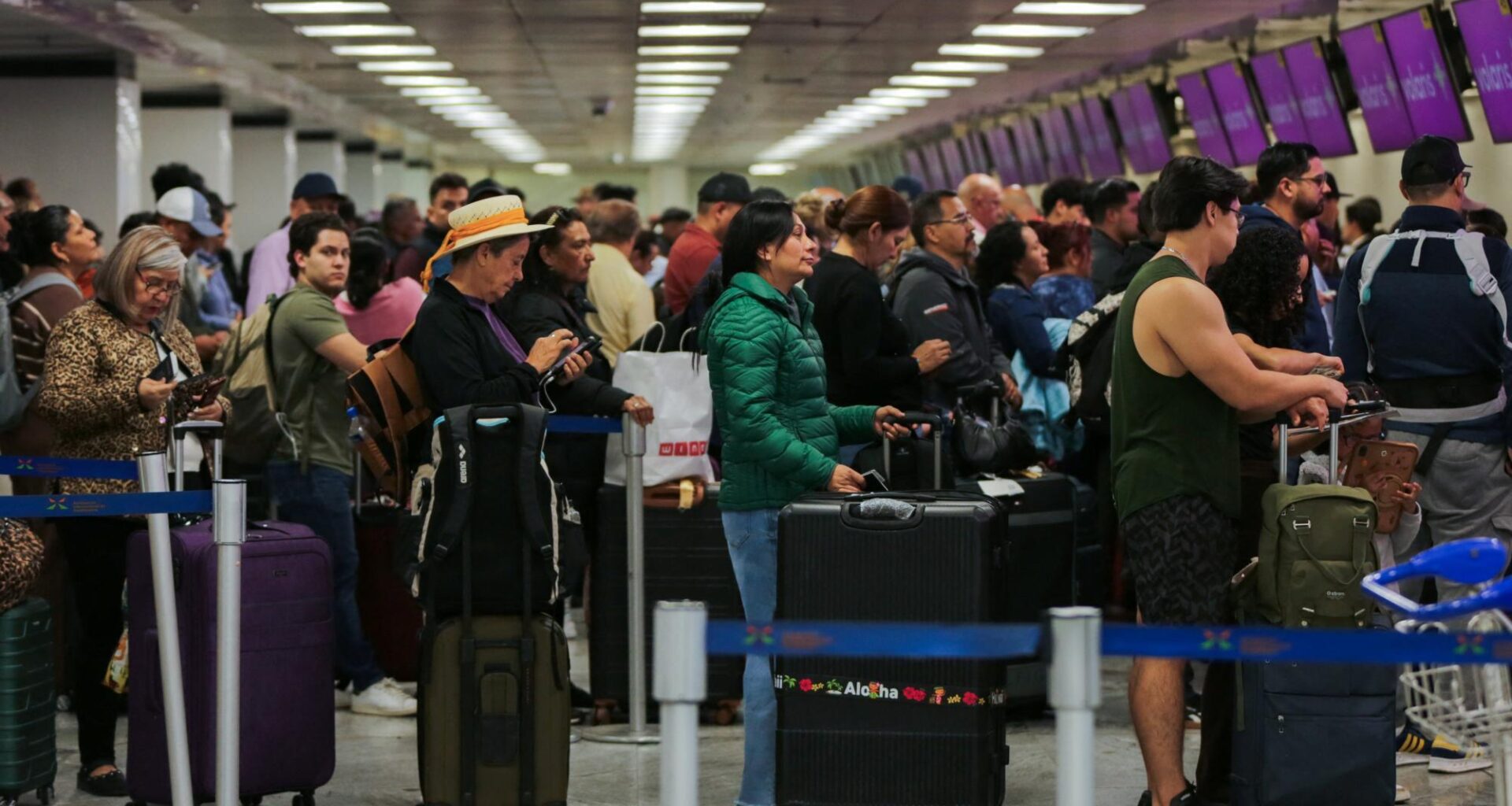
On Sunday, the Mexican government killed one of the country’s most infamous cartel leaders, sparking shootings and arson across the country, particularly in the Guadalajara and Puerto Vallarta areas.
The U.S. Department of State urged American tourists in Mexico to “shelter in place” and issued a security alert in a number of locations. Major airlines, including DFW-based American Airlines and Southwest Airlines, cancelled all flights on Monday, Feb. 23.
The incident has caused some TCU students to reconsider spring break plans to Mexico.
“Before all this started happening, safety wasn’t a huge decision maker,” said Sofia Wehner, a sophomore fashion merchandising and economics major who cancelled her trip to Cabo San Lucas Tuesday morning. “I didn’t know much about the travel advisory, but stuff online was scaring me that I saw on TikTok or Instagram from different news outlets.”
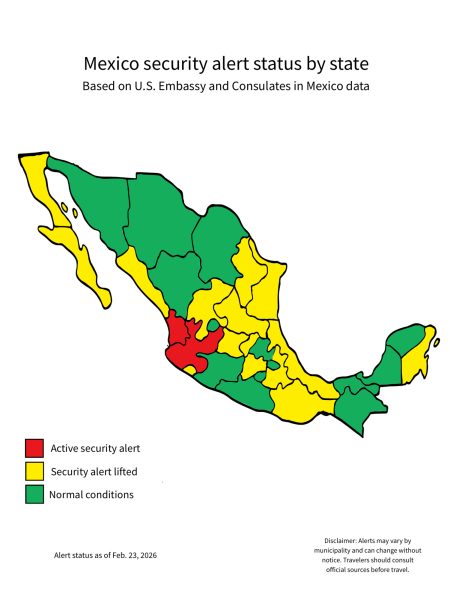 A map detailing the current status of security alerts issued by the U.S. Embassy in Mexico by state as of Feb. 23. (TCU 360/Shaffer Dale)
The security alert has now been reduced to the Jalisco state and the Nayarit State, and American tourists no longer need to shelter in place, according to an updated security alert released on Tuesday. Airlines also resumed service.
TCU currently has 32 students enrolled from Mexico, according to university data. As some students reconsider travel plans in response to recent cartel-related violence, the situation highlights how international events can affect perceptions of countries that are home to members of the TCU student body.
“Major tourist hubs are heavily dependent on international visitors and therefore invest significantly in maintaining security in resort and tourism zones,” said Carmen Peterson, a junior geography major from Colima, Mexico, which is located just south of Jalisco. “That doesn’t mean nothing ever happens, but those areas are generally structured to be safe for visitors who use common sense.”
Wehner was able to receive flight credits, but her hotel costs and deposits for other activities were nonrefundable. She said she ultimately decided to cancel her trip after her parents expressed safety concerns.
According to the U.S. Embassy in Mexico’s most recent security alert, all airports are operating normally, including the Guadalajara and Puerto Vallarta airports. Road blockages have impacted air travel in those areas but are beginning to resolve.
Peterson believes advisories are often too generalized and do not represent the country as a whole.
“The media tends to focus heavily on violence, which is real and serious, but it rarely captures everyday life,” Peterson said. “Take advisories seriously in terms of awareness, but don’t overreact to headlines that treat Mexico as one uniform place.”