
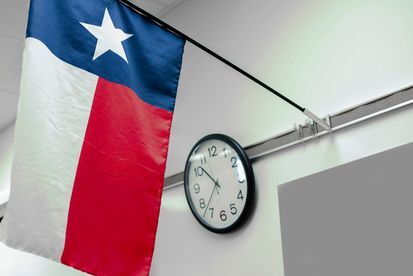
The Texas Education Agency on Wednesday received preliminary approval to make more than 4,100 corrections to its in-house curriculum, Bluebonnet Learning — a volume of fixes some state board members called “unprecedented” and evidence of “sloppy publishing.”
Most of the changes are minor, a TEA official told the State Board of Education, and factual errors in the state’s materials are comparable to those found in products from education publishers.
But the volume of corrections, along with some of the specific changes needed, drew the ire of some board members.
“I’m very concerned that as a board we have set a precedent for sloppy publishing,” said Pam Little, a Republican and the board’s vice chair. “So next year if a publisher comes to us and they have 3,000 errors what are we going to say?”
Four other publishers also submitted corrections to curriculum materials recently approved by the board. The combined total of their revisions: 16.
Little said the state board has historically taken a tough stance against publishers with excessive errors in their learning resources, levying significant fines or declining to place materials on the state’s approved list.
Texas has invested substantial money in a novel K-12 strategy: using open educational resources as a platform to develop its own curriculum products to compete with established education companies.
In just more than a year, TEA’s instructional materials have gained significant market share in Texas.
The first batch of Bluebonnet resources — English language arts K-5, phonics K-3 and math grades K-8 and algebra 1 — was added to the state-approved list in late 2024. Hundreds of districts are using the materials for the first time this school year.
In November, the board approved another set of Bluebonnet materials — including Spanish-language language arts and math, Algebra II and geometry — for inclusion on the state-approved list.
At least 4,119 corrections will need to be made to TEA instructional materials approved by the board in 2024 and 2025, according to agency documents.
Will Hickman, a Republican board member, said the number is “unprecedented.” At a meeting in January, another member who chairs the board’s committee on instruction said publishers have previously required extensive corrections, but not on this scale — “in the 1,000s, plural.”
“I feel like we’ve done something wrong,” Hickman said. “We have high quality instructional materials that were approved by us, but it’s coming back to us with 4,200-plus corrections.”
Throughout Wednesday’s meeting, board members pressed for someone from TEA’s publishing division to answer questions. That did not happen.
Instead, Colin Dempsey, TEA’s director of district operations, technology and sustainability supports, fielded inquiries and, on several occasions, referred questions to the agency’s publishing division. Dempsey works in the division that regulates publishers, not in the open educational resources division responsible for Bluebonnet content.
He defended the state-developed curriculum, saying it is part of the standard process for publishers to make updates and substitutions after the state board approves instructional materials, allowing them to avoid undergoing a full review again.
“It’s not uncommon that corrections need to be made,” he said.
About a quarter of the corrections involve images used without proper copyright permission, Dempsey said. Other changes are intended to align English- and Spanish-language materials that were approved by the board in different years.
Dempsey also acknowledged there were factual errors. Asked for a figure, he said he did not have the data in front of him, but that it was “more than zero.”
Ultimately, he said, it should not be surprising that TEA’s curriculum accounts for the largest number of corrections, given that more Bluebonnet programs have been adopted by the board since 2024 than materials from any other publisher.
While some of the changes may be minor — such as correcting an extra space or page number — an “error is still an error,” said Little, the board’s vice chair. Most concerning, she said, are the roughly 1,062 images that will need to be replaced across Bluebonnet materials.
“That leaves the state open to lawsuits for violating copyright laws,” Little said.
When education publishers make fixes, they eat the cost. But because Bluebonnet is state produced, “that means the taxpayers will cover this expense and that’s concerning to me,” she said.
Dempsey said he did not know the cost of corrections.
But Julie Pickren, a Republican board member, said costs should be minimal because most Bluebonnet student materials are reprinted annually, regardless of the corrections at hand.
“The extra cost to the state would be the reprint of teacher guides, and some student components like readers that are meant to last several years,” she said. “This is not like keeping a textbook for six years. These are workbooks that students are writing in.”
The board approved the proposed changes on an initial 8-6 vote Wednesday. A final vote is expected Thursday
If approved, TEA will update digital materials within 30 days. Print materials will be corrected in the next production cycle for the upcoming school year.
Get Exclusive Intel at the EdWeek Market Brief Fall Summit
Education company officials navigating a changing K-12 market should join our in-person summit, Nov. 11-13 in Nashville. You’ll hear from school district leaders on their biggest needs, and get access to original data, hands-on interactive workshops, and peer-to-peer networking.