
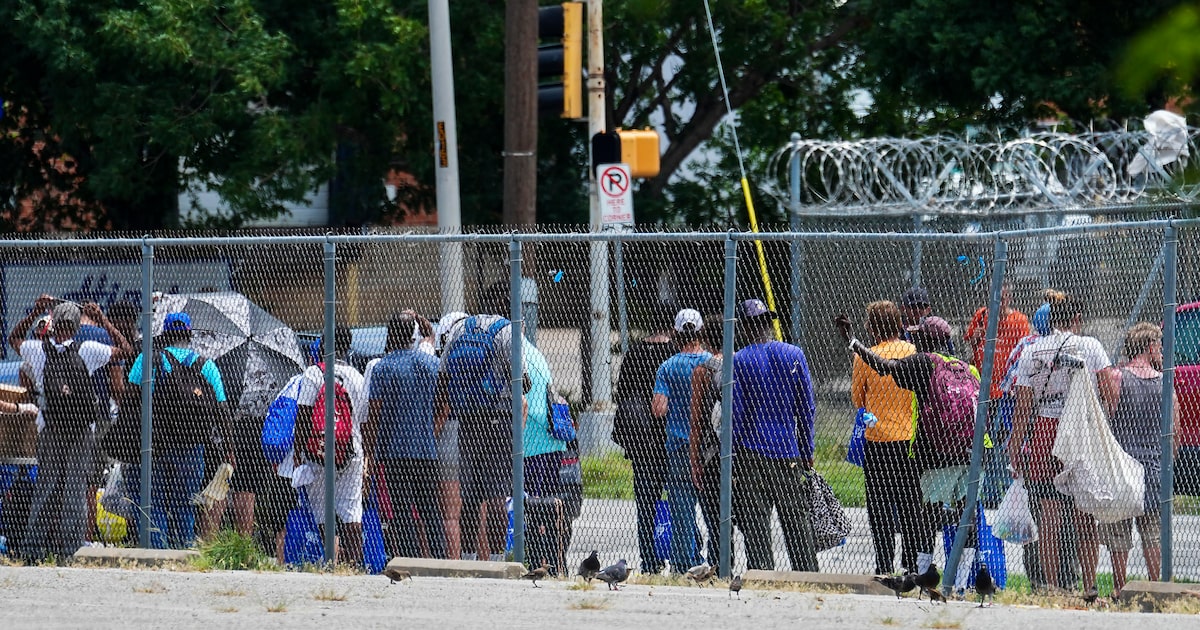
It’s a great thing that there are people in the Dallas area who want to give their time and money to feed the less fortunate among us. But the tough truth is that homeless feedings, though well-intentioned, can have a detrimental effect on neighborhoods when not coordinated or managed well.
Poorly run feedings have often led to piled-up trash that costs time and money to clean up. And events that aren’t integrated with the city’s larger homelessness response represent lost opportunities to connect individuals with a broader array of services.
That’s why the City Council should approve rules to require those wanting to distribute food to the homeless to acquire a permit and adhere to basic sanitation and food safety standards.
The proposed rules would expand the definition of “street vendor” to include the service or distribution of free food or drink. Those activities would require a “simple, low-burden” permit, according to city staff. The application for such a permit would be free and would be denied only based on “an imminent threat to public health or safety,” according to a draft ordinance.
Opinion
Permit-holders would have to dispose of wastewater and trash themselves and certify that someone attending the distribution has food-safety training. These measures can help establish a party responsible for cleanup and maintaining food-safety standards.
This is a good start, but Dallas can go further. City staff said at a recent public meeting that the proposed ordinance wouldn’t restrict the location of feeding events. Dallas should consider rules that would do just that and require these events to be fully integrated with the region’s broader homeless response organizations.
Nonprofits in the area prepare a lot of food but end up throwing out a lot of it, a city staffer told council members at a committee meeting last month.
“There’s so much pop-up food activity that their food doesn’t get eaten,” the staffer said, citing conversations with the nonprofits.
That’s one of the many reasons free-food distribution for the homeless should be organized with groups that already work together to help those in need. Goodness knows they can always use more hands on deck.
Plus, these nonprofits are equipped to do more than just provide food. A meal at one of these centers can lead into all sorts of other services, from shelter to substance abuse recovery. Those interactions can and do change lives, and disorganized and arbitrary feeding events do little if anything to help them happen.
Limiting street feedings is not about preventing good Samaritans from helping those who need it; it’s about trying to organize our efforts to get better outcomes for those who need help most.
We welcome your thoughts in a letter to the editor. See the guidelines and submit your letter here.
If you have problems with the form, you can submit via email at letters@dallasnews.com