
Look into the night sky just after sunset this Saturday and you could see a rare celestial event. Six planets — Venus, Mercury, Saturn, Neptune, Uranus and Jupiter — will align, creating a sort of “planet parade” across the western and southern sky.
Planetary alignments occur because all the planets in the solar system orbit the Sun along the same plane, called the ecliptic. Occasionally, their orbits bring them into nearly a perfect line from our perspective on Earth, even though the planets are not actually lined up in space.
Four of the planets on Saturday night — Saturn, Venus, Mercury, and Neptune — will form a cluster low on the western horizon. Saturn and Venus will be easy to detect with the naked eye, Mercury will be much dimmer, while Neptune is only likely to be seen with a telescope.
This four-planet cluster will be seen for only about an hour after sunset. That means in Houston, you should look between 6:45 and 7:30 p.m. for your best chance at seeing multiple planets at once. Between 7:30 and 8 p.m., the planets will gradually disappear below the horizon.
Farther down the planet chain, Uranus will be situated in a south-southwest direction. However, because the planet is about 1.75 billion miles away from Earth, it’s very difficult to see with the naked eye. You’ll likely need binoculars or a telescope.
Finally, Jupiter will be located high over the southeast sky at 7 p.m., moving almost directly overhead around 9 to 10 p.m. Easily visible to the naked eye, Jupiter is typically the fourth-brightest object in the sky after the sun, the moon and Venus.
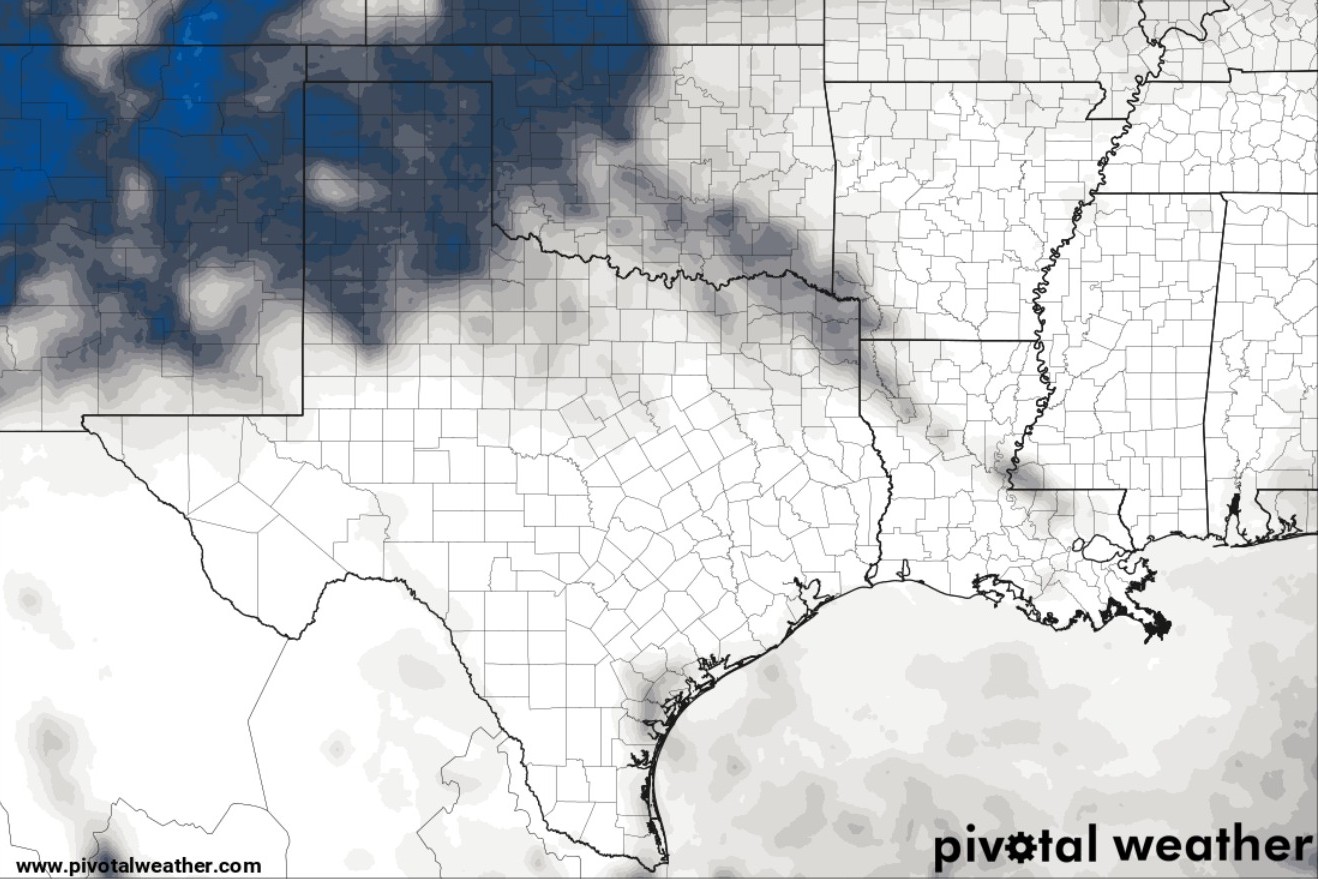
Overall, four of the six planets in alignment — Venus, Mercury, Saturn, and Jupiter — will be visible without any optical aid. However, weather also plays an important factor, because if skies turn cloudy, it could block the alignment entirely. Here’s what we’re expecting across Texas.
Most of Texas will experience quiet, warm weather on Saturday with high temperatures rising into the mid-80s. By nightfall, the quiet conditions will continue, leaving clear to mostly clear skies for most of the state, including in Houston, San Antonio, Austin and the Rio Grande Valley. Weather will be perfect for stargazing.
Farther north, scattered clouds are likely to start moving into the Dallas-Fort Worth area by 7 to 9 p.m. However, skies are still expected to be mostly clear through midnight, leaving relatively good viewing weather for the planet parade.
In the Texas Panhandle, clouds are more likely to interfere. Skies may turn partly to mostly cloudy by late evening, though occasional breaks could still provide brief glimpses of the planets.