
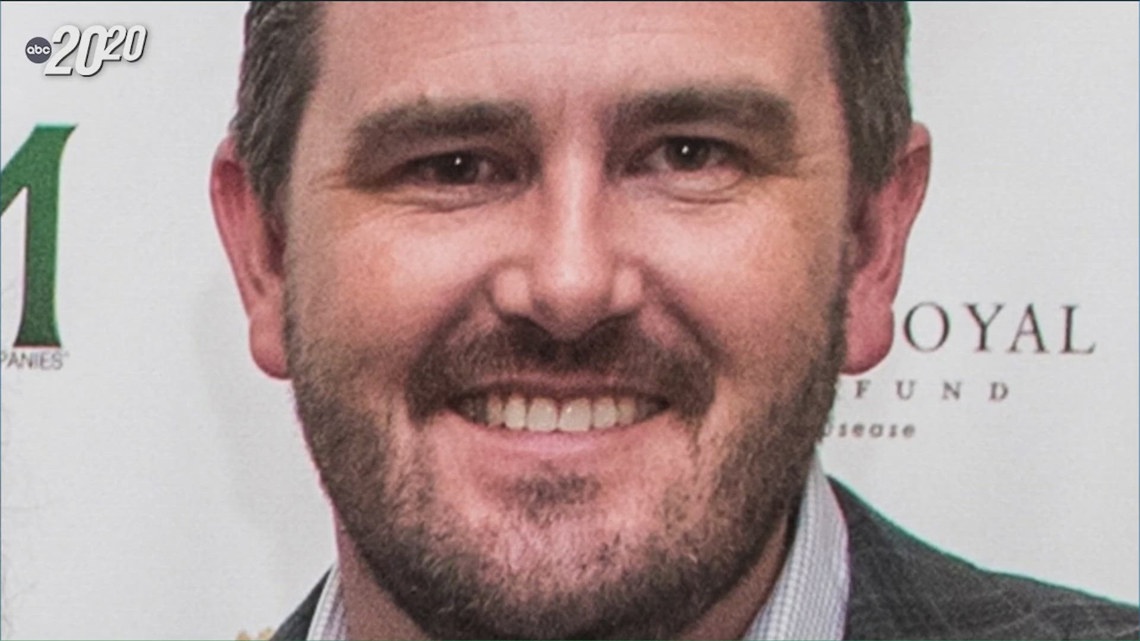
Austin businessman Erik Charles Maund and two others were convicted in the 2020 murder of Holly Williams and William Lanway in Nashville.
AUSTIN, Texas — A U.S. appeals court has reversed a new trial order for three people involved in a murder-for-hire plot that ended in the death of a man and woman roughly six years ago in Nashville.
Erik Charles Maund, Adam Carey and Bryon Brockway were all convicted of various offenses in connection with the murders of Holly Williams and her boyfriend, William Lanway, who were found dead in a vehicle in Tennessee back in 2020. Maund, an Austin businessman, was allegedly involved in an affair with Williams prior to the murders.
Documents from the Sixth Circuit Court of Appeals state that Lanway blackmailed Maund after the affair by “demanding money in exchange” for keeping the information from Maund’s family. In response, Maund hired a man named Gilad Peled to handle the blackmail issue. Peled hired Brockway, Carey and two others to watch Williams. Then, in spring 2020, Maund paid Peled to kill Williams and Lanway, and their deaths were carried out by Brockway and Carey.
Maund, Carey and Brockway were indicted and later convicted in 2023. Brockway and Carey were convicted with kidnapping and conspiracy to commit kidnapping as well.
The appeal ruling claims the court later learned that it had “erroneously provided the jury with ten unadmitted exhibits and failed to deliver three admitted exhibits,” including a recorded conversation involving Brockway.
During the trial, provided evidence included recorded conversations between Maund, Brockway and Carey and financial documents proving a $150,000 transfer on the day of the killings.
The appeal states Brockway claimed Carey was unaware of the murders, but that Carey also said “nobody cares about [the murder victims]” in a recorded conversation.
“The defendants each moved to exclude the entirety of Brockway’s conversation, which the government presented” as the recording and transcript,” according to the documents. “But the court denied the defendants’ motions and admitted the government exhibits,” excluding Brockway’s comments about Carey being unaware of the murders.
Maund and Brockway wanted to include a testimony from Peled involving a conversation with Carey where he responded to the murders by stating, “Don’t worry about it. Nobody cares about them. They’re low, common criminal.”
Carey argued against the inclusion of this statement in the trial, and the court allowed him to decide whether to mention it. Thus, Carey’s quote was not used as evidence in the courtroom.
Despite its ruling, the court “erroneously” gave the jury the aforementioned exhibits and several others throughout deliberations that were not meant to be included. Meanwhile, Peled’s testimony involving his discussion with Carey was not provided to the jury.
Several months after the men were convicted, the court noticed the error and a hearing was held in January 2024 to inform those involved. All three defendants were permitted to file motions for a new trial.
A Remmer hearing was held several months later, during which the jurors were questioned on their possible knowledge regarding Brockway’s claims that Carey was unaware of the murders, along with various transcripts. The court then stated that jurors likely heard or read a transcript or recognized a USB used to play the recording.
During the Remmer hearing, documents state that the court also mistakenly focused on one binder of evidence instead of the four that were initially provided. Though the court said this error did not impact the hearing, a new trial was still granted.
The government said the mistake was not significant, while Maund, Carey and Brockway said the error was still enough for a new trial.
The appeals court then stated that the error “was not so unquantifiable as to be structural,” adding that it was also considered harmless.
The court also stated in the documents that the error is “most clearly harmless to Carey” because it “arguably helped, rather than prejudiced, him,” citing the audio recording, lack of testimony from Peled and several other explanations. It provided a similar finding for Maund and Brockway, stating that Brockway “has the strongest claim of potential prejudice” as he was accused of kidnapping and killing Williams and Lanway alongside Carey.