
Downtown Plano businesses have seen the effect of broader marketplace changes first hand over the last year.
The area has seen several business closures and openings in 2025 as rising costs, shifting customer habits and increasing rents reshape how small businesses operate.
Kelle Marsalis, Plano Chamber of Commerce president and CEO, said staffing expenses and rising rents have made it more difficult for small retail businesses to sustain a traditional brick-and-mortar presence.
“Costs have increased across the board,” Marsalis said. “There was a lot of fluctuation in the last year, and so that will often have an impact on consumer spending.”
The gist
Several storefronts in downtown Plano have turned over in the past year, with some longtime businesses closing and newer service-oriented businesses entering.
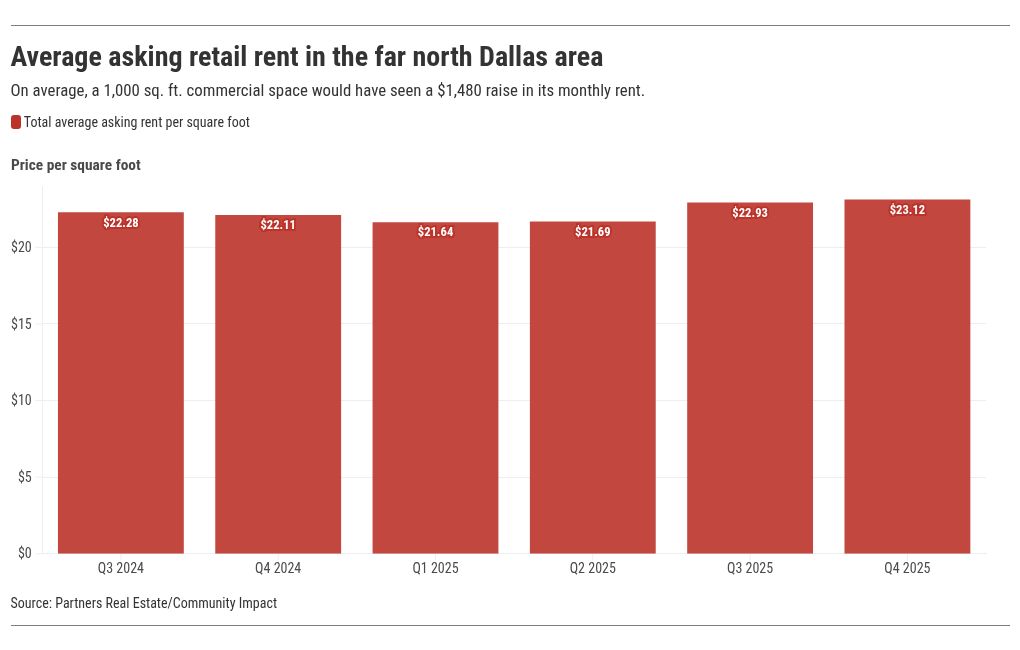
Since early 2025, Partners Real Estate data shows that the average asking retail rent in the far north Dallas area has increased from $21.64 per square foot at the start of the year to $23.12 by the end of the last quarter, an increase of about 7%.
“With property values going up, that makes the rents go up,” Downtown Plano Manager Michelle Hawkins said. “[When] sales aren’t keeping up with the rent, then it’s struggling. Our mom-and-pops are struggling, but that’s not just a downtown Plano issue.”
The impact
Hawkins said downtown’s retail presence has “thinned out” in recent years, largely due to national trends in retail rather than issues entirely unique to Plano. Retail makes up just over 8% of downtown businesses, while restaurants and bars account for nearly 27%, according to city data.
“Some of our newer stuff has moved on, and we’ve got some things moving in that [are] very exciting,” Hawkins said. “It’s not as much of a shopping district as we’d like to see, so that is going to be a focus of ours moving forward is attracting more retail.”
Hawkins said as retail has decreased, service-oriented businesses and restaurants have filled some spaces downtown. For example, hair salon Anomalia Society is taking over retail boutique La Foofaraw’s former space.
“With retail moving out, what has come in is more services, which is great … but it’s not necessarily what you think of when you think of a vibrant downtown,” Hawkins said. “You think of shopping and restaurants.”
Marsalis added fewer consumers are shopping in person compared to previous years, a trend that accelerated after the COVID-19 pandemic.
“People don’t shop on foot as much as they used to,” Marsalis said. “That’s not a new thing. People have been doing more online shopping, but I think it’s even more popular now.”
Bibliobar owner Chelsea Tresp, who opened her independent bookstore in downtown Plano last March, said expanding downtown’s retail mix is critical to building sustained foot traffic.
“We need more retail, and we need landlords who want to have more retail,” Tresp said. “Retail gets more retail, [which] gets more people. The more people you can get down here, the better.”
“>
What’s being done
Marsalis noted that while Plano has a strong talent pool, retail businesses in particular continue to struggle to find and retain retail workers. At the same time, higher costs are leading some consumers to scale back discretionary spending, Marsalis said.
“The most expensive part and the most challenging part of having a business is people,” Marsalis said.
Hawkins and Marsalis said some businesses have adapted by shifting online or other options rather than maintaining full-time retail spaces.
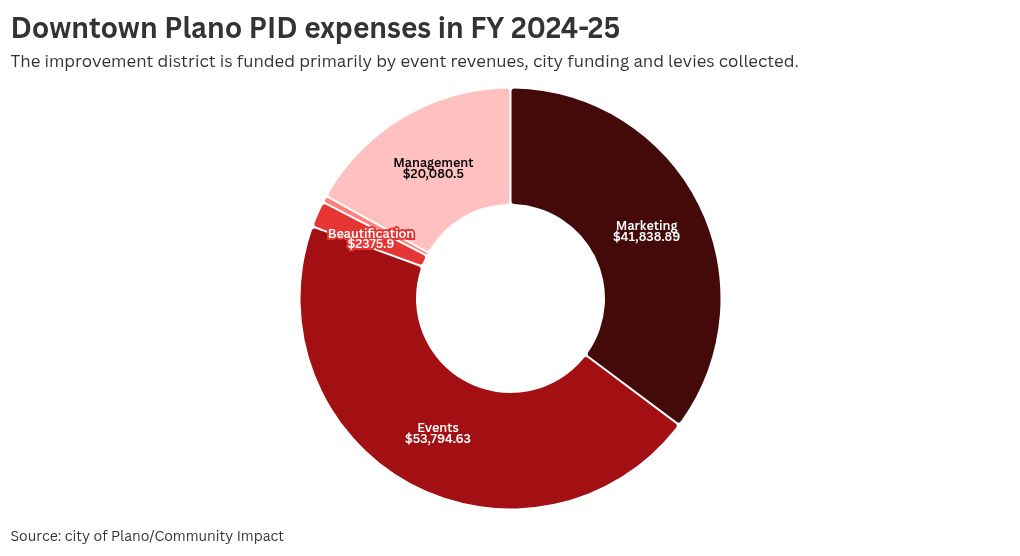
Hawkins said the Downtown Plano Public Improvement District, which allows the city to collect and pay for the maintenance of and services within the PID, should help address these challenges in the coming year, particularly for retail businesses.
The improvement district has recently helped fund economic incentive projects, such as a district-wide downtown e-gift card program to encourage spending at participating businesses.
In addition to prioritizing hosting more downtown events, Hawkins said the city is partnering with local businesses to sell Visit Plano merchandise and encouraging extended business hours.
Downtown Plano is also set for several infrastructure improvement projects.
Looking ahead
Hawkins said attracting more retail will remain a priority as downtown continues to evolve, noting that this area of Plano has historically gone through cycles as consumer habits and business models change.
“I remember when downtown was antique stores, and everything closed early before the restaurants went in,” Hawkins said. “I think [the COVID-19 pandemic] really changed the direction of a lot of things, and it’s just going to take a minute for it to all settle.”