
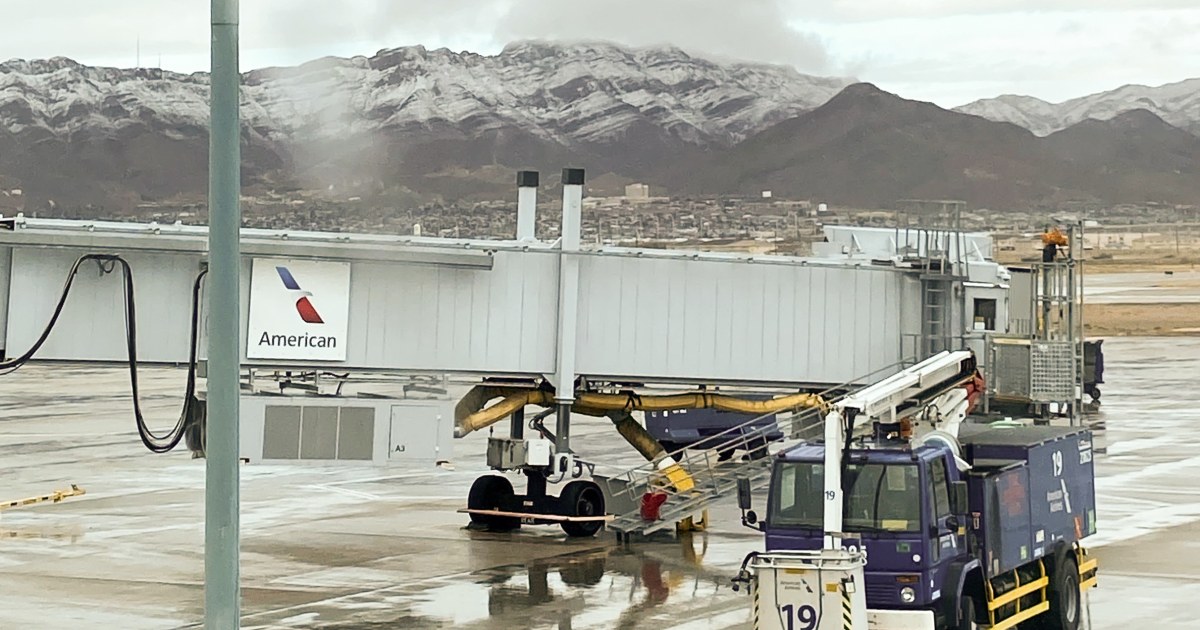
FORT HANCOCK, Texas — The U.S. military used a laser to shoot down a Customs and Border Protection drone, members of Congress said Thursday, and the Federal Aviation Administration responded by closing more airspace near El Paso, Texas.
It’s not clear why the laser was deployed but it’s the second time in two weeks that one has been fired in the area.
The earlier laser firing did not hit a target. It was done by the CBP near Fort Bliss, about 50 miles northwest, and prompted the FAA to shut down air traffic at El Paso airport and the surrounding area. This time, the closure was smaller and commercial flights not affected.
U.S. Rep. Rick Larsen and several other top Democrats on the House Transportation and Infrastructure committee said they were stunned when notified of the latest incident.
“Our heads are exploding over the news,” the lawmakers said in a joint statement. They criticized the Trump administration for “sidestepping” a bipartisan bill to train drone operators and improve communication among the Pentagon, FAA and Department of Homeland Security.
“Now, we’re seeing the result of its incompetence,” they said.
The Defense and Transportation departments referred questions to the FAA, which said in a brief statement that it had expanded the airspace closure around Fort Hancock. Border Protection did not immediately respond to questions.
The El Paso shutdown two weeks ago lasted only a few hours but it raised alarm and led to a number of flight cancellations in the city of nearly 700,000 people not far from the Mexican border.
NBC News previously reported that the closure came after CBP officials used an anti-drone laser that was provided by the military to shoot down what was later identified as party balloons, according to sources familiar with the matter.
The CBP did so without coordinating with the FAA, according to sources, and the FAA shut down the airspace.
Afterward, members of Congress said it appeared to be another example of dysfunction within the government with different agencies failing to coordinate with each other.
Transportation Secretary Sean Duffy said he was planning to brief members of Congress sometime this week about what happened. He said at an unrelated news conference last Friday that it wasn’t a mistake for the FAA to close the airspace in El Paso and that he doesn’t think it was a communication issue that led to the problems.
The investigation into last year’s midair collision near Washington, D.C., between an airliner and Army helicopter that killed 67 people highlighted how the FAA and Pentagon were not always working well together.
The National Transportation Safety Board said the FAA and the Army did not share safety data with each other about the alarming number of close calls around Reagan National Airport and failed to address the risks.