
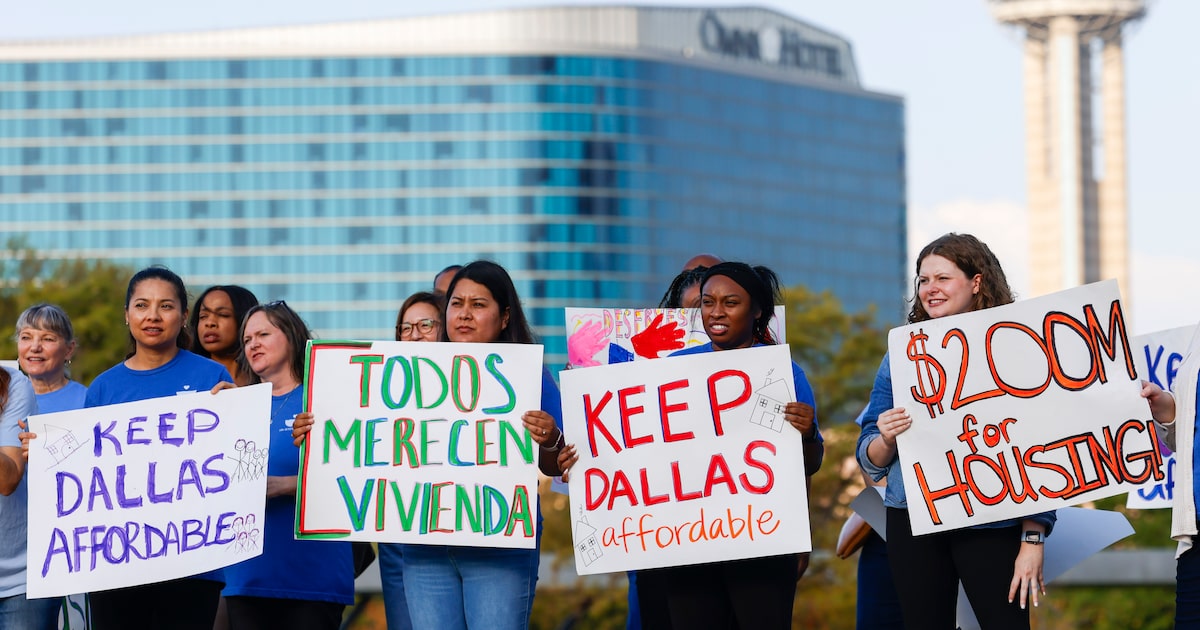
Dallas lost over half of its rental units priced under $1,000 over a period of two years, leaving a gap between what many renters can afford and what’s available.
The Child Poverty Action Lab released a report assessing the city of Dallas’ rental housing needs in February. The report found a gap between renter supply and demand based on spending benchmarks.
Dallas went from over 98,000 units with a gross rent under $1,000, to just over 47,000 units between 2021 and 2023, according to the report. Although prices for the average renter might look better heading into 2026, fewer options are available to low-income households.
Rental units priced at $1,000 are affordable to renters earning $36,000 per year, or 50% of the area median income for a single-person household, according to the report.
D-FW Real Estate News
Some areas of Dallas lost over 50% of their low-rent units, according to the report. City council districts 1 and 6 in western Dallas along with districts 9, 10, 11 and 12 in northeastern Dallas all lost over half of their units under $1,000, but every district had a loss over the two-year period.
Losing those units doesn’t necessarily mean that they disappeared completely, said Ashley Flores, senior director of the Child Poverty Action Lab.
“It could mean that some were bulldozed and never replaced,” Flores said. “But it also could mean that their unit physically still exists, but is now renting for more than $1,000.”
Flores said people are often skeptical when they hear of an affordable housing deficit because they see apartments being built across the city.
“Even though we have enough, in terms of number of units, the price distribution of those rental units doesn’t match the household income distribution of our renter population,” Flores said.
The report estimated that demand for units affordable for households earning at or below 50% of the area median income outpaces supply by about 46,000 units. That gap is about 43,000 units for households earning at or below 30% of the area median income.
Bryan Tony, executive director of the Dallas Housing Coalition, said rents for low-income units can increase as new renters come in and some smaller communities get torn down and redeveloped.
“We think that by increasing housing production, it will decrease that development pressure and the rents because there’ll be more options for people that they can access new housing,” Tony said.
More options for renters could make it harder for landlords to raise rent significantly, Tony said.
Dallas had a rental vacancy rate of 10.5% in 2025, which means the city is “renter-friendly” and renters have more bargaining power and options, according to a Realtors.com report.
As renting in Dallas is becoming more difficult for low-income renters, the average renter might be better off than in previous years.
The gap between Dallas’ mean rent and what the median renter can afford is closing, according to the report. In November 2025, the average rent was $189 above what the median renter is recommended to be spending on rent, as opposed to a $464 gap in December 2022.
The standard for renters to spend no more than 30% of their gross income on housing expenses. When households have to pay more, that can mean making difficult trade-offs, Flores said.
“Maybe they’re skipping meals, maybe they’re forgoing educational experiences that they have planned for their kids,” Flores said. “So they’re making these hard trade-offs in order to pay rent.”