
SAN ANTONIO — Immigration courts across the country have reported receiving more than 130,000 new cases. Roughly 30% or 38,000 are from Texas.
With all of those people waiting to get in front of a judge, and with President Donald Trump’s One Big Beautiful Bill requiring a cap on new immigration judges, the backlog isn’t likely to be remedied soon.
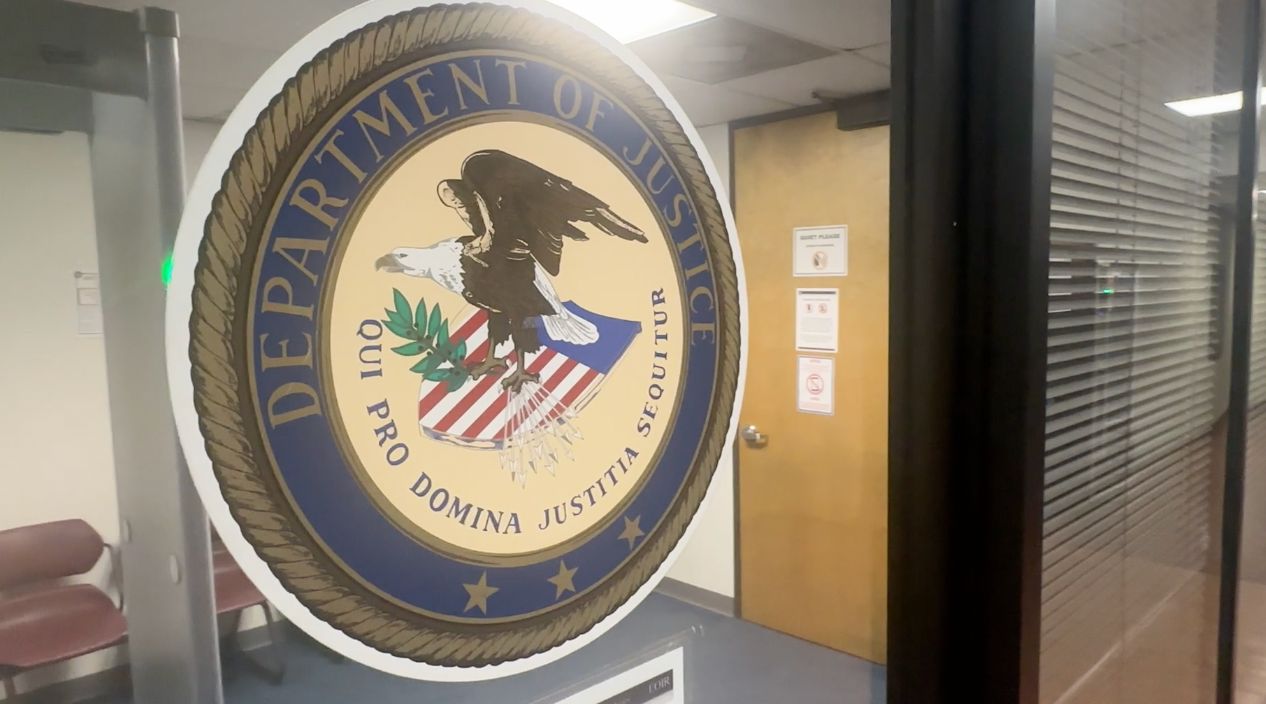
Spectrum News 1 spent two days inside one of two courthouses in San Antonio to get a feeling of what’s happening inside. While video and audio are not allowed, just observing the proceedings provides a general understanding of what individuals and sometimes families are going through.
Every day, people meet with immigration judges inside different courts on different floors. The building we entered usually doesn’t include those who’ve been detained, but it is occupied by individuals and families who are making their first or second court appearances. Many don’t speak English, so an interpreter is present via Webex or Zoom. The entire experience is not chaotic, but U.S. Immigration and Customs Enforcement (ICE) agents—both in uniform and in plain clothes—are present.
Many of the proceedings are also done via Webex with attorneys representing their clients. For those who appear in person, the judge will make sure they are aware of what’s happening in their case, why the government feels they are in the U.S. illegally and what the next steps are in the process. The majority of cases we sat in on had future court dates set. Not one was before December 2026.
While that ruling might seem set in stone, it’s not. People could be pulled aside by ICE agents, interviewed and put on a bus or van that takes them to a detention facility. They’ll still have an opportunity to see a judge and have their case heard, but it won’t be the same judge and that future court date likely won’t apply.
Elizabeth Almanza Villasenor is the social and legal support manager for American Gateways, a nonprofit that helps immigrants obtain legal services, located on the first floor of the court building. She sees what appears like the random nature of detentions.
“What we see every day the memos that come down, it’s the discretion of the ICE officer,” Villasenor said. “We might see like they only took males, then the next day it’ll be like they took whole families. It’s the discretion of the ICE officer.”
Villasenor also says it’s not uncommon for ICE agents to make families an offer.
“Sometimes a family will be stopped by ICE and they’ll say, ‘which one wants to go?’ It’s usually the dad that gets on the bus, while mom goes home with the kids,” she said before adding, “I’ve also seen them take a dad and his 6-year-old son.”
By all accounts, the actions are legal, but they certainly toe the line considering a judge has already spoken on the matter.
“Where the judge has said, ‘I’ll see you in three months’ they’re walking out thinking the judge will see me, but that’s when the officers will say, ‘You won’t see the judge here, if we detain you, you’ll see the judge virtually. So you’ll still have your case, you just won’t be able to go home,’” Villasenor said.
It also became evident that people who had legal representation, either present in the room or online, had easier experiences.
Dr. Sukh Kaur is a councilwoman in San Antonio, and she had the chance to sit in on proceedings a couple of weeks prior to our visit. She noticed the same thing.
“What really struck me was that if you don’t have an attorney when you go in there, they treat you differently,” Kaur said. “It’s not like they have to provide you with an attorney, like in different courts.”
The overall feelings is that it’s like any other court. There’s judicial fairness, and charges and options are explained. But there’s also a feeling that the scenario is scary, uncertain and confusing. An initial court hearing could end up with detainment, handcuffs and shackles, or even an immediate recommendation for deportation if something is misunderstood or done incorrectly.
You also start to realize that this entire process—though scrutinized and seemingly overwhelmed with cases now —has been going on for years and through various presidential administrations.
“I’ve got a merit hearing at 1 p.m., and we’re definitely getting it done today,” one of the immigration judges stated in court.
A merit hearing is basically the final hearing where a decision on whether an individual is staying or going is rendered. The one the judge mentioned it has been delayed since 2015.