
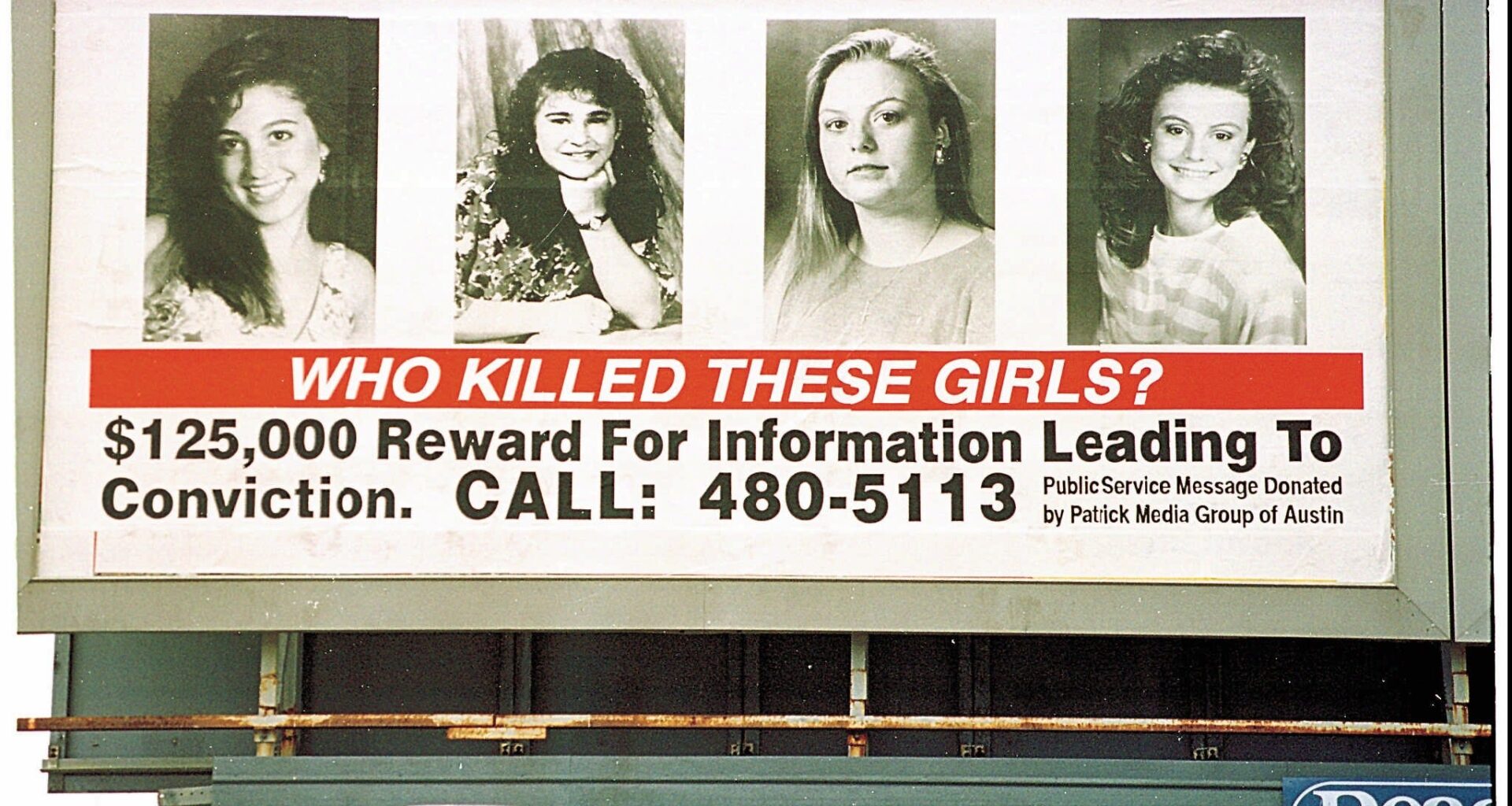
The case will be featured in the latest episode of ABC’s “20/20,” anchored by David Muir and Deborah Roberts, which investigates high-profile mysteries and true crime events.
In an exclusive interview, the daughter of the killer named in the yogurt shop murders, Robert Eugene Brashers, offers her perspective alongside family members of all four victims. Their voices will be joined by those of law enforcement officials and genetic genealogist CeCe Moore, whose work was critical in linking Brashers to the crime.
The two-hour episode will air Friday, Feb. 27, from 8 p.m. to 10 p.m. CT on ABC, and it will be available to stream Saturday on Disney+ and Hulu.
The deaths of 17-year-old Eliza Thomas, 13-year-old Amy Ayers, 17-year-old Jennifer Harbison and her 15-year-old sister Sarah at the I Can’t Believe It’s Yogurt shop in Austin remained unsolved for 34 years. Investigators preserved DNA, but early profiles were too limited and degraded to yield a match.
Advancements in ballistics analysis and cutting-edge DNA testing, combined with investigative genetic genealogy, were key to the breakthroughs, leading investigators across the country in their search for the serial killer and rapist.
‘Crime I did not commit’: 4 men declared innocent in Austin yogurt shop murders
Robert Eugene Brashers was born March 13, 1958, in Newport News, Va. Little is documented about his childhood, though court records and investigators have described him as intelligent, manipulative and skilled with tools and weapons.
Brashers’ violent record began in 1985 in Port St. Lucie, Fla., where he lured Michelle Wilkerson into his car under friendly pretenses. When she tried to leave, he shot her in the head and neck.
Wilkerson survived and identified him as her attacker. Brashers was convicted of attempted first-degree murder, aggravated battery and firearm charges, and was sentenced to 12 years in prison. He was released on parole in 1989, after serving only three years.
In the time after his release, Brashers committed a slew of other crimes, in addition to the yogurt shop murders, confirmed later by DNA evidence:
On Jan. 13, 1999, police tracked Brashers to a Super 8 motel in Kennett, Mo., where he was hiding with his wife, daughter and two stepdaughters. After a tense standoff, he released his family before shooting himself in the head. He died six days later on Jan. 19. Investigators have said he used the same gun that he used in the yogurt shop killings.
At the time of his death, Brashers was not publicly identified as a serial killer, but advances in forensic genealogy changed that. In 2018, investigators exhumed his remains and matched his DNA to several unsolved cases.