


Dominic Anthony Walsh/Houston Public Media
Trazawell Franklin, left, and April Jamarillo, right, sit in front of the SEARCH Homeless Services center on Nov. 11, 2025.
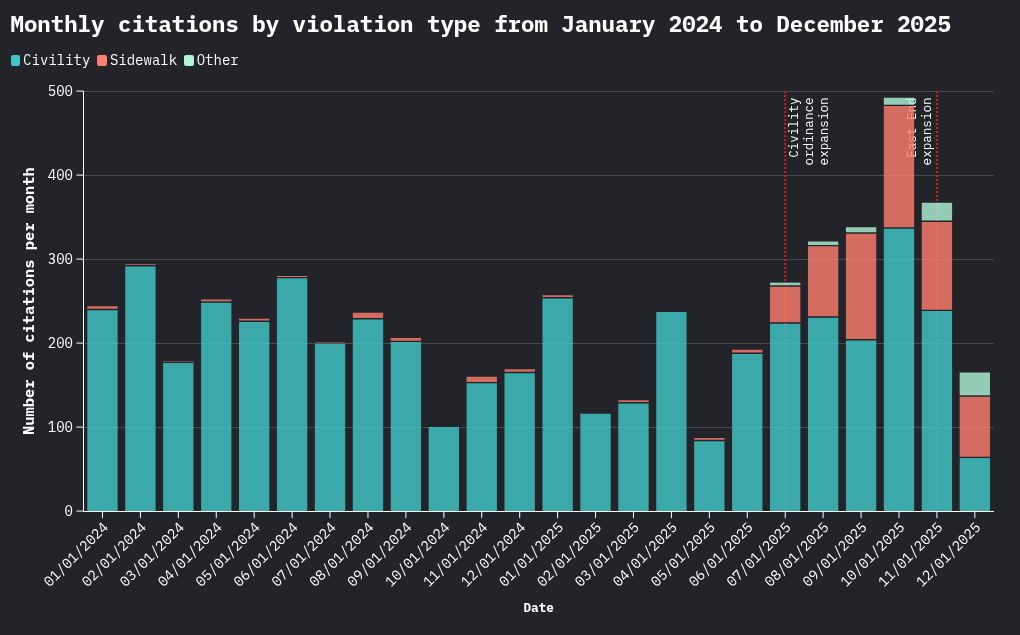
Over the last half of 2025, the Houston Police Department issued nearly 2,000 citations for violations of the city’s sidewalk obstruction rules — about double the number issued in the first half of the year — marking a major ramp-up in Mayor John Whitmire’s efforts to address homelessness across the city.
According to municipal court records obtained by Houston Public Media and analyzed by the University of Texas at Austin’s Media Innovation Group, the increase came after the city council approved an expansion of the so-called civility ordinance in mid-July. It previously prohibited sitting, laying down or placing personal possessions on sidewalks during the day in 12 areas of the city. After the expansion, it took effect 24/7 in downtown and East Downtown.
The typical fine for violations of the civility ordinance was about $200.
Sign up for the Hello, Houston! daily newsletter to get local reports like this delivered directly to your inbox.
The analysis includes civility ordinance citations as well as tickets issued for violations of a more general sidewalk obstruction rule. The vast majority of sidewalk obstruction citations were issued to people whose addresses were listed as “homeless.”
The recent ramp-up under Whitmire does not mark the highest ever levels of enforcement — but it does mark the steepest increase during his time in office.
Over the past decade, most individuals were ticketed repeatedly
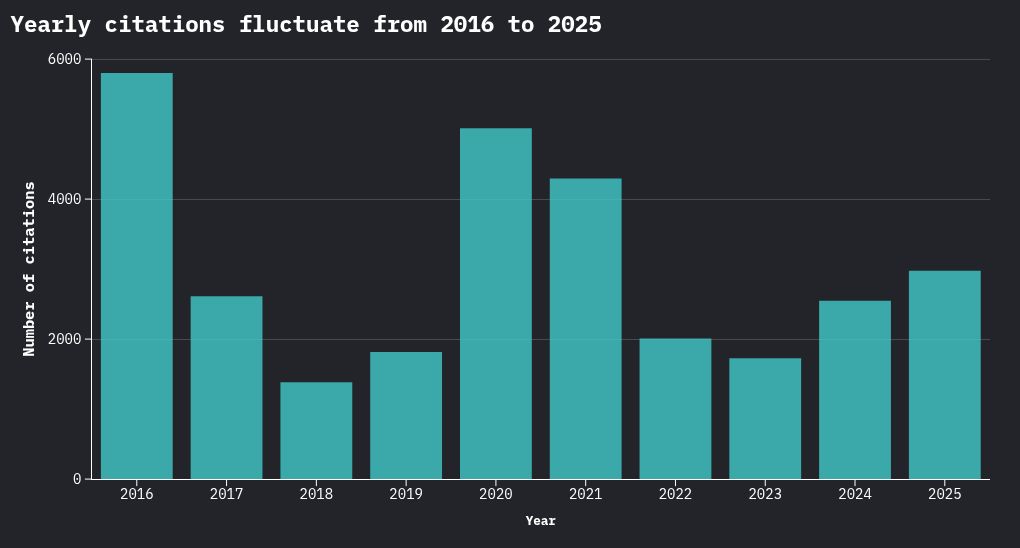
Under Mayor Sylvester Turner, officers issued more than 5,000 citations in 2016 and 2020. The figure ticked down to about 2,000 in 2022 and about 1,700 in 2023 — the last years of Turner’s second term, when the city opened a 112-bed shelter and services center — before rising to about 2,500 during Whitmire’s first year in office and nearly 3,000 in 2025.
Marc Eichenbaum, who served as the mayor’s special assistant for homeless initiatives under Turner, did not comment on the trend.
The Houston Police Department often ticketed the same individuals repeatedly. While officers issued more than 30,000 tickets since 2016, the analysis found only about 4,700 individual people received a citation.
Over that time, repeated tickets led to massive fine totals for some individuals. Among 10 of the most fined individuals, total fines exceeded $38,000 each. From 2017 through 2025, one woman received 794 citations with fines totaling nearly $200,000.
The fines were mostly dismissed — or waived after individuals spent time in jail. One man saw more than $26,000 in fines waived after receiving “time served” credits on 22 occasions. He also had nearly $11,000 in fines dismissed, and as of December, he still owed more than $5,500.
More than 1,000 people received credit for time in jail since 2016, according to the records.
After civility ordinance expansion last year, enforcement ramped up
Attempts to reach the top 10 most cited individuals were unsuccessful. Searching for the most heavily fined woman around the locations she received her citations, Houston Public Media found Trazawell Franklin, who received a citation for violating the civility ordinance last year.
“If I could talk to the mayor — which no one out here is really capable of talking to the man — I would try to get to an understanding about the sidewalk, because the sidewalk belongs to the city, the people. It doesn’t belong to him,” Franklin said. “Let’s get the resources up and mobile before you try to administer an ordinance or a law.”
Franklin was cited in East Downtown after the city council first expanded the civility ordinance from a daytime rule to be in effect 24/7 in that neighborhood and the Central Business District.
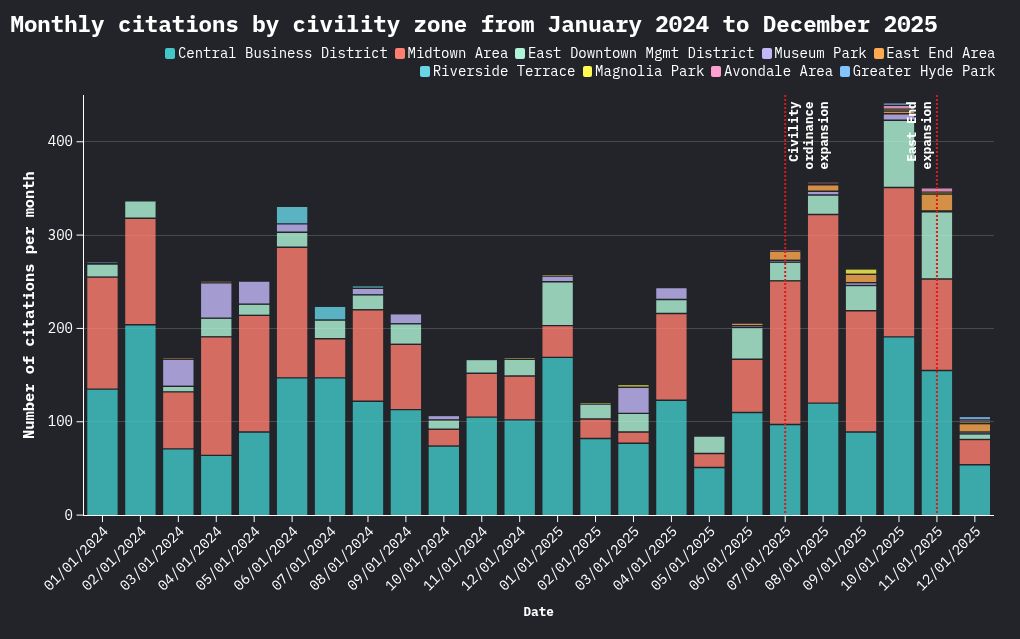
After announcing a 240-bed shelter and service center at 419 Emancipation Ave. — expected to open by June — the administration faced backlash from some community members in the area. In mid-November, the city council added the neighboring East End to the ordinance to address those concerns.
In the last half of 2025, officers issued twice as many citations than the first half of the year — nearly 2,000 from July through December, compared to about 1,000 from January through June.
“There’s been more citations issued on that because we have to be accountable,” said Larry Satterwhite, Whitmire’s public safety director. “You offer all the love and the help you can and all the hope — trying to get them to a better place — but again, a lot of them don’t even know their own perilous situation.”
As contention over the proposal grew after the administration announced the shelter in early October, enforcement ticked up in East Downtown and the East End.
Map
January 2025February 2025March 2025April 2025May 2025June 2025July 2025August 2025September 2025October 2025November 2025December 2025
The data analysis shows officers were issuing citations in the East End even before the area was designated a civility ordinance zone. The Houston Police Department did not respond to a request for comment on that enforcement.
Enforcement is one piece of multipronged approach
Expansion of the civility ordinance has been a major part of Whitmire’s multipronged approach to addressing homelessness. He has repeatedly called for a citywide, 24/7 expansion of the rule.
City Attorney Arturo Michel said a broader sidewalk obstruction ordinance — which also saw ramped-up enforcement last year — is intended to address obstructions that “restrict public use or access to any part of the sidewalk or make it unreasonably dangerous or difficult to traverse.” The civility ordinance has more utility as it prohibits certain behavior “even if the pathway is unobstructed,” Michel said.
The administration has opted for a more gradual expansion of the civility ordinance because it’s trying to increase services and paths to housing at the same time, Satterwhite said.
RELATED: Mayor Whitmire wants to ‘end homelessness’ in Houston this year. The effort faces challenges
“We need a place that they can be. Because otherwise, we’re just moving them on to the next problem, and that’s somebody else’s neighborhood,” Satterwhite said.
But enforcement has so far outpaced housing and service referrals. In the central urban core, city officials said they moved about 200 people into housing last year.
On the ground, the enforcement ramp-up has led to movement.
At the same location where Franklin was ticketed, Mike Kaufman said he has been moving block by block during his past three months on the street.
“You can move across the street or whatever — just can’t be in that same spot,” Kaufman said.
Working in Northeast Houston, Jackie Urbina — an outreach associate with the Coalition for the Homeless — said she’s heard about the enforcement from new arrivals in the area.
“They have pushed a lot of the population out into the neighborhood,” Urbina said.
Hannah Lebovits, interim director of the Institute of Urban Studies at the University of Texas at Arlington, said she was “not surprised that a city would prioritize (enforcement) above actually offering more services or retooling its service system.”
“Providing services does take longer than just having a cop come out and forcibly remove somebody from an area,” she added.
According to Satterwhite, the enforcement is already paying off. He attributed a significant downtick in citations during December, in part, to “a reduction in homelessness” in the downtown area.
Data analysis for this story was provided by Layla Dajani — a fellow with the Media Innovation Group, an experiential learning project within the School of Journalism and Media at the University of Texas at Austin. The group is funded by the Dallas Morning News Journalism Innovation Endowment.