
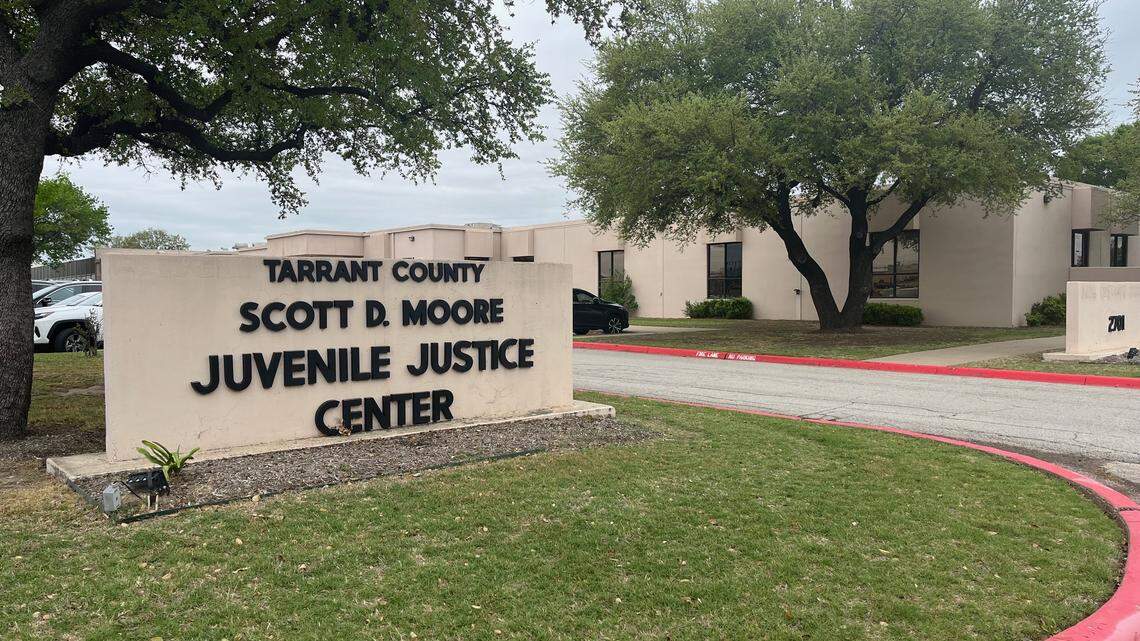
My Health My Resources of Tarrant County has provided services to far fewer children in the county’s juvenile justice system than its predecessor.
Kamal Morgan
My Health My Resources of Tarrant County has worked to rehabilitate far fewer children in the county’s juvenile justice system than the nonprofit it replaced nearly two years ago, raising questions about use of taxpayer money and a lack of attention to public safety.
MHMR provided services to 65 children in the county’s juvenile justice system in 2025, after being awarded an $895,000 contract in 2024.
Youth Advocate Programs, which previously had the contract , operated the same programs as MHMR and served 421 children in 2023, according to county records.
In 2024, YAP had served 127 children through July, when the Juvenile Board terminated its contract over diversity and advocacy language on its website and lobbying issues. YAP’s contracts for those programs totaled just over $1 million.
Elizabeth Henneke is founder and chief executive officer of Lone Star Justice Alliance, which advocates for youth in the criminal justice system. She said the vastly fewer number of children served is deeply concerning and raises a pressing question: Is the county failing to help hundreds of youth get on the right track? “This data deepens our concerns that without substantial intervention, the county will continue to waste money and waste lives,” Henneke said.
Henneke added that the responsibility to ensure children in the juvenile justice system are served lies squarely with the Tarrant County Juvenile Board. Tarrant County should conduct a comprehensive evaluation and partner with other community organizations to serve justice-involved youth, she said.
MHMR is a component of county government that serves people with the mental illness, disabilities and substance use disorders.
The organization said in a statement responding to questions from the Star-Telegram that it provided services to all youth referred to the organization by the juvenile justice system in 2025. Referrals are made by Family Court judges and Tarrant County Juvenile Services.
‘As a society, we focus too much on kids’ self-esteem’
Judge Alex Kim, who presides over the 323rd Family District Court, which hears child welfare and juvenile delinquency cases, is chairman of the Tarrant County Juvenile Board. He said he never saw the value of Youth Advocate Programs and its services, saying its mentoring services were not effective.
Judge Alex Kim said more attention needs to be placed on children’s self-control rather than self-esteem as he questioned the value of drug abuse prevention programs. Amanda McCoy amccoy@star-telegram.com
Kim said mentors were not aware of youth’s drug use, truancy or other problems. He said substance abuse prevention programs are a waste of taxpayer money and that more accountability should be placed on youth because drug abuse is a choice, not an addiction.
“I believe that as a society, we focus too much on kids’ self-esteem and not enough on their self-control,” Kim told the Star-Telegram.
Kim said some youth do need help, but others must be removed from the community. He said the Juvenile Board trusts Riley Shaw, the director of Tarrant County Juvenile Services, to decide which outside vendors or agencies they should use, including My Health My Resources.
“If Mr. Shaw thinks that they’re doing an appropriate job, I trust Mr. Shaw,” Kim said. “I trust he’ll bring it to our attention if there’s a problem.”
Shaw did not respond to questions from the Star Telegram.
Diversion programs and support, or punishment?
Alycia Castillo is associate director of policy at the Texas Civil Rights Project, an Austin-based legal advocacy and litigation organization. She says if Tarrant County cares about public safety, it must invest in diversion programs that reduce recidivism and allow children access support they need.
Without these programs, she said, youth offenders will slip through the cracks and fall deeper into the criminal justice system. “We are doing a disservice, not only to the kids, but to our community more broadly, by failing to support them and instead just punishing them,” Castillo said.
Tarrant County Commissioner Alisa Simmons has questioned whether MHMR can match the services provided by Youth Advocate Programs. She points to data from the past two years showing Tarrant County has sent more youth to juvenile prisons than any other county in Texas. Many advocates link this rise in incarcerations to the loss of longstanding community-based alternatives like Youth Advocate Programs.
Simmons asked MHMR to brief the Commissioners Court in January and February about how many children it’s serving. “I ask that we be briefed on this contract to ensure we are spending our money appropriately and that our incarcerated youth are getting the mental and behavioral support they need to be truly diverted from crime and to hopefully become productive citizens of our county,” Simmons said in a February meeting of the Commissioners Court.
Commissioner Manny Ramirez, who is chair of the Texas Juvenile Justice Board, and County Judge Tim O’Hare, who is part of the Tarrant County Juvenile Board, did not respond to requests for comment.
In a January commissioners meeting, Susan Garnett, CEO of My Health My Resources, said the organization serves about 400 juveniles across all of its juvenile justice services. She could not specify how many juveniles have been served by the programs under the latest contract awarded in 2024. In the same January meeting, Simmons asked about staffing and outsourcing by My Health My Resources. Garnett said the organization has over 2,000 staff available for part-time work and training to provide services as needed. In October, My Health My Resources issued a request for bids to subcontract its Youth Mentoring Services program. In November, the organization withdrew the request, stating in an email that it would “not be making an award at this time.”
Youth Advocate Programs had long history with Tarrant County
Youth Advocate Programs had worked with the county since 1992 and provided neighborhood-based volunteers called YAP Advocates who are trained staff members who connect participants and their family members to individualized economic, educational, and emotional programs.
Between October 2022 and June 2024, 90 percent of participants in Tarrant County’s Youth Advocate Programs services were not adjudicated or convicted of a new charge while enrolled, and 100 percent stayed enrolled in school, graduated, or earned a GED, according to Youth Advocate Programs.
Youth Advocate Programs provided services on average to 272 justice-involved youth through its mentoring program and an average of 115 participants in the substance use prevention program between 2021 and 2023, according to annual reports.
In 2024, the Tarrant County Juvenile Board voted to end its contracts with Youth Advocate Programs because the board said the organization had “policy and advocacy” and “diversity initiatives” on its website and had used taxpayer money for lobbying, which Youth Advocate Program leadership said was not true.
In 2025, after the 2024 contract was awarded, My Health My Resources served 34 youth through its Family in Transition program, a substance use prevention program, and 31 youth through its youth mentoring services, according to information obtained by the Star-Telegram through a public records request. The contract states My Health My Resources can support up to 75 youth for its Family Centered services and 150 youth for its mentoring services.
In previous years, those services were provided by Youth Advocate Programs. The organization served 421 youth in 2023, 412 in 2022 and 328 in 2021, according to Tarrant County Juvenile Services Annual Reports.
Related Stories from Fort Worth Star-Telegram

Fort Worth Star-Telegram
Kamal Morgan covers racial equity issues for the Fort Worth Star-Telegram. He came to Texas from the Pensacola News Journal in Florida. Send tips to his email or Twitter.