
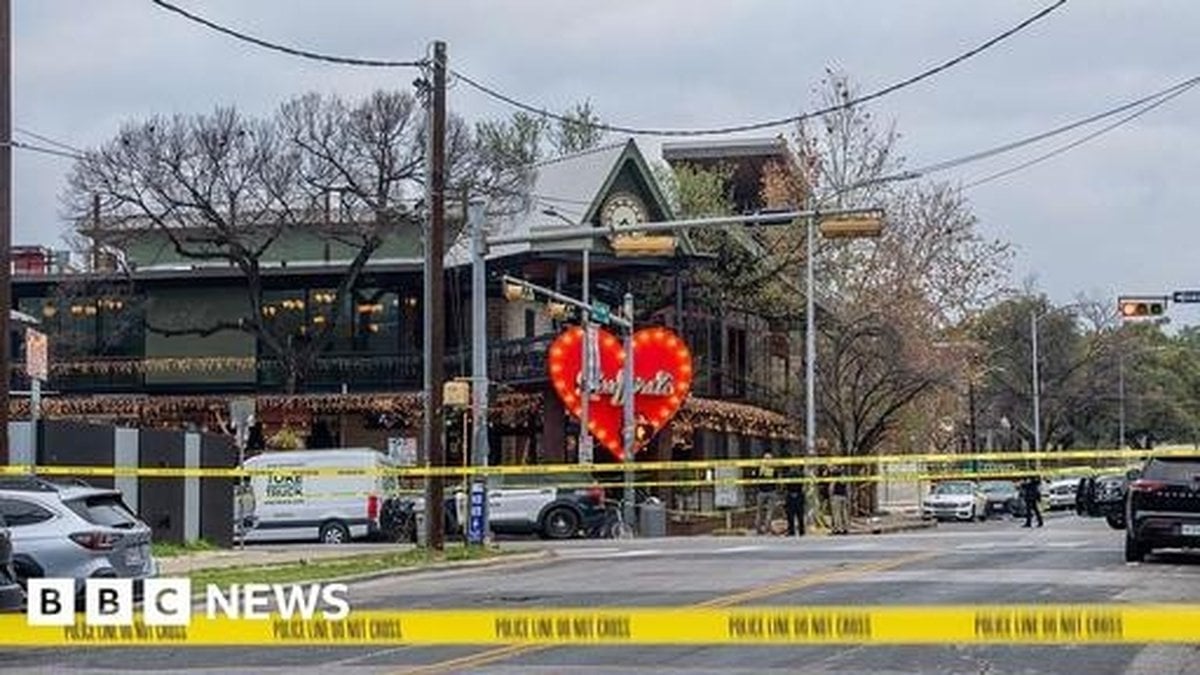
In the early hours of March 1, 2026, the heart of Austin, Texas, was rocked by a mass shooting that left two people dead and 14 others wounded outside Buford’s Backyard Beer Garden, a popular haunt in the city’s bustling Sixth Street entertainment district. The attack, which unfolded just before 2 a.m. local time, is being investigated by federal authorities as a potential act of terrorism, casting a shadow over a city known for its vibrant nightlife and lively university scene.
The gunman, identified by the Department of Homeland Security as 53-year-old Ndiaga Diagne, was shot and killed by Austin police officers after a harrowing sequence of violence that began with him driving past the crowded bar several times. According to Austin Police Chief Lisa Davis, Diagne initially fired a pistol from the window of his SUV at patrons seated on the patio and on the pavement outside Buford’s. He then parked, exited the vehicle with a rifle, and continued shooting at people walking in the area, before being confronted and fatally shot by officers who rushed to the scene. The rapid response—just 57 seconds after the first emergency call—was credited by Austin Mayor Kirk Watson with saving lives. “They definitely saved lives,” Watson said, echoing the relief and gratitude of a shaken community.
Of the 14 wounded, three remained in critical condition as of Sunday morning, according to Austin-Travis County Emergency Management Services head Rob Luckritz. Witness Kelson Lee, 25, described the aftermath to the Austin Current: “I see about seven to eight bodies on the floor. No-one should ever have to see that. I kind of blacked out, froze up. I felt kind of helpless because I wanted to help people.” The trauma of the event rippled through the city and beyond, with the University of Texas president Jim Davis confirming that some of those impacted were members of the university’s “Longhorn family,” and offering prayers for the victims and their loved ones.
The suspect, Diagne, was a naturalized American citizen originally from Senegal, according to multiple law enforcement officials cited by CBS News and the Associated Press. He arrived in the United States in 2000 on a tourist visa, obtained a green card in 2006, and became a citizen in 2013. Before settling in Texas, he had spent time in New York. Investigators believe Diagne acted alone, but the motive for the attack remains unclear.
What has fueled particular concern among law enforcement and federal agencies is the possibility of a terrorism link. FBI Acting Special Agent Alex Doran told reporters there were “indicators on the subject and in his vehicle that indicate a potential nexus to terrorism,” though he cautioned, “it’s still too early to make a determination on that.” Among the details that have emerged: Diagne was reportedly wearing a sweatshirt emblazoned with “Property of Allah” and a shirt featuring an Iranian flag design during the attack. Law enforcement sources told Fox News and CBS News that a Quran was found in the gunman’s vehicle, and a search of his home turned up an Iranian flag and pictures of Iranian leaders. However, officials have stressed that no formal link to a specific terrorist group has been established, and the investigation is ongoing.
The shooting occurred just one day after the United States and Israel launched a joint attack on Iran that killed Supreme Leader Ayatollah Ali Khamenei. While some have speculated about a possible connection, authorities have not confirmed any direct link between the international incident and the Austin shooting. Texas Governor Greg Abbott, responding swiftly, warned that the state would respond aggressively to anyone seeking to “use the current conflict in the Middle East to threaten Texas.” In a statement, Abbott said, “Texas mourns with the families and loved ones of those who were horrifically killed in last night’s attack in Austin. This act of violence will not define us, nor will it shake the resolve of Texans. To anyone who thinks about using the current conflict in the Middle East to threaten Texans or our critical infrastructure, understand this clearly: Texas will respond with decisive and overwhelming force to protect our state.” He also activated the Texas Military Department under Operation Fury Shield and increased patrols in the downtown entertainment district.
Senator Ted Cruz of Texas condemned the attack as a “senseless act of violence,” adding, “My team and I are co-ordinating with local, state, and federal authorities. I’m grateful for the heroic and quick response from law enforcement.” President Donald Trump was briefed on the shooting, with White House Press Secretary Karoline Leavitt confirming that the president was monitoring the situation closely.
Austin’s Sixth Street district, a magnet for students and locals alike, is no stranger to tragedy. In the last five years, it has seen at least two other high-profile shootings, including one in 2021 that left 14 people wounded. The entertainment area is typically under heavy police surveillance, especially on weekends, which Police Chief Davis credited for enabling the swift intervention that likely prevented further loss of life. “Officers immediately transitioned … and were faced with the individual with a gun. Three of our officers returned fire, killing the suspect,” Davis said. She described the shooting as “a tragic, tragic incident.”
Authorities from the FBI, the Bureau of Alcohol, Tobacco, Firearms and Explosives, the Joint Terrorism Task Force, and local and state police are all involved in the ongoing investigation. The National Counterterrorism Center is also working with partners in Austin to probe for any potential ties to foreign terrorism, and officials are examining the suspect’s background, internet activity, and possible signs of self-radicalization. Two law enforcement sources told CBS News that Diagne had prior mental health episodes in Austin, and investigators are considering whether he was influenced by extremist ideology or acted out of personal instability.
As the city grapples with the aftermath, community leaders and officials have called for unity and vigilance. Mayor Watson, reflecting on the tragedy, said, “My heart goes out to the victims, and I praise the swift response of first responders.” Chief Davis urged anyone with information or video evidence to come forward, emphasizing the importance of public cooperation in the investigation.
For now, Austin mourns, but also stands resolute. The rapid response by law enforcement, the outpouring of support from local and national leaders, and the ongoing commitment to uncovering the truth behind the attack reflect a city determined not to be defined by violence, but by resilience and solidarity in the face of uncertainty.