
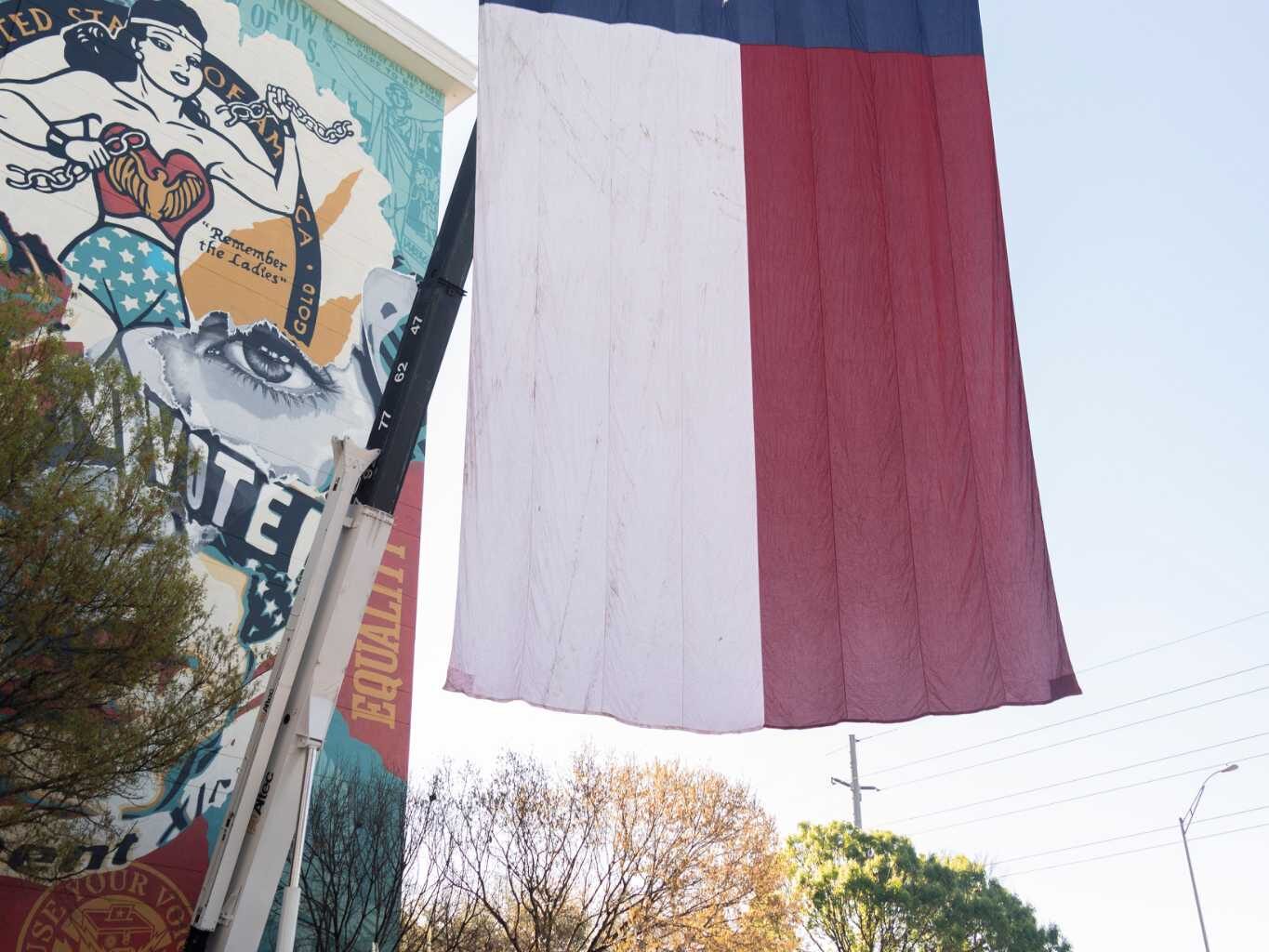
It’s been 180 years since the Republic of Texas dissolved, but many residents continue to celebrate Texas Independence Day. If there’s anything Texans love more than cowboy boots and the Longhorns, it’s their freedom.
When is Texas Independence Day, and what exactly does it celebrate? Saddle up for a quick history lesson.
Texas Independence Day is always on March 2, which falls on a Monday this year. On this day 190 years ago, 59 delegates at Washington-on-the-Brazos signed the Texas Declaration of Independence from Mexico.
The adoption of the Texas Declaration of Independence on March 2, 1836 marked a turning point in the Texas Revolution, shifting the focus from returning to the Mexican Constitution of 1824 to forming a separate and independent Republic of Texas.
Weeks after Texas declared independence, the Battle of San Jacinto was the final battle of the Texas Revolution. The state won its independence on April 21, 1836. David G. Burnet became the interim president of the Republic of Texas, and its other presidents were Sam Houston, Mirabeau B. Lamar and Anson Jones.
The Republic of Texas remained for nearly a decade before Texas joined the United States in 1846.
Texas Independence Day is not a federal holiday, but it is a state holiday.
While post offices, banks and federal buildings stay open on Texas Independence Day, state government offices, libraries and agencies usually close in observance.
Public schools generally operate as usual; however, some may be closed or hold special events for the state holiday.
Mexico’s Independence Day — Diez y Seis de Septiembre — is celebrated on Sept. 16. It commemorates Father Miguel Hidalgo y Costilla’s Grito de Dolores (“Cry of Dolores”), delivered in the early morning hours of Sept. 16, 1810, in the village of Dolores near Guanajuato. In his call to arms, Hidalgo urged the people to rise up and end Spanish rule in Mexico.