
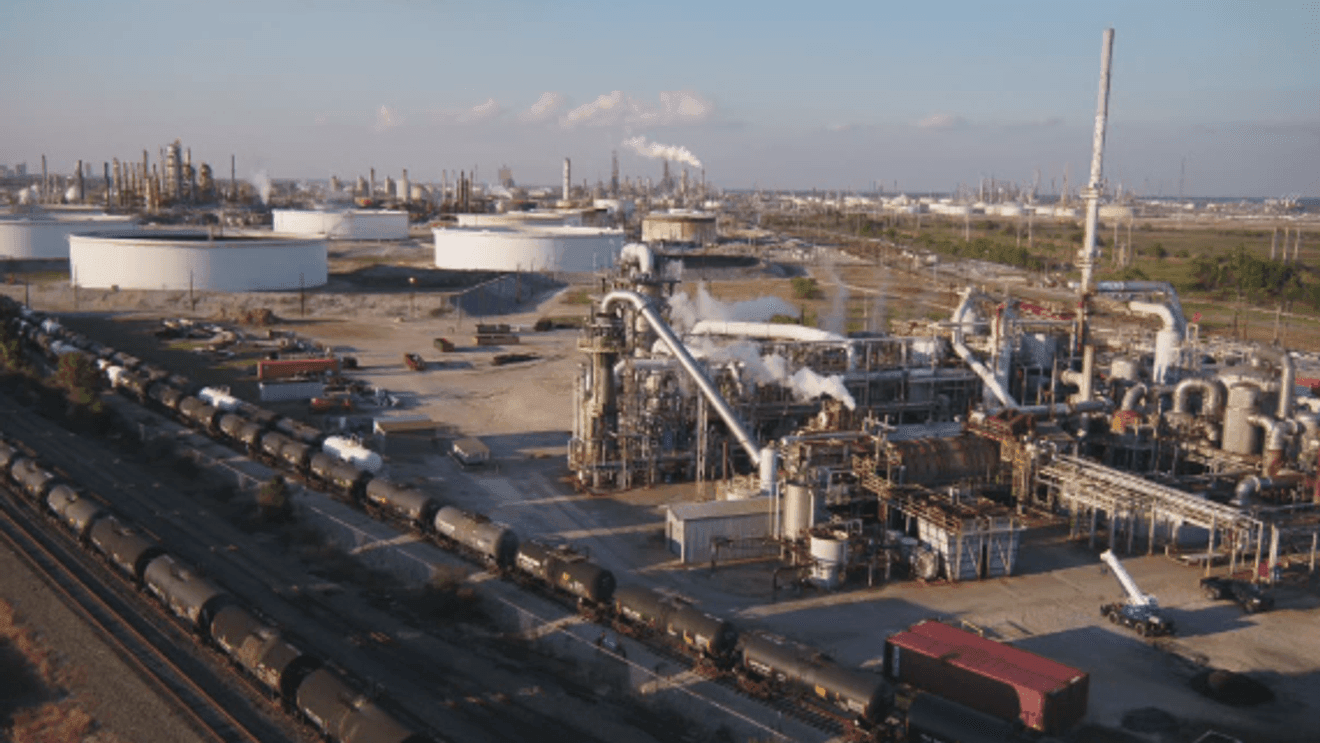
In the wake of the war against Iran and a mass shooting in Austin this past weekend, questions are being raised about preparedness not just in big cities, but in Southeast Texas, where major refineries, petrochemical plants and the Port of Beaumont make the region a key part of the nation’s security infrastructure. Jefferson County is home to major refineries and petrochemical plants, as well as the Port of Beaumont, described as the largest military outload port in the nation. The resources that move through the region, from ships carrying military equipment to fuel powering the armed forces, directly support national defense.
Brit Featherston, executive assistant for the Jefferson County District Attorney and a longtime federal law enforcement official, said the area’s industrial and shipping footprint makes security a necessity. “Anytime you manufacture some of the vital resources that our country needs… you know, gasoline, oil production, and the shipping industry that comes with that, those play a vital role in our national security,” Featherston said. Featherston also pointed to the military activity visible in the area. “Right here looking at our window that we can look out, you can see the freedom ships. You can also see the military assets that are being loaded or taking off of the ships and moved around,” he said.
After 9/11, Southeast Texas became one of the first mid-sized areas in the country to establish a Joint Terrorism Task Force. Featherston, who began his federal career just before the attacks of Sept. 11, said one of the biggest lessons learned was the need for stronger coordination and intelligence-sharing among federal, state and local law enforcement agencies to prepare for worst-case scenarios. “They truly are, your state and local partners to the eyes and ears on the ground. They’re the ones that are going to be the first responders. They’re the ones that are going to be the first one on the ground to see something and to be able to react to something,” Featherston said.
That coordination, he said, is part of why communities are safer even when the public never sees the threats that are stopped.
Featherston said citizens also play a critical role in preventing violence, noting that sometimes it is not law enforcement that spots danger first. He cited an example from two years ago, when an active shooter threat was reported by teachers and staff at St. Anthony Cathedral, a call that may have saved multiple lives. “That really began by the citizens, the teachers, the staff there at St. Anthony’s Cathedral that called and said, ‘Hey, y’all need to do something about this,’” Featherston said.
Featherston said nearly every active shooter investigation reveals that someone saw warning signs, reinforcing the message: If you see something, say something. He said preparation is ongoing, and reporting suspicious behavior could be the difference between stopping a threat early and responding after it is too late.