
AUSTIN, Texas — We Are Austin kicked off the morning with something wild — in the best way!
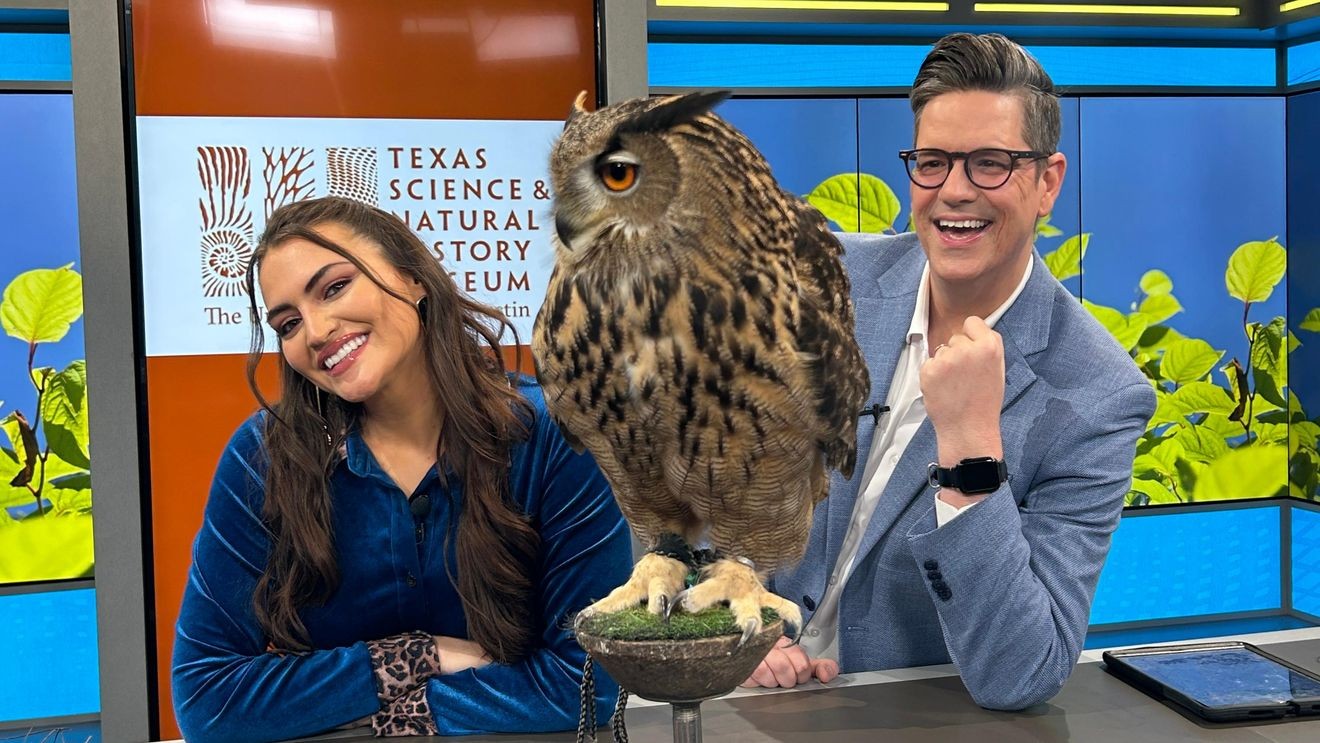
In celebration of Texas Wildlife Day, the Texas Science and Natural History Museum welcomed Dr. Liam Norris, Eagle Kirk Corredor, and Owl-Bert the Eurasian eagle owl to share what families can expect at this year’s event with hosts Sierra Waggoner and Trevor Scott!
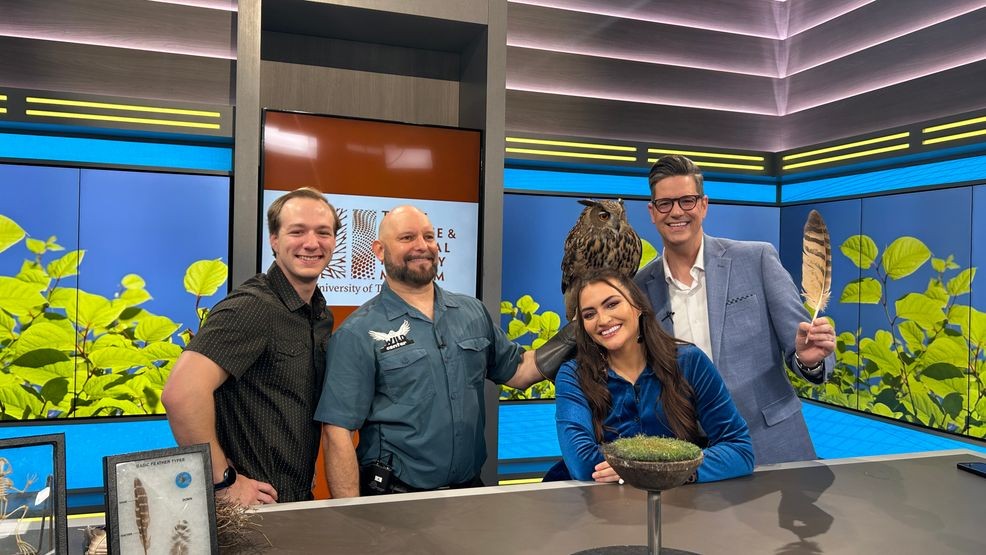
In celebration of Texas Wildlife Day, the Texas Science and Natural History Museum welcomed Dr. Liam Norris, Eagle Kirk Corredor, and Owl-Bert the Eurasian eagle owl to share what families can expect at this year’s event with hosts Sierra Waggoner and Trevor Scott!
Dr. Norris highlighted the museum’s deep roots in the community!
“We’ve been in Austin since 1939,” he said. “We love sharing the natural world of Texas with our visitors. Many people know us for our fossils, but they might also remember our Texas Wildlife Gallery. Some of those specimens have been on display since the museum opened. Texas Wildlife Day is a fantastic continuation of the activities and education we’ve been doing for so long.”
This year’s event will feature hands-on learning designed to spark curiosity in visitors of all ages.
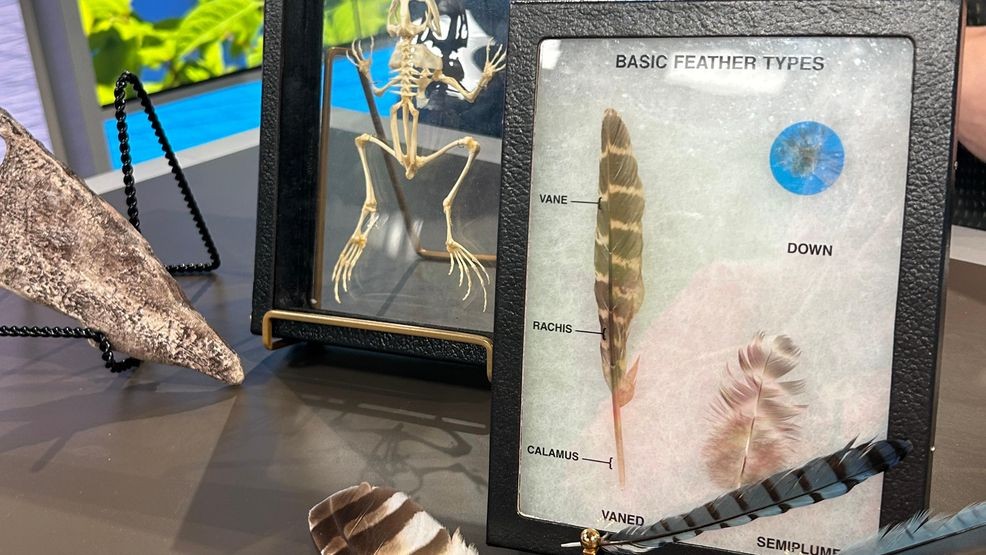
“Our team will have two main activities,” Norris explained. “First, Backyard Birds. Everyone sees signs of birds in their backyard, and we’re going to help you identify what you might find — like a blue jay feather or a beautiful cardinal nest. We’ll also be comparing modern amphibians with fossil amphibians. This is the skull of Diplo Collis, the boomerang-headed amphibian.”
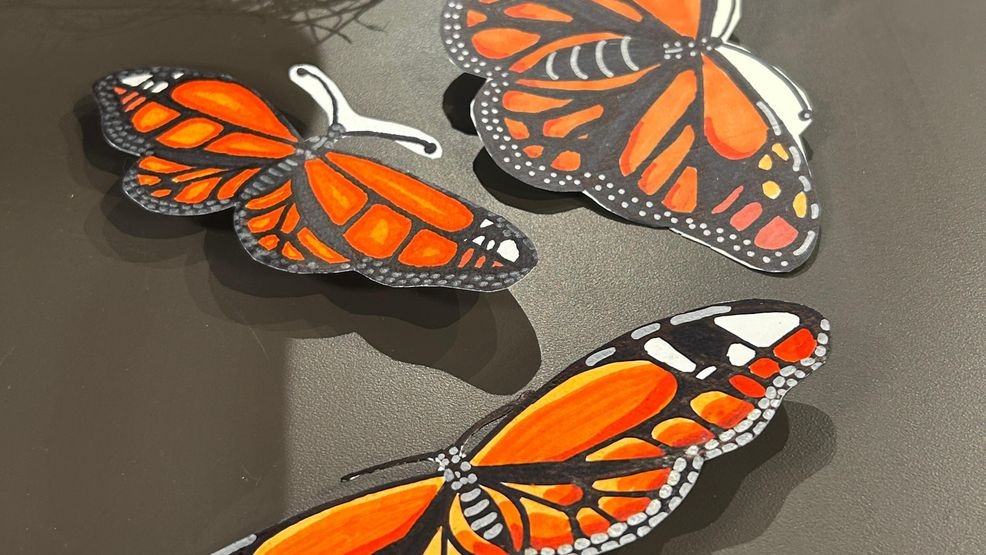
In addition to these interactive stations, guests can explore a brand-new exhibit, Follow the Monarchs, featuring artwork by Clare Wuellner. The installation includes 1,000 butterflies created by community members, celebrating monarch migration and conservation efforts.
In addition to these interactive stations, guests can explore a brand-new exhibit, Follow the Monarchs, featuring artwork by Clare Wuellner. The installation includes 1,000 butterflies created by community members, celebrating monarch migration and conservation efforts.
“Our team will have two main activities,” Norris explained. “First, Backyard Birds. Everyone sees signs of birds in their backyard, and we’re going to help you identify what you might find — like a blue jay feather or a beautiful cardinal nest. We’ll also be comparing modern amphibians with fossil amphibians. This is the skull of Diplo Collis, the boomerang-headed amphibian.”
One of the morning’s biggest stars was Owl-Bert, a seven-year-old male Eurasian eagle owl. According to Corredor, he closely resembles Texas’ native Great horned owl.
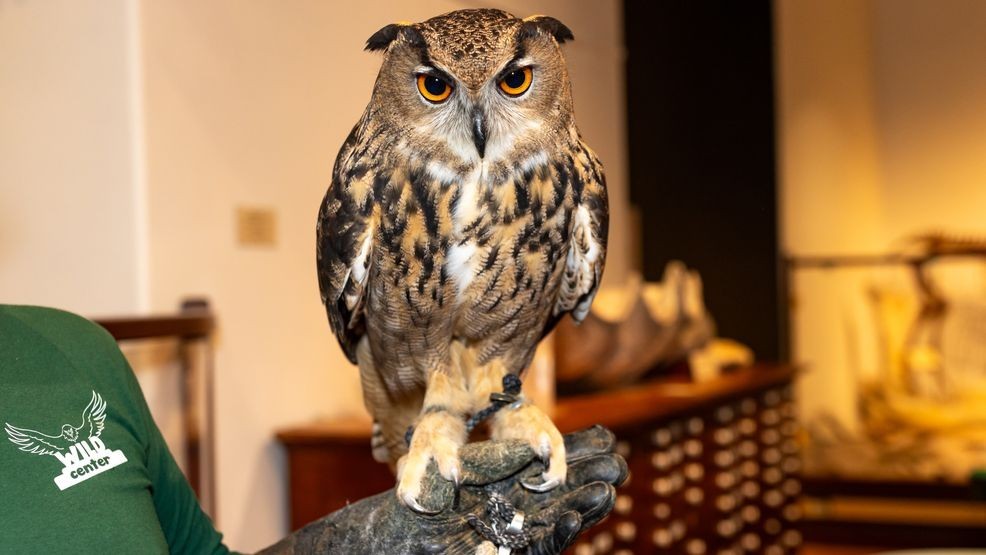
Owl-Bert is fully flighted and part of the Wildcenter’s traveling education program, which brings live animal experiences to schools, libraries, parks, and museums throughout Central Texas.
“He’s essentially the European and Asian equivalent of a great horned owl,” Corredor said. “He’s a little larger than our native males — about the size of a large female great horned owl. Females are bigger than males.”
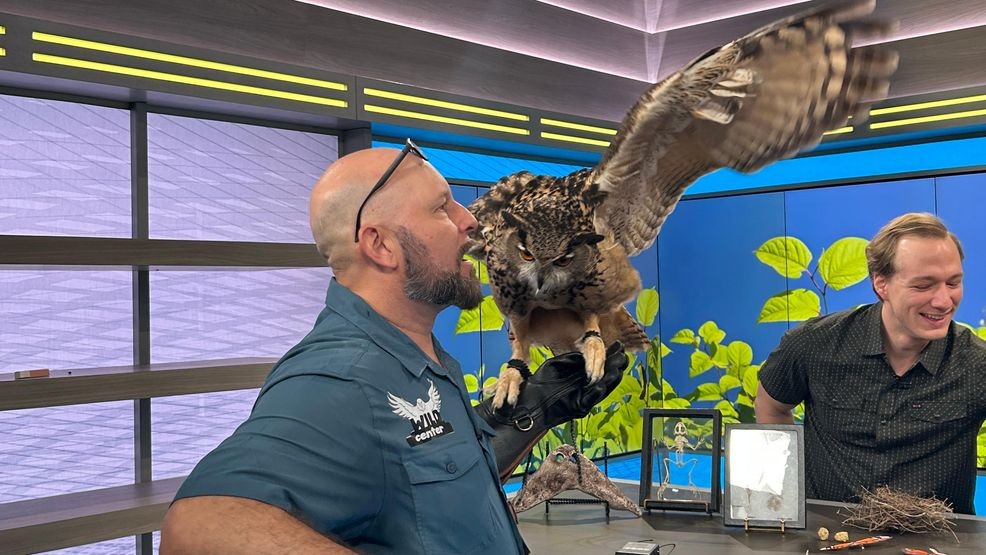
“He’s essentially the European and Asian equivalent of a great horned owl,” Corredor said. “He’s a little larger than our native males — about the size of a large female great horned owl. Females are bigger than males.”
Owl-Bert is fully flighted and part of the Wildcenter’s traveling education program, which brings live animal experiences to schools, libraries, parks, and museums throughout Central Texas.
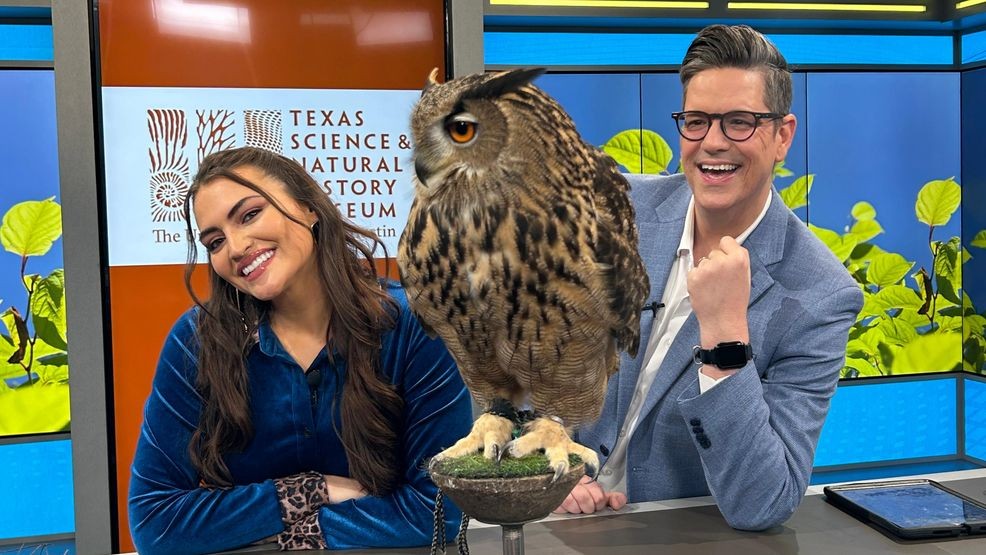
Owl-Bert the Owl Soars Into We Are Austin Ahead of Texas Wildlife Day!
“We’re like a mobile education facility,” Corredor explained. “We fly the birds when we can and pair them with what we call our ‘modern dinosaur program’ — birds like Owl-Bert, along with lizards, snakes, and turtles. Some are Central Texas natives, some are not. He obviously isn’t, but he’s a great representative of the incredible owls you can see.”
While guests won’t be able to handle the birds, there will still be interactive opportunities.
“We don’t generally let people touch the birds,” Corredor noted. “But we do selfies, and we’re giving you one of his molted feathers. Because he’s not native to the U.S., those feathers are legal to have. If you find feathers from a native bird of prey, you actually need a permit to keep them, so we discourage people from picking those up.”
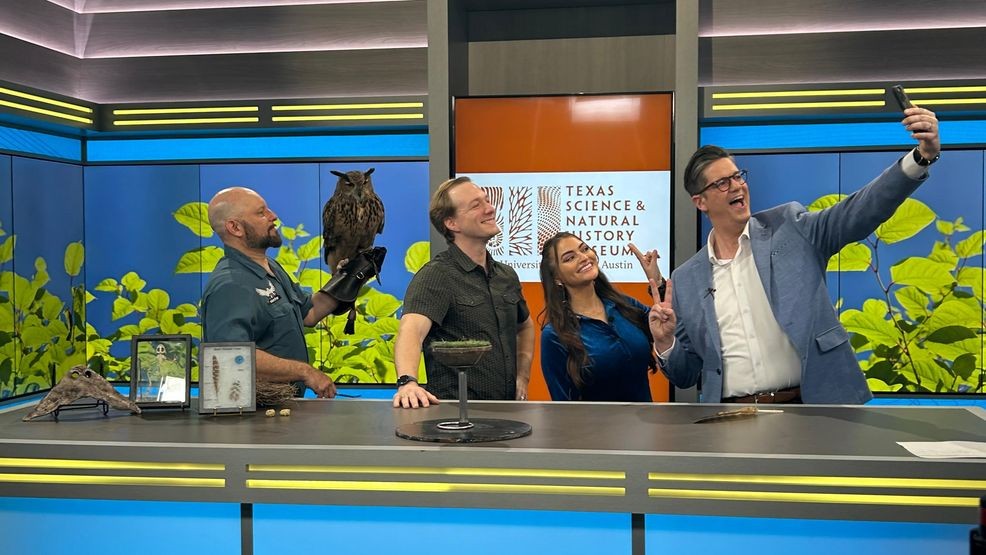
Owl-Bert the Owl Soars Into We Are Austin Ahead of Texas Wildlife Day!
Texas Wildlife Day offers a unique blend of live animal encounters, fossil discoveries, art, and hands-on science — all designed to connect the past and present of Texas wildlife.
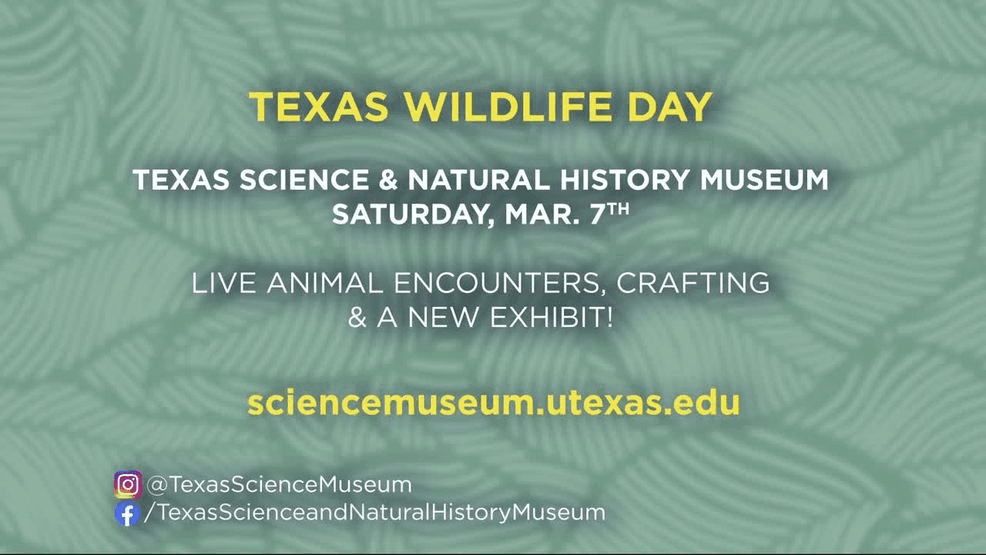
Texas Wildlife Day takes place Saturday, March 7. For more information and event details, visit the museum’s website.
Texas Wildlife Day takes place Saturday, March 7. For more information and event details, visit the museum’s website.