
Greenhill School redefines remarkable women during its diamond anniversary
As the Greenhill School celebrates its 75th year, a women’s history class is ensuring the milestone is marked not just by looking back, but by focusing close to home.
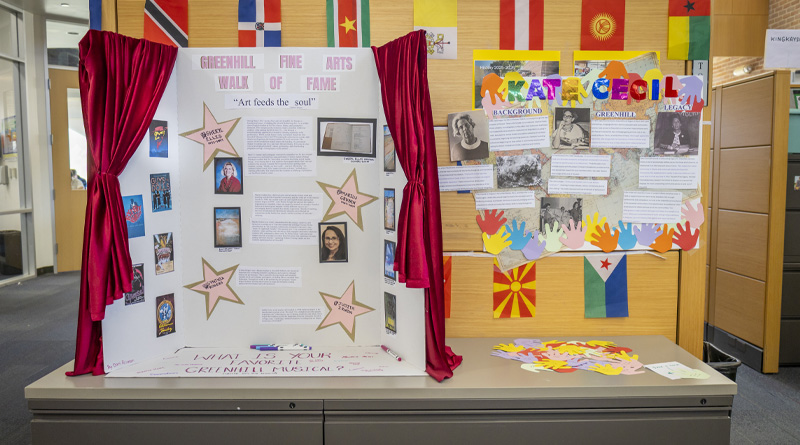
The elective, taught by Dr. Amy Bresie, challenged students to examine the role women have played in shaping Greenhill’s community over the past seven and a half decades. Rather than focusing solely on well-known historical figures, the upper school history teacher and department chair asked students to search for remarkable women within the school’s own halls. The result was a student-curated museum of research projects honoring women whose mark was left in classrooms, hallways, and daily campus life.
“Students often assume history happens somewhere else,” Bresie said. “This project was about recognizing that powerful influence and leadership exist right where you are.”
Among the women highlighted was Kate Cecil, a longtime member of Greenhill’s language department. A Holocaust survivor, Cecil co-founded the Echo Latin Club and was known for emphasizing service, discipline, and personal responsibility. Students were struck not only by her academic rigor, but by how her lived experience shaped generations of students.
“Researching an influential woman in our own community reminded us of how history happens in little daily interactions and lives on in memories long after people leave,” said Greenhill senior Kate Ponnambalam.
Another project focused on Lorene Richardson, Greenhill’s longest-tenured employee, who served the school for 46 years. Beginning her career in the cafeteria, Richardson became widely known as the heart of the campus. She is remembered for knowing students by name, offering steady encouragement, and, as many fondly recalled, baking unforgettable pies.
“At school, we often hear about founders and former heads of school, but women like Ms. Richardson become important parts of people’s memories of their time at Greenhill, because they learn your name or smile at you during a hard day,” said Ponnambalam, adding how she and her peers learned that the most meaningful stories are often found close to home in the people who build community and leave lasting imprints on generations to come.
“We often think about people at school in terms of how they interact with us, but we forget everyone has a story that extends beyond campus and follows them into work each day. Everything we learned about Lorene made us more curious about her family, her childhood, and all the untold parts of her story,” Ponnambalam said.
As part of the project’s reflective component, students also examined the evolution of Greenhill’s dress code over the decades. Many were surprised by how restrictive it once was, particularly for girls. Bresie, herself a Greenhill alumna, recalled a time when jeans were not permitted. The exploration prompted broader conversations about identity, autonomy, and how cultural expectations for young women have changed over time.
The class reinforced the powerful lesson that heroism and influence don’t always require a distant stage. “Trying to piece together the story of someone fascinating who is no longer with us reminds me to take time to ask about the stories of those who quietly, sometimes invisibly, work in our school,” said Ponnambalam.