
Texan Algenita Davis headed into her state’s primaries Tuesday with a clear sense of what she wanted the outcome to be.
“You want to make sure that you put people in office who are going to make the most difference — who are going to fight,” said Davis, 75, a retiree who lives in the Third Ward of Houston.
The day after the primaries, she and the rest of Texas now know more about who could be elected in the November general election to fight for them in the U.S. House and Senate.
And spoiler alert: U.S. Rep. Jasmine Crockett, Democrat of Texas – the civil rights attorney who has gained fame for her bitter feuds with Republicans – won’t be one of their senators.
Black voters in Texas have been watching these races intensely, especially the voters worried that the changes Texas Republicans made to their state’s election maps last fall will reduce the number of Black elected officials in Congress.
But in a blow to supporters of Crockett who wanted to see a Black woman representing Texas in the Senate, she lost her primary to Texas state Rep. James Talarico, a pastor who urged coalition-building, including with voters who may have backed President Donald Trump but now want someone different.
Talarico will face Republican John Cornyn or Ken Paxton in the November election for the U.S. Senate. The two Republicans, who outpaced a third candidate, U.S. Rep. Wesley Hunt, are headed to a May 26 runoff after neither received at least 50% of the vote Tuesday.
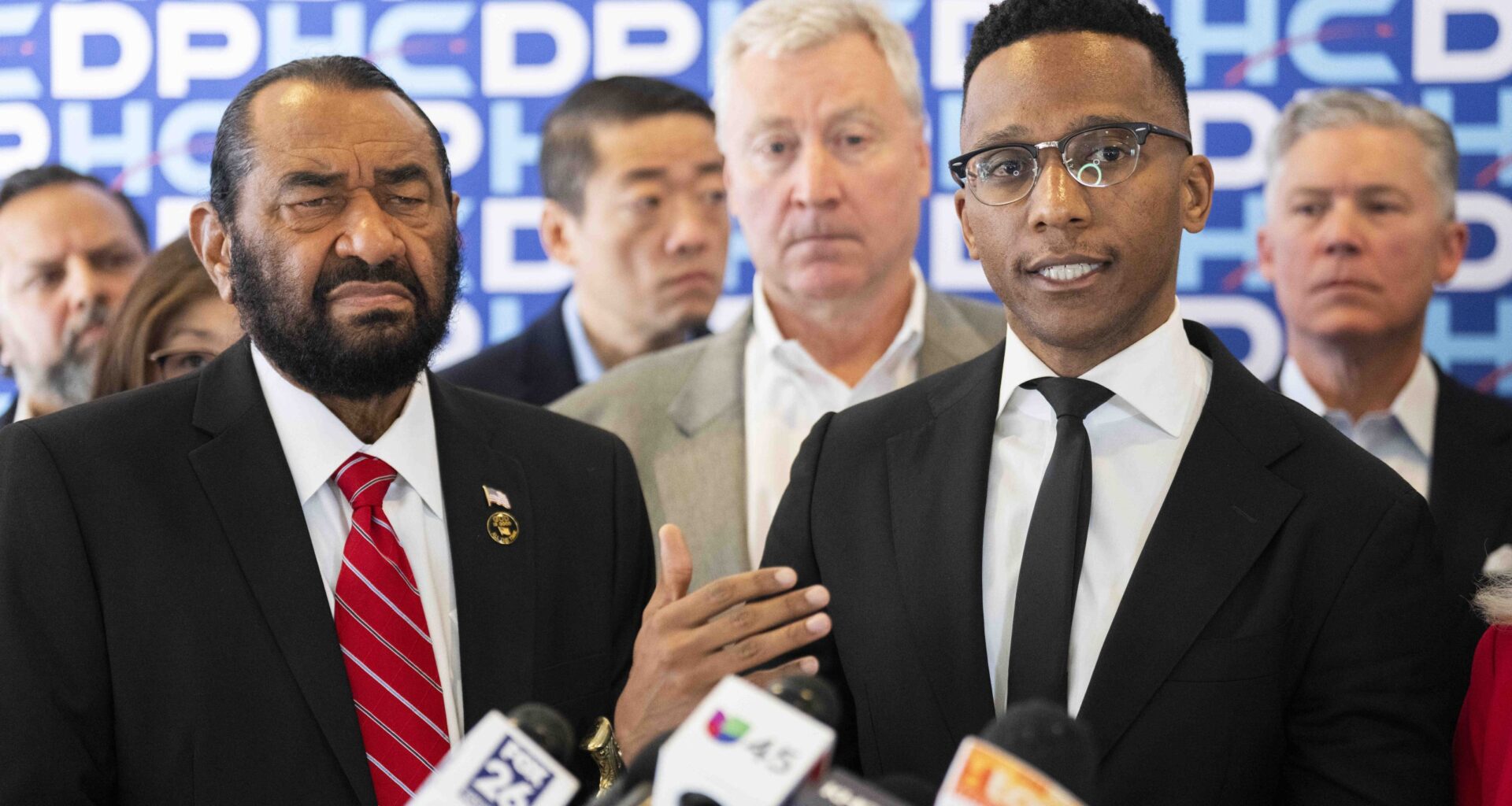
In the other big Texas race, the one for Texas’s 18th Congressional District, it’s still not clear which Democrat will be on the November ballot. Two of the Democratic candidates – U.S. Reps. Al Green and his challenger, Christian Menefee, both Black – appeared headed to a runoff on May 26, too.
The Democratic primary in the district matters to Black voters who are worried about the redistricting that took place there and whether it is time for the older generation of Black elected officials to retire and make room for a younger one.
As of Wednesday morning, Green, the elder statesman at 78, had 44.2% percent of the vote and Menefee, the younger at 37, had 46%. The winner of the runoff will face Republican Ronald Whitfield, though the seat is seen as safely Democratic.
What the candidates are saying
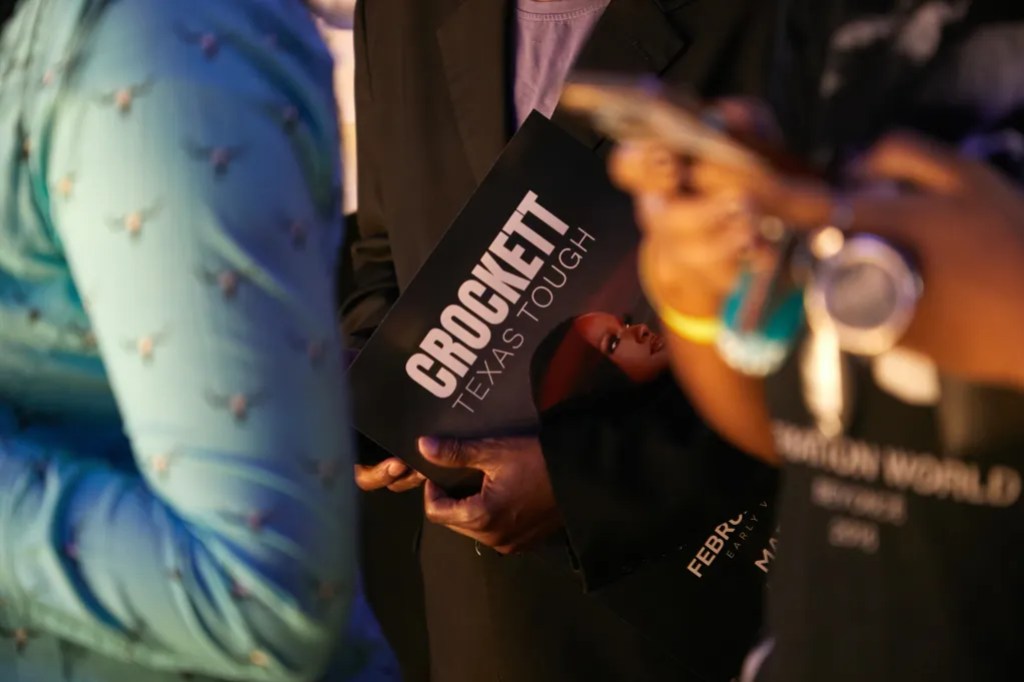 An attendee holds a “Crockett Texas Tough” sign during a Texas primary election night event with Democratic U.S. Rep. Jasmine Crockett of Texas in Dallas on Tuesday. Crockett lost the Democratic primary to run for the U.S. Senate. (Dylan Hollingsworth/Bloomberg via Getty Images)
Crockett conceded the race Wednesday morning, saying in a statement, “Texas is primed to turn blue, and we must remain united because this is bigger than any one person.” She added, “With the primary behind us, Democrats must rally around our nominees and win.”
In a short statement, Talarico said Wednesday morning, “We’re about to take back Texas.”
Acknowledging the looming Democratic primary runoff pitting two Black lawmakers against each other, Menefee said in a statement Wednesday morning, “I didn’t ask for these new maps, Congressman Green didn’t ask for this, and the voters of this district certainly didn’t ask for this.”
In a Wednesday morning interview, Green underscored his tenure in Congress, saying, “I am running on what I have done” and Menefee “is running on what he will do.”
What Black Texans are saying
Texas has the largest population of Black eligible voters of any state, with 2.9 million — about 14% of all eligible voters statewide, as of 2022, according to the Pew Research Center. Most of those Black voters are Democrats.
For them, this primary election was not just a struggle between their preferred candidates. The race was also a referendum on the issues they care most about, including redistricting, health care, reproductive rights, and the ages of lawmakers.
Texas has been ground zero for a Republican effort to maintain control of the U.S. House by changing the election maps to favor themselves, an effort that has left many Black Democrats, such as Davis feeling threatened.
In 2025, Texas Republicans pushed through a map that drastically reshaped the 18th and 9th districts, “packing” Black and brown voters into the former and “cracking,” or diluting, the voting strength of these groups in the latter.
From her home near the Old Spanish Trail and Cullen Boulevard in the Third Ward of Houston, Davis described congressional lines that curve and stretch north and south across the city and into suburbs. “When you redraw lines for a party instead of for people, that’s the downfall of democracy,” said Davis, who lives in the 18th District.
Access to abortion has declined significantly across Texas, troubling many Black women in the state, who saw this primary as a referendum on that.
Since the Supreme Court overturned Roe v. Wade in 2022, Texas has enforced one of the strictest abortion bans in the country, outlawing almost all abortions except in some medical emergencies and making miscarriages more dangerous. Lawmakers have also restricted access to abortion medication.
Angela King, 58, is a Harris County, Texas, poll worker who cares about the loss of that abortion access.
“I believe that a woman’s body is a woman’s body — it’s her decision,” King said, noting that abortion access “isn’t something that the government should control.”
She is also worried whether every eligible voter will be able to cast a ballot without confusion or intimidation, as President Donald Trump and Republican leaders press Congress to pass the SAVE America Act. The measure would tighten voter ID requirements and limit no-excuse mail-in voting, which allows eligible voters to request and cast a ballot by mail without having to provide a specific reason. Such changes could increase barriers to the ballot box, disproportionately impacting Black voters who are less likely to have certain kinds of identification, critics say.
“I want to make sure that I can show up and say that I did my part,” King told Capital B, adding that she wants people to “know that their votes count, and that they matter.”