
A version of this story appeared in CNN’s What Matters newsletter. To get it in your inbox, sign up for free here.
The first primaries of the 2026 midterms are in the books, and they offered some very interesting storylines.
Texas Democrats opted for the White seminarian preaching unity over the Black firebrand promising to stand up to Trump.
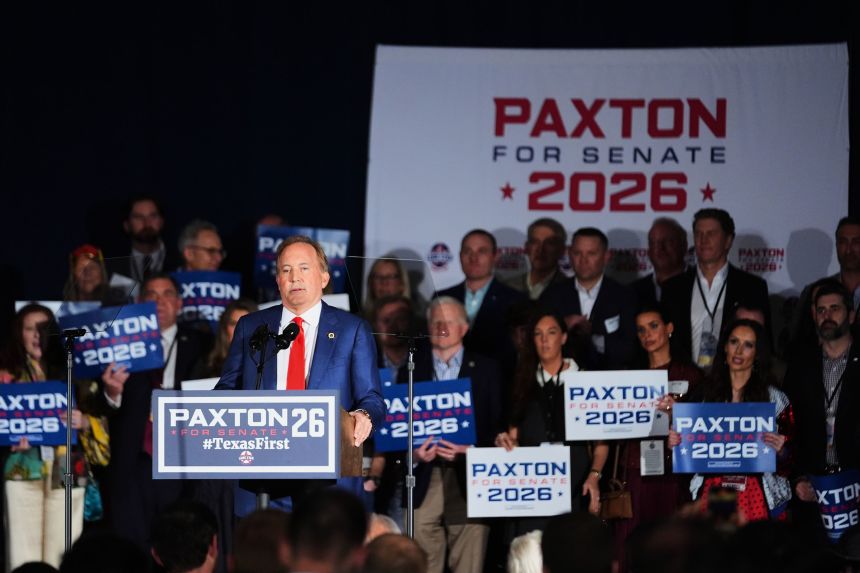
Texas Republicans get another chance to choose between an old bull of the Senate and a MAGA-aligned attorney general who led the charge against the 2020 election results on Trump’s behalf. Will Trump weigh in on the race?
An incumbent House Republican lost, and two incumbent Democrats are on the ropes.
I talked to CNN’s Washington Bureau Chief and political director David Chalian to hear how he’s reading these results. Our conversation, with my questions paraphrased, is below:
What’s the main takeaway for Democrats?
CHALIAN: First, first and foremost, from 30,000 feet, the record-setting Democratic midterm primary turnout in Texas should not be overlooked. Not because I think it signals that Texas is going to flip blue in November, but because it fits a pattern over the last year — of special elections, the off-year elections in Virginia, New Jersey of this Trump 2.0 era. Democrats are really, really fired up to participate in this midterm year, more so than Republicans.
More Texas voters participated in the Democratic primary yesterday than participated in the Republican primary. That just hasn’t happened in a very long time, and that’s just not the norm.
What’s the main takeaway for Republicans?
CHALIAN: The Donald Trump factor coming up in this Texas runoff between Cornyn and Paxton is the story that is on the must-watch list for these next 12 weeks now that this runoff is scheduled. That, to me, is the big forward-looking storyline. Does Donald Trump now get off the sidelines of this race? Ken Paxton is fully MAGA-aligned, cut in the model of Donald Trump. He has been impeached, has been indicted, has fought back it all, much like President Trump, and has a lot of fans from Trump’s base. And yet the Republican establishment believes, if Paxton emerges as the nominee in 12 weeks, that will create, for the party … a very expensive headache. I think that what Trump does here is going to be consequential, because if he does get in for one of them, he is likely to shut down runoff in a pretty substantial way.
(On Wednesday, after the primary, Trump said on social media that he would soon make an endorsement and ask the other person to drop out.)
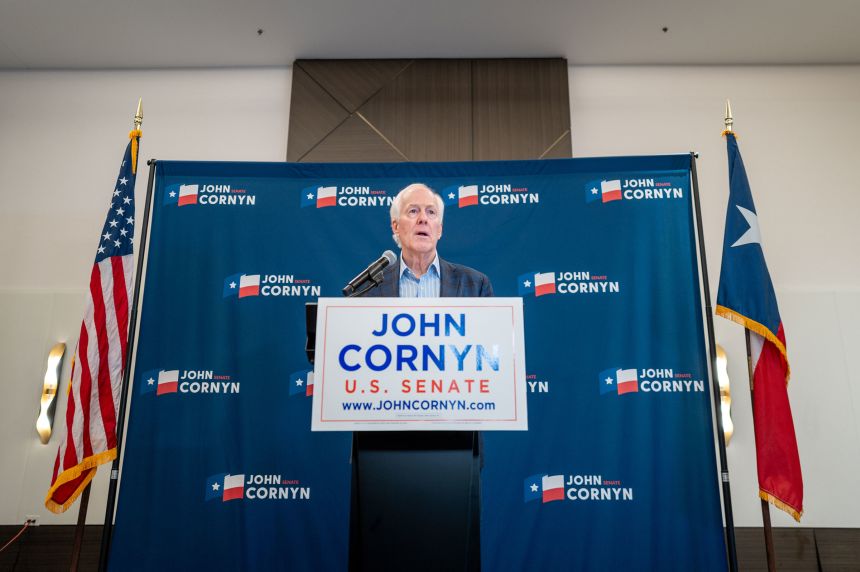
CHALIAN: He wasn’t in for Paxton because he understands the political conundrum. Remember, some of his closest political advisers — his 2024 campaign manager, Chris LaCivita; pollster Tony Fabrizio — they’re working for Cornyn. There are people who have Trump’s ear and can make real political arguments to Trump in private that were successful, probably, at keeping him on the sidelines. Now they have the mission of convincing him to get in for Cornyn even though it is so against the grain of him wanting to reward his most faithful in the one-way loyalty test that Donald Trump constantly demands. Ken Paxton has always passed that test.
CHALIAN: Talarico has been running a very successful campaign in terms of his operation on the ground. He significantly outspent Crockett, and just the basic blocking and tackling of campaigning was on display on a daily basis in the way that it was not for Crockett.
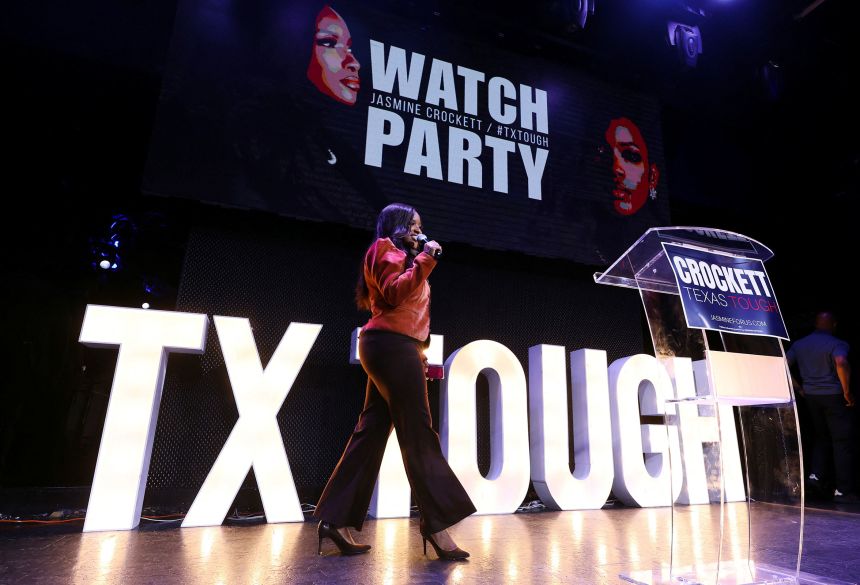
Crockett, who got in late, had all of this energy and enthusiasm around her firebrand style of taking it to Trump. It’s a calling card. Democratic primary voters clearly were telling us that they were eager to see that kind of fighting. She just never was able to convert that opportunity and enthusiasm for her style into a truly robust and effective campaign operation.
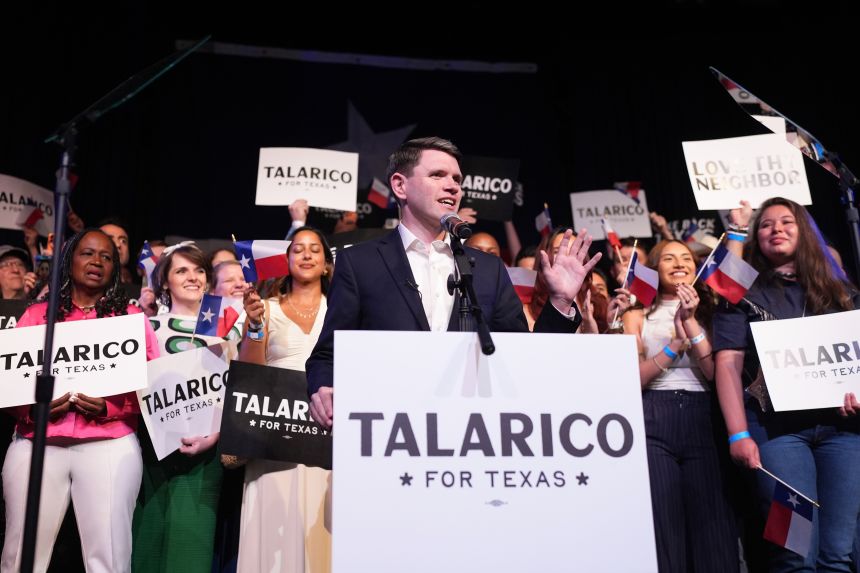
I don’t know that we can walk away from this saying Democrats learned they’ve got to just put white, male, religious-values-based candidates to run in redder places. I don’t think it’s that simple, because I do think campaigns matter.
But I do think Talarico, in his wearing his faith on his sleeve, in his preaching of a renewed sense of love and community, did provide a new kind of profile for Democrats that has engendered a lot of interest from donors, from grassroots, from some of the pieces of Trump’s coalition from ‘24.
Winning Latinos back and trying to get independents and even some Trump voters who may have grown a little soft on Trump into the fold — that’s been part of his mission.
But I think this whole equation about how real Texas may be really depends on the outcome of that Republican runoff.
The question after primaries is whether the party can unite behind the winning candidate. What’s the evidence so far in Texas?
CHALIAN: Out of the gate today, Crockett called Talarico, congratulated him on his victory, and is urging unity behind his candidacy across the party. But this is Talarico’s main message point. He does not believe it’s a left-right dynamic he’s trying to sell both the Democratic primary voters and to Texas voters broadly. He frames the narrative as, it’s top versus bottom. And I think you’ll see that from a lot of Democrats, with the affordability crisis in America that is top of mind for voters, no matter what other things are happening in the news.
You hear from Talarico the argument that the way … to make sure you are casting as wide a net as possible is to be on the side of a populism-style economic appeal: that those at the top have been corruptly adversely impacting your personal economic situation. And that is the way that you’re going to see a lot of Democrats try to stitch together the pieces of the party.
CHALIAN: Redistricting, no doubt, played a role in ousting the first Republican incumbent defeat that we’ve seen in this kickoff to the 2026 midterm season. Rep. Dan Crenshaw wasn’t running against another incumbent in his Texas district. And on the flip side of someone like Ken Paxton, he got real crosswise with the MAGA base. Trump refused to endorse him. (Sen. Ted) Cruz was campaigning against him. But part of what happened there too is that his district was redrawn, and the state legislator that defeated him in the primary yesterday — a big part of his district was drawn into that congressional district.
In the Democratic Houston area seat in Texas 18, there were two incumbents running. Christian Menefee has only been in office for a few weeks. It’s not a long-term incumbency. That seat, after the death of the former occupant, was held open for nearly a year. Al Green is a long-entrenched incumbent now running for that seat after the redistricting. He thought that maybe he’d be able to rely on that. But this is going to a runoff, and it’s not at all certain that Green is going to emerge victorious.
And so you know, playing in a different district when these lines get redrawn means, even for longtime power players, they have to introduce themselves to new voters. And that is not the easiest task for folks that have been there a long time. (Menefee got under 2,000 more votes than Green on primary day; the race now heads to a runoff.)
CHALIAN: If you look at the turnout in some Latino precincts in South Texas, in Texas 34, a district that Trump won but is held by a Democrat — it’s exactly the kind of district that if you are the Republicans trying to save your majority, you need to flip that one to start protecting against some of your vulnerable members. And yet we saw big Latino turnout in the Democratic primary that may suggest when Texas Republicans redrew maps, counting on Republicans maintaining or increasing the inroads that Trump made with Latinos in ‘24 may not have been the smartest bet. And then we’ve seen it all throughout ‘25 among that that bloc of the electorate, the Latino vote.
Whenever you do redistricting, it never goes exactly as the computer maps it out. Undoubtedly, there will be some head-scratching in November looking at the results of some districts that perhaps, depending on which state it is, Republicans or Democrats may have drawn thinking it was a clear winner, and it didn’t prove to be that way.
GOP Rep. Tony Gonzales also faces a runoff. Between him and Paxton, can we assume personal issues will dominate the runoff season?
(Gonzales has been accused of having an affair with a staffer who later died by suicide. Paxton has been through a messy and public divorce from his wife, who is a state lawmaker.)
CHALIAN: The morning after getting into the runoff, we all find out that Gonzales is going to be under an ethics investigation in the House. So this will be the dominant thing that hangs over his runoff. Whether it will be the determinant or not, we’ll have to see. I don’t know if it’s quite like Paxton, though, because Paxton, yes, his divorce, lots of dirty laundry got aired, but he also went through an impeachment, went through an indictment and beat back both of those. Gonzalez is facing this as he’s facing voters, not something he’s proved to be able to beat back yet.
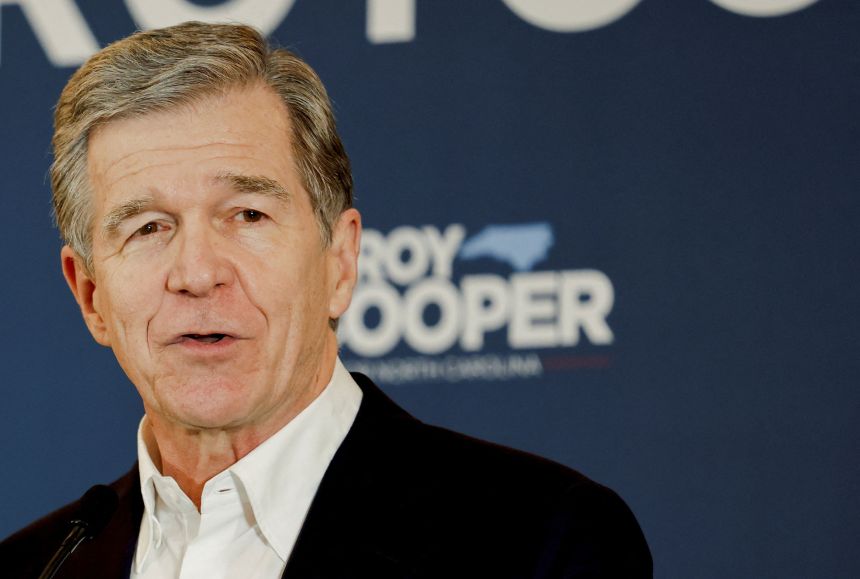
CHALIAN: We saw an enthusiastic Democratic primary electorate there as well, even though it was really not a contest. (Former Gov.) Roy Cooper was going to be the nominee. But we still saw, you know, much more Democratic primary participation than on the Republican side in the Senate race. But I’m not sure we learned a whole ton, because there may be more money spent on that Senate race than maybe any other Senate race. It will be a colossal battle.
Democrats, really ever since Barack Obama won North Carolina in 2008 and then lost it in 2012, have been trying to find a way back. And having a former popular Democratic governor who has won statewide there was a huge recruiting success for them. But it’s still a reddish-leaning state. There is no path to the Senate majority for Democrats if they don’t flip that North Carolina seat.
CHALIAN: I’m a little bummed because the Texas story was so good, which is kind of rare for primary season. But there are some big moments to watch for coming up in a couple of weeks. There’s a very competitive Democratic primary for the US Senate to replace Dick Durbin, and given the fact that (Illinois Gov.) JB Pritzker is thinking about running for president, he’s put his weight behind his lieutenant governor (Juliana Stratton). We’ll see if he gets a political win there as he’s considering a presidential run.
You are going to see in Kentucky in May a fascinating Republican primary to replace Mitch McConnell with three candidates who all worked for McConnell at some point and now are trying to run completely away from him … to curry favor with Trump’s MAGA base. That’s a real story of the change in the Republican Party in the Trump era. I don’t think Illinois or Kentucky will end up being what we discuss in November, but they will be telling about certain dynamics within the party.
We are also going to continue to see what we saw last night in North Carolina, in a House district with Democrats in a rematch from a couple of years ago. The challenger (Bernie Sanders-endorsed Nida Allam) is more of that liberal, progressive, anti-Israel, anti-AIPAC wing of the party. We saw this in the New Jersey special Democratic primary to replace Mikie Sherrill a few weeks ago. Is that wing ascendant inside these Democratic primaries? The one in North Carolina last night still hasn’t been projected. It looks like the incumbent, (Rep. Valerie Foushee) the more establishment candidate, may hang on there, but I think we’re going to continue to see that storyline play out, especially now, given what’s happening with the war in Iran. The US alliance with Israel will continue to be a real undercurrent inside domestic politics, within each party.