
In honor of its 20th anniversary, Zillow released a report exploring how American homes have changed since 2006. The company assessed the frequency of certain keywords in listings shared on the platform over time. Like hairstyles and pant lengths, what we as a nation deem desirable has changed considerably.
Zillow’s biggest takeaway from its 20-year analysis was simple: “American homes have shifted from status symbols to sanctuaries. Buyers are no longer chasing the biggest footprint or the glossiest finishes. Instead, they’re seeking homes that reflect who they are, how they live and what they value.”
But is that shift evident in Dallas-Fort Worth? After all, status has been cemented into the local real estate culture for decades — long before home searches moved online. We ran Zillow’s findings by two seasoned North Texas real estate pros to see how they hold up here.
Function over formality
Get updates from Abode
According to Zillow’s report, home listings in the early aughts touted impressive estates with formal rooms that were reserved for occasional hosting and entertaining. The company deems the “McMansion era” surely and firmly ended, in part due to affordability but also due to changing priorities. Now, buyers put a premium on houses that fit their daily lifestyle, even if those homes comes with less square footage.
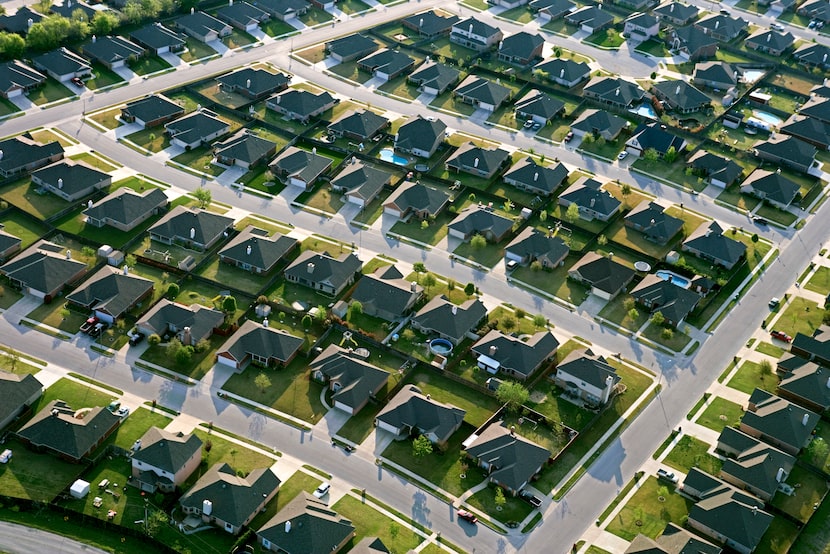
Homes considered large by today’s standards still aren’t the sprawling “McMansions” of 20 years ago.
Jupiter Images/Getty Images
This is mostly true in North Texas, too, says Diane DuVall, an agent with Briggs Freeman Sotheby’s International Realty. “The homes are still quite large, but they’re not the big, huge McMansions with a lot of wasted space.” Instead of focusing on endless square footage, D-FW buyers are prioritizing quality materials, design and interior finishes, she notes.
Debbie Sherrington with Dave Perry-Miller Real Estate — her husband Kevin Sherrington is one of our sports writers here at The News — agrees that thoughts on home size have changed. People understand that they’ll likely have to sacrifice square footage to get the house they want at a price they want. For a few years there, Sherrington observes, the sheer expanse of large homes “got way out of control.” Now, homes that are considered large are smaller than those of the McMansion years.
And what matters most, no matter the price point, is that the layout is truly functional. “I think people want something that has good livability — that has rooms that they will use, not rooms that are just wasted,” says Sherrington.
Goodbye, man cave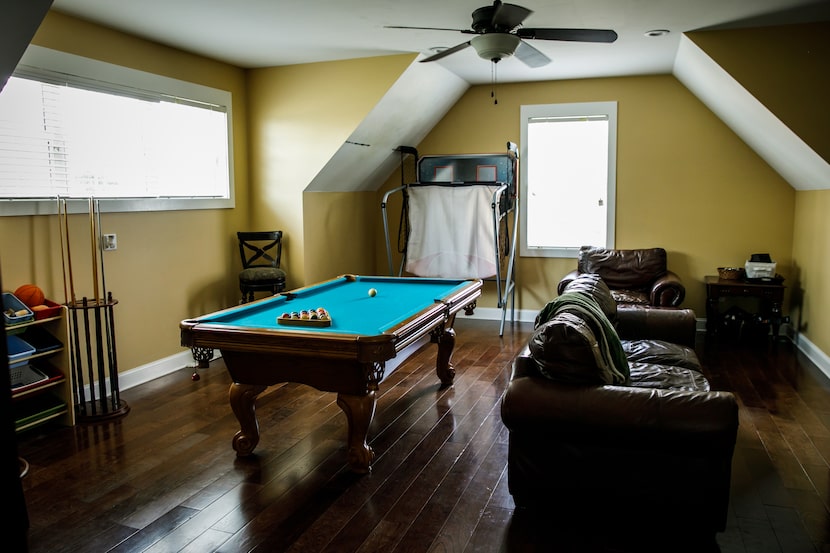
The “man cave” popular a couple of decades ago has declined in favor of amenities such as golf simulators and updated home bars.
Ucpage/Getty Images
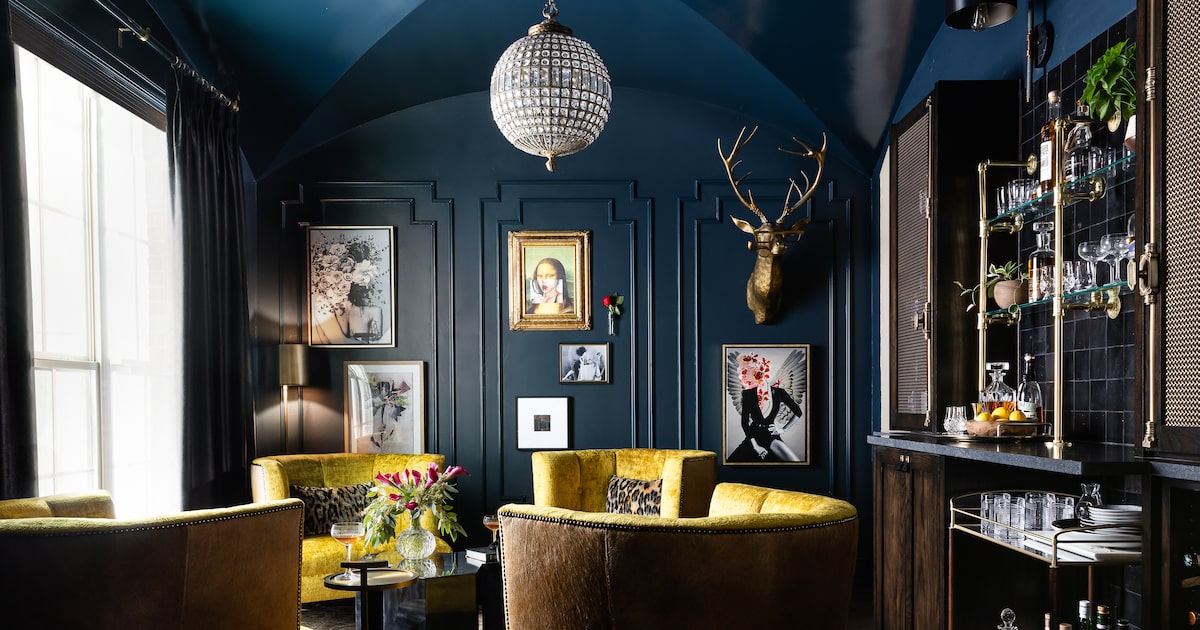
Speaking of thoughtful uses of space, Zillow found that the somewhat vague “man cave” feature of the early 2000s has been replaced. Today, amenities lean more purposeful across the country and in Dallas. Zillow reports a 25% increase in mentions of pickleball courts and golf simulators. “Everybody wants a golf simulator,” agrees Sherrington. “If they can’t have one in the house, [they’re wondering,] ‘Where can we put one outside?’” Duvall points to another trendy feature: “The ‘man cave’ has turned into the speakeasy,” she says.
Another change DuVall has noticed, in line with Zillow’s analysis, is the decline of the media room. “It was a status symbol” in the early 2000s; it’s not that much of a draw now. A whole room for bulky media equipment is no longer needed, because all of those high-tech features can be integrated seamlessly into any room’s design.
Energy efficiency and weather resilience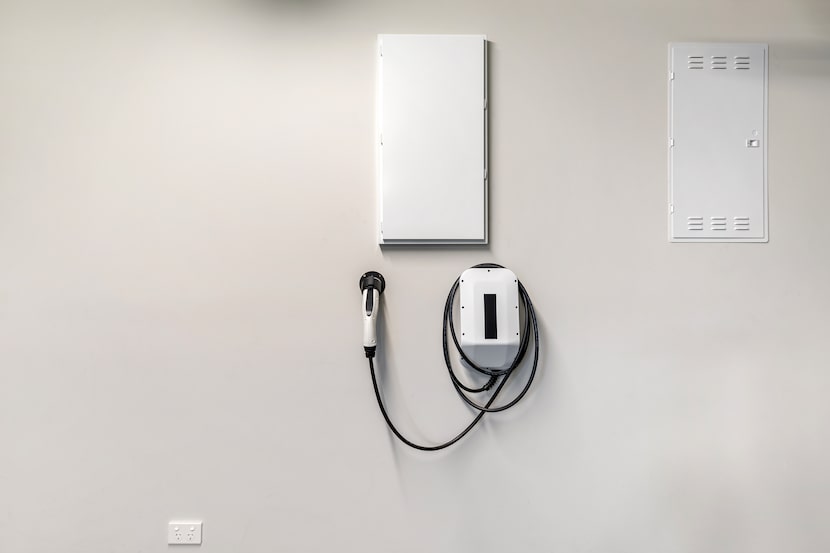
Mentions of EV charging stations are up 25% in real estate listings, notes the Zillow anniversary report.
Denizunlusu/Getty Images
Zillow tracked a significant increase of interest in energy efficiency and weather resilience. According to the report, “Listings mentioning zero-energy-ready homes [where renewable energy systems could offset most or all annual energy use] are up 70%, whole-home batteries are up 40%, and EV charging stations are up 25%. Climate-resilient features, from flood protection to fire resistance, are increasingly becoming selling points as buyers look for homes built for long-term uncertainty.”
In a region where weather swings from paralyzing ice storms to scorching summers, these elements carry weight. Buyers understand that there is a cost to making a home comfortable, and energy- and climate-smart features can definitely sway buying decisions. “I think people are very much more concerned about energy costs,” says Sherrington. “If you’ve got somebody buying in the million or million-plus range, in the olden days, nobody cared about what your electric bill was. And now, that is big time: ‘I want to see the utilities.’”
DuVall says luxury buyers tend to expect tankless hot water heaters, full-home water filtration systems and smart climate controls. “Generators are extremely popular today,” she adds.
Decorative details
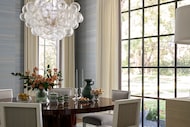
Mentions of “color drenching” have jumped 149%, according to Zillow’s report. And DuVall notes that while many sellers are still advised to paint every wall white before going to market (it’s Pantone’s Color of the Year, after all), she is seeing greater openness to color. “I love color drenching, absolutely love it,” she says, referring to the trend of painting walls, trim, ceiling and other details one shade to create a seamless, monochromatic look. DuVall recently sold a house that had been decorated by designer Jan Showers, and the home had multiple color-drenched rooms. “Every agent that walked into that house … wanted [to know] the paint color and wanted their home exactly like that.”
Personality is now a big part of what compels buyers to choose a home; agents increasingly hear buyers asking for character and uniqueness over recent design styles. “Right now, the majority of things are very contemporary, very white box. I’ve got a nice little trend of people who don’t love that,” says Sherrington. “They want something that looks more timeless and is going to have more longevity. I’m very excited about that.”
Related
 The decline of open concept
The open-concept floor plan was all the rage for decades, but Zillow noticed that open concept is losing steam in favor of homes with more private spaces. The report indicates that mentions of reading nooks have gone up 48%, which Zillow says signals a trend toward “quieter, restorative corners absent from most homes in the 2000s.”
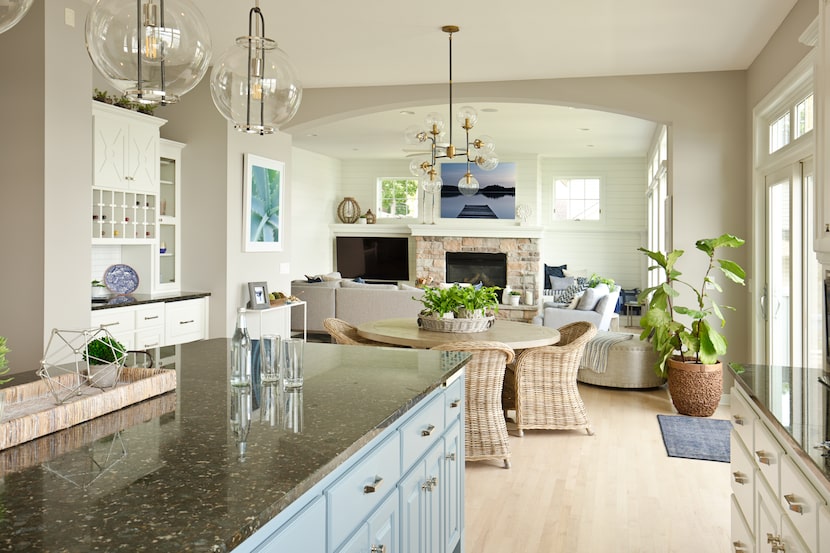
Open-concept floor plans are not as popular as they were in years past, but an open kitchen-den is still desirable.
YinYang/Getty Images / Getty Images
But the open floor plan isn’t completely gone, especially here in D-FW. Sherrington says buyers still appreciate some degree of connectivity. “Everybody wanted open, open, open floor plans, and then after COVID, we do want a few more walls,” she notes. “Everybody needs privacy. But I would still say, overall, the open kitchen-den is still a big thing.”
More real estate trends in D-FW
There are a few consistent features that buyers really care about, Sherrington and Duvall note. “Kitchens and bathrooms are what always sells a house,” says Sherrington — and indeed, listing mentions of spa-inspired bathrooms are up 22% over the past 20 years, according to Zillow. “Outdoor living has really jumped up there to the top, too,” adds Sherrington, “and I think a lot of that is because of COVID, because people were outside so much.”
If you’re planning to update any space in your home, those are the places where you’ll see the most impact if you go on to sell. And in the luxury market, you may have not one but two kitchens to consider. DuVall says a secondary kitchen (sometimes called a prep kitchen or a scullery) is also increasingly desired.
Love homes, gardens and design? Get more good stuff from Abode by following us on Instagram, Facebook and LinkedIn.
Looking for a building lot? These have forever-home vibesEmbracing nature daily: Homes near parks, trails