
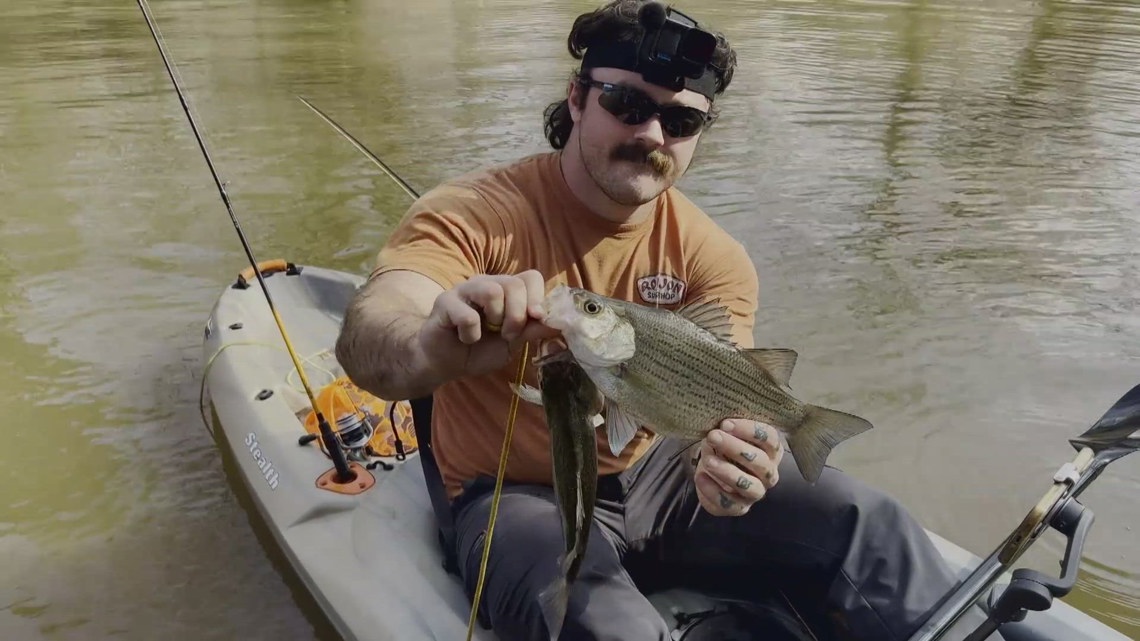
Biologists predict tributaries to Lake Palestine — including the Neches River and Kickapoo Creek — will be prime spots for the annual run.
TYLER, Texas — The white bass run in Texas happens every year as the popular game fish move into creeks and streams to spawn. But this week’s Hooked on East Texas is about the one thing that could make or break the 2026 run.
If you’ve seen the 1991 movie City Slickers, you know Curly challenges Mitch to find that one thing in life that matters most. It may not be the meaning of life, but the one thing that could make or break the white bass run in East Texas this spring is rain.
Tyler District lead biologist Jake Norman says timely rainfall could make all the difference.
“With white bass, length of day matters too, water temps,” Norman said. “But flow can make the run happen a lot more concise. So you see, all of a sudden, the creeks are just full of white bass.”
After Valentine’s Day, anglers got a small preview of how rain impacts the run. Brett King, who runs the YouTube fishing channel Kings Wild Outdoor Adventures, found white and yellow bass already spawning and biting.
“I really love the fight on these guys — the muscle, the strength these guys have even though they’re so small,” King said while fishing the Neches River near Chandler. “They fight so good, and they will hit and strike hard.”
Biologists predict tributaries to Lake Palestine — including the Neches River and Kickapoo Creek — will be prime spots for the annual run. There’s plenty of water flowing now, but that could change.
“If we don’t have a lot of rain this year that makes all those rivers and tributaries flow, you’re going to see the spawn do this with the white bass this year,” Norman said. “It’s going to be small pulses and spread out over a longer time frame.”
Chandler River Park is a popular access point for anglers on the Neches. On the Sabine River, the Grand Bluff Boat Ramp in Panola County offers free access to the Black Shoals fishing hole about three miles upstream through the River Access and Conservation program.
“For all the population — I’m talking about Palestine specifically — I think it’s one of our well‑known white bass runs,” Norman said. “The population on Palestine over the last couple of years has looked really, really strong.”
The white bass run can last well into April. For anglers like King, the action lasts even longer as he chases fish returning to Lake Palestine after spawning.
“They actually get into these huge schools,” King said. “If you can get out on the main lake early in the morning, they’ll just be blowing up all over the water, popping up everywhere. You’re casting — every cast you’re catching a fish.”