
The Athletic has live coverage of the 2026 NHL Trade Deadline.
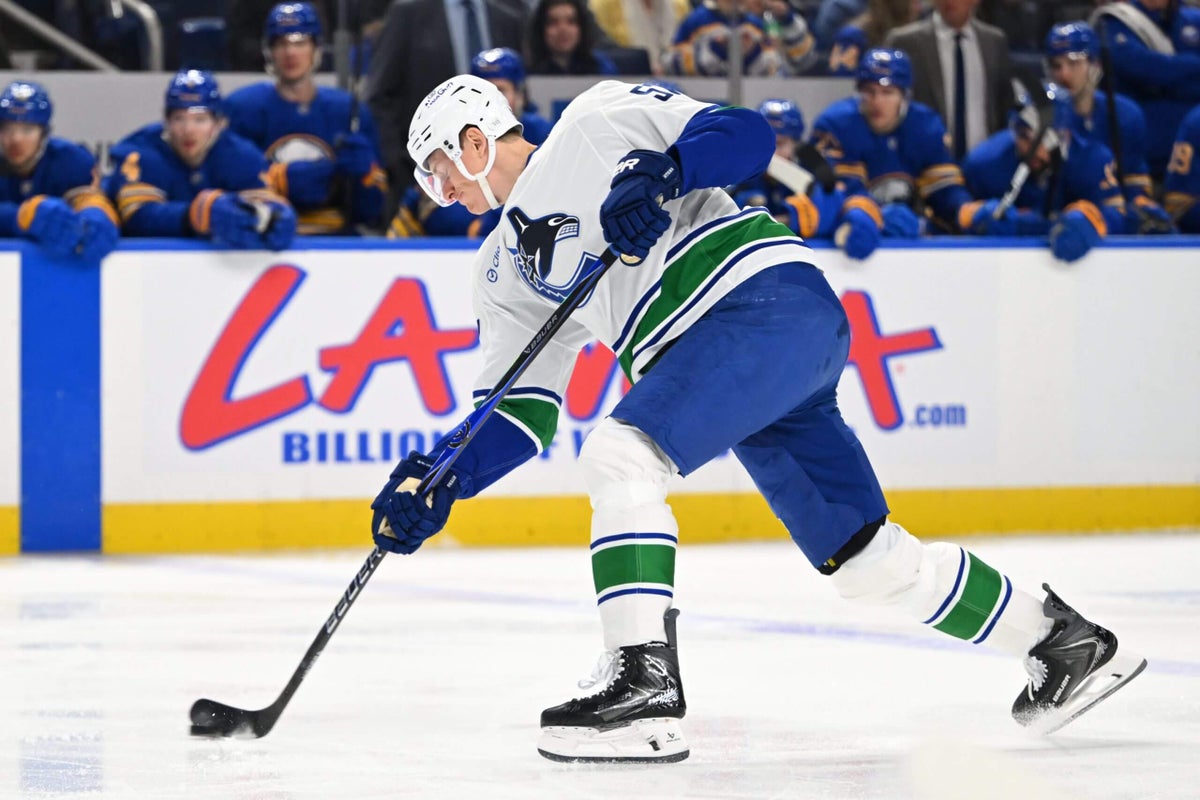
Stars get: D Tyler Myers
Canucks get: Second-round draft pick in 2027, fourth-round pick in 2029 (also retain 50 percent of Myers’ remaining contract)
Harman Dayal: This is a solid win-win trade for both sides.
After adding Chris Tanev in 2024 and Cody Ceci last year, the Stars desperately needed to add a right-handed defenseman again. Nils Lundkvist has performed better lately on the second pair with Thomas Harley and seems to be slowly gaining the trust of the new coaching staff, but it’s hard to know if that will last in the playoffs. Lundkvist has always had a short leash in the postseason. With his undersized frame and up-and-down defensive play, there’s always a risk he ends up back in the doghouse. Beyond Lundkvist, Dallas’ right-side options were grim — Ilya Lyubushkin and Alex Petrovic are marginal depth players that can’t be expected to play top-four minutes.
The Stars needed to upgrade their right-side defense at an affordable acquisition cost because they burned through a lot of their premium trade chips with last year’s Mikko Rantanen trade (they have no 2026 or 2028 first-round pick), and because they still need to leave enough to add one or two top-nine forwards ahead of the deadline due to Tyler Seguin’s injury and some of their offseason departures, including Mikael Granlund, Mason Marchment and Evgenii Dadonov. Dallas simply couldn’t afford to blow all its assets on a big-name top-four defenseman.
Myers is far from a perfect player, but he represents a significant upgrade over what the Stars were icing on the right side. Most importantly, he’s economical in terms of cap hit and acquisition cost. Myers had a difficult year in Vancouver, and his underlying numbers are rough, but I fully expect him to bounce back in Dallas. The Canucks are an absolute tire fire, with zero semblance of structure or stability under Adam Foote; even Quinn Hughes’ defensive numbers were underwhelming during the first quarter of the season. Myers’ struggles are likely environmental, as he was a serviceable second-pair contributor over the last two years, even though he’s closer to being a No. 4 or No. 5 on a good team. In other words, don’t think he’s washed up just because his analytics look rough this season.
Myers is a physical specimen, boasting a giant 6-foot-8 frame and above-average skating speed. His enormous wingspan and mobility make him a rangy defender. He’s a sturdy in-zone defender who brings a physical edge, wins battles, stops cycles down low, blocks shots and effectively boxes players out in front of the net. He is prone to being overaggressive and taking penalties at times, but if the whistles get put away in the playoffs, he will get away with clutching and grabbing more than in the regular season, which helps him. Myers’ biggest limitation is his decision-making with the puck on zone exits. He doesn’t always navigate heavy forecheck pressure well, and can turn the puck over if he’s forced to make a high volume of breakouts.
There are a few different ways the Stars could use Myers. If Lundkvist falters, Myers should be a competent second-pair fit next to Harley. He’d be a far better option than Lyubushkin or Petrovic in that spot. If Lundkvist stays with Harley, Myers will be a luxury on the third pair; his matchups and minutes would be far easier than the heavy top-four usage he’s had in Vancouver, which would help his game.
It’s also possible the Stars will pair Myers with Esa Lindell, similar to what they did with Ceci, and hand them a heavy dose of defensive-zone starts, which would allow Dallas to stack Miro Heiskanen and Harley together. In the 2024 playoffs, the Canucks had a similar look with a Myers/Carson Soucy shutdown pair that defended against top lines to reasonable success.
In any case, Myers will be a useful piece to shuffle around. The 50 percent retention to bring Myers’ AAV down to $1.5 million through next season is also massive, with Jason Robertson due for a monster raise this summer and with Dallas’ projected cap difficulties for 2026-27.
For the Canucks, this is a solid return right in line with the market value for a player of Myers’ profile. It’s the exact same price the Winnipeg Jets paid for Luke Schenn last year, and it’s slightly more than what the Chicago Blackhawks received for Connor Murphy (though Myers comes with an extra year of term). However, the Canucks deserve extra credit for problem-solving around Myers’ full no-movement clause. Vancouver is now armed with seven cumulative picks in the first two rounds of the 2026 and 2027 drafts. This is exactly the kind of future-focused move that the fan base desperately needed and wants to see more of during this new rebuilding phase.
Stars grade: B+
Canucks grade: B+
Mark Lazerus: For a team riding a 10-game win streak and boasting the second-best record in the league, the Stars still entered deadline season with two obvious needs: a top-six winger to replace the injured Seguin, and a right-shot defenseman to play alongside Harley on the second pair. GM Jim Nill wisely addressed the more glaring of the two holes, filling it with one of the largest humans in the NHL in Myers.
Myers literally and figuratively lengthens the Stars’ back end, giving them a shutdown defender on each of the top two pairings, with all-everything standout Heiskanen on the top with Esa Lindell. On a very bad team while facing very difficult usage, Myers was crushed in terms of five-on-five goal differential this season, as the Canucks were outscored 53-25 with him on the ice. But his underlying numbers are much better than that, as his almost comically low 949 PDO will attest. Myers brings physicality and reliability (well, most of the time) to the Stars’ blue line, a guy capable of playing 20-plus minutes a night with a heavy dose of defensive-zone starts. If Dallas is to make a fourth straight run at the Western Conference final, Myers likely will be asked to neutralize the likes of Kirill Kaprizov and Nathan MacKinnon along the way, with Connor McDavid and Leon Draisaitl potentially waiting (again) in the third round.
Nill was able to get a legitimate top-four defenseman for an absolute song — a second-round pick in 2027 and a fourth-round pick in 2029 (which might as well be 2099 for the win-now-at-all-costs Stars) — while also getting the Canucks to eat half of Myers’ $3 million salary for this year and next. Myers might not be as steady a defender as Murphy (who went to Edmonton for a second-rounder) or as enticing as Rasmus Ristolainen (who likely will cost more), but he’s not some replacement-level player, either. Dallas got better here and gave up hardly anything to do so.
The salary retention in this deal means the Stars might not be done reallocating Seguin’s LTIR money and can still be on the lookout for a winger to complement Robertson, Rantanen, Wyatt Johnston, Matt Duchene and Roope Hintz in the playoffs. Think of it this way: Dallas got a top-four, 20-minute-a-night guy for basically the same price Minnesota paid for fourth-line center Michael McCarron, the distant fourth-rounder being the only difference. Another fine piece of work by Nill, the perennial GM of the year.
As for Vancouver, what’s sure to be a late second-rounder in 2027 for one of its more attractive trade chips, especially one that now eats up one of its retention slots for this year and next, is underwhelming. But it’s something. Vancouver now has seven picks in the first two rounds of the next two drafts. You have to start somewhere.
Stars grade: A-
Canucks grade: C+