
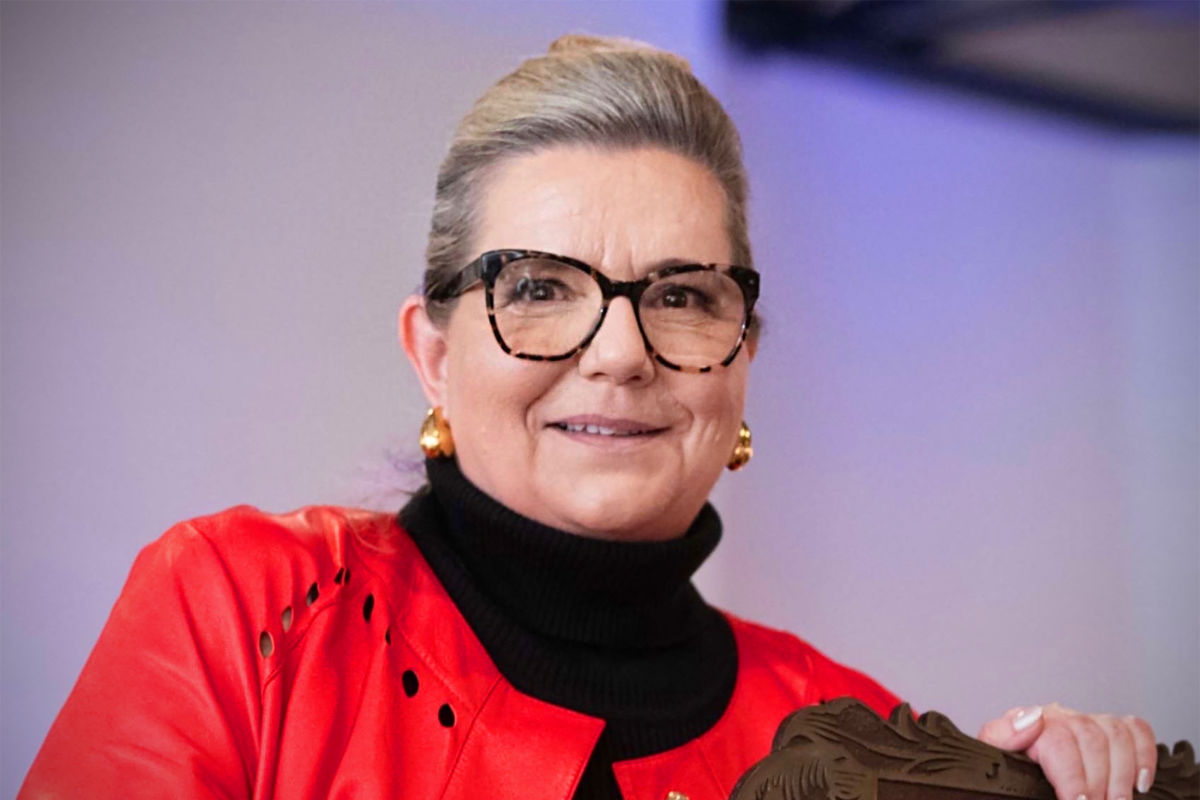
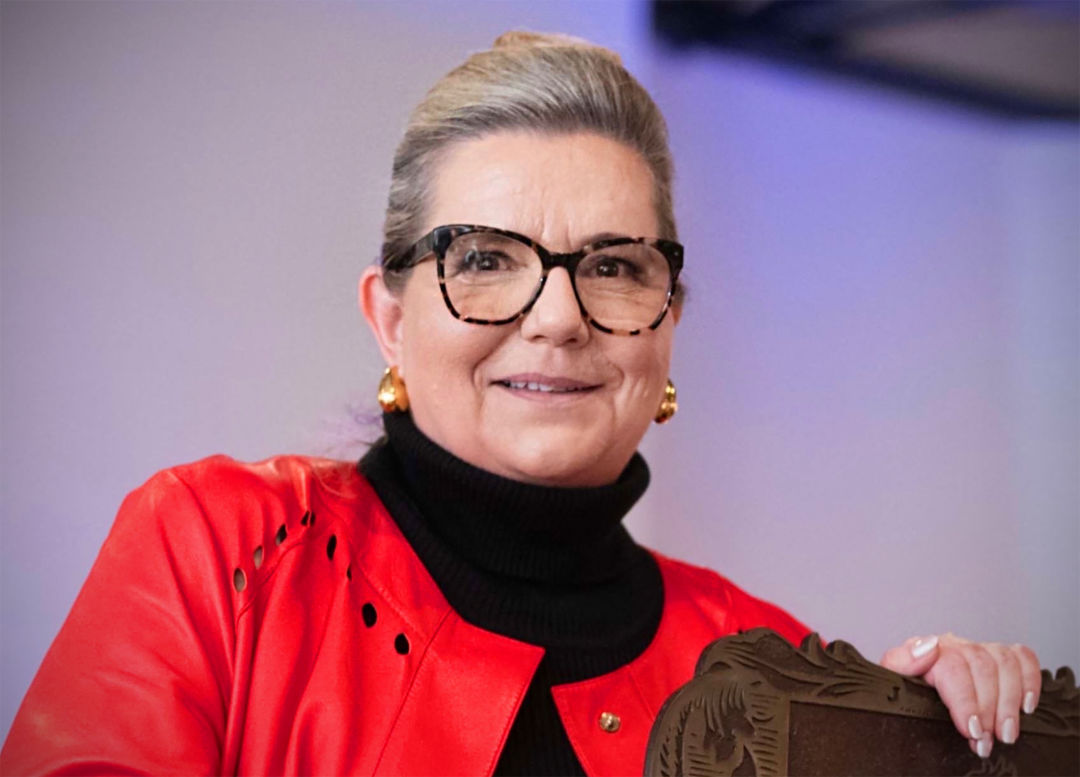
Diane Roederer is Houston’s Truffle Lady.
Growing up in France, Diane Roederer didn’t exactly envision a future in our Lone Star State, not until she fell in love with a man who owned a ranch in Del Rio in the ’90s. “I’ve been living in Texas longer than I lived in France now, which is always strange, you know?” she says.
In 2012, Roederer decided she was ready to move to a city, and she felt especially enamored by Houston’s diversity and international appeal. But it took two more years and a chance opportunity before becoming a well-known figure in the hospitality world.
While on a 2014 hunting trip in Spain, Roederer was approached by the owner of the ranch where she was staying; he offered her the opportunity to import truffles. In December of that same year, she launched her truffle-import business, DR Delicacy, out of her garage. A year later, Roederer held the inaugural Truffle Masters competition, where each year since, she’s invited a select number of chefs to craft dishes, with one requirement: They must use black truffles.
The popularity of the event and her work in the Houston restaurant industry, including partnerships with Central Market and H-E-B, have earned her the nickname “Truffle Lady.”
Now in its 11th year, the Truffle Masters is set to return on Monday, March 9, at the Astorian. Houstonia caught up with Roederer ahead of the event to learn what she’s been up to, her favorite ways to use truffles, and where she thinks the industry is headed.
This interview has been edited and condensed for clarity.
What was the truffle industry like at first?
There were not many people selling truffles, and no one had a stock of truffles in the fridge in Houston. Everyone was either importing or buying from importers, so that was what made the difference. Anyone would call me and say, “I need a pound of truffle.” [I’d say] “Yeah, okay, I’ll be there in an hour.” Before, it was impossible. I would go with my truffles, my scale, my little handwritten notes, and they could pick their truffles. They loved that.
How would you go about educating chefs on truffles at the time?
A lot of them didn’t want to admit they had never worked with truffles, so I would just show them. You wrap it in a paper towel, put it in a Styrofoam box in the cooler, and then change the paper daily, because it’s the moisture that ruins the truffle. And don’t go cook with it, it’s like a finishing salt. You shave it at the end. The heat of the food is gonna warm it up, and then you have all the smells.
How has the truffle industry grown since you first started?
I was selling maybe a kilo to two kilos a week. Now, some weeks, like Valentine’s [Day], we probably [sell] close to 15 kilograms. At the beginning, it was only restaurants. I didn’t have a store. I had a fridge in my garage, and I would just go from kitchen to kitchen to sell my product.
Now, we have a salesperson who just started in Dallas. We have two warehouses. We sell not only to restaurants, but also to grocery stores. H-E-B and Central Market have our truffles. Since the pandemic, we opened the store to the public, and we do all those events—Truffle Masters, truffle dinners, and Truffle Week—at Central Market. I think people really associate our name with truffles. That’s why they call me the Truffle Lady.
What will the Truffle Masters be like this year?
So, this year, I reduced it a little bit and made it into a VIP-only event. We have [fewer] chefs and guests, but I think we just [want to] keep it a little more elevated and special.
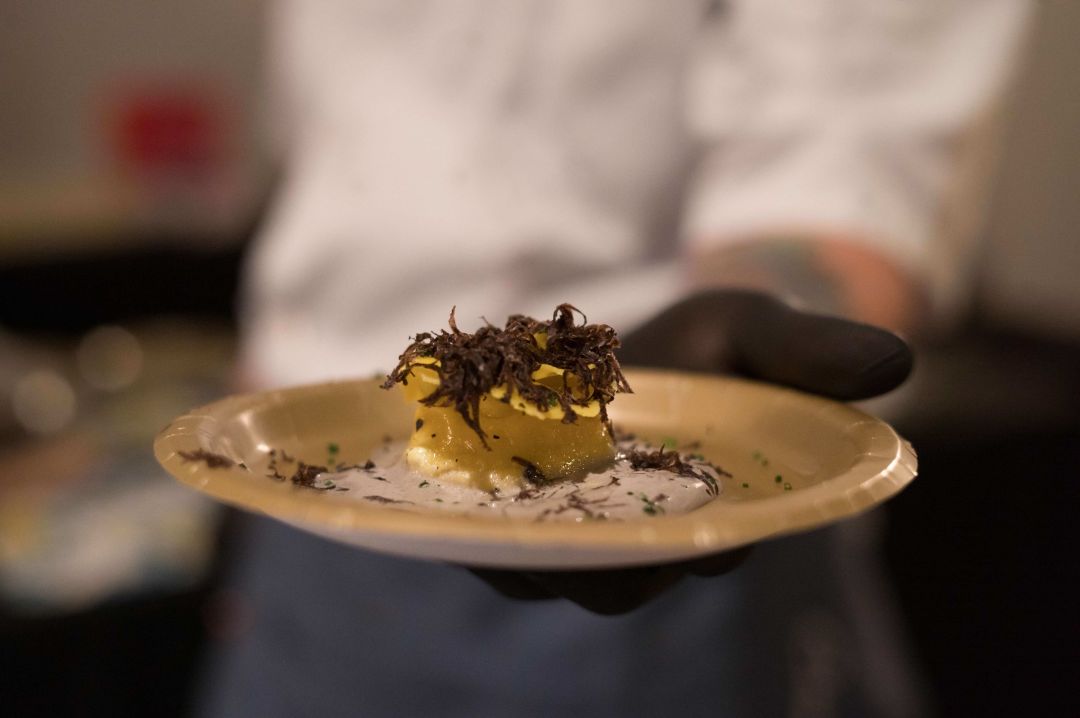
Chefs get creative each year at the Truffle Masters.
What fueled that decision to reduce it?
It’s really because it takes a lot of time for me to organize it. With 350 people instead of 550 and just VIP, we don’t have all the tables and tiers, which makes it a little easier to handle. Last year, we started a cocktail competition because after a certain amount of years, some of those chefs, they’ve won Truffle Master, but they don’t want to come back and compete again. So, we go, “OK, we still want to have them in the competition,” so we started the cocktail competition, and they’re actually having a lot of fun. They don’t have to use truffles.
What is a favorite dish from a chef that you remember from previous Truffle Masters?
Last year, Bari Ristorante made a truffle ice cream in a little cone. I thought it was so good. We just had it. We asked [chef Renato De Pirro] to make some for us a month ago, so he very nicely did. You would not think about truffles in an ice cream, yeah? But it did work.
One of the best, too, was a grilled cheese sandwich from chef Austin Simmons, [formerly of Tris]. I think he’s [still] making so many of them. It’s absolutely ridiculous. Every time he goes to a catering job or a home event, everyone asks him for the grilled cheese. It’s a sandwich he discovered while he was traveling in Switzerland. One of the chefs he was visiting showed him how to do his grilled cheese sandwich, so when he came back, he said, “Diane, I have my Truffle Masters recipe.” I think that was a success story of a recipe tasted in Europe. He came here, he changed it because we didn’t have all the same cheeses and stuff, and he won. Now, he’s famous all across Texas for his truffle grilled cheese sandwich.
Houstonia previously reported on Simmons’s sandwich after his win in 2018. The sandwich featured shaved fresh truffles over a three-cheese blend of cultured cream, aged Comte, and Gruyère, served on a butter-toasted brioche.
Beyond the Truffle Masters and your partnerships with H-E-B and Central Market, what are some fun things you’ve gotten to do as Truffle Lady?
For me, what’s fun is creating. At one of the first Truffle Masters, with Robert Del Grande, we worked on a truffle cocktail. I thought it was super cool because he had a brand of gin, Roxor, that he actually put together. So, he invited me to Café Annie. He had a full table of spirits and things, and we made a cocktail together.
Then, creating a recipe: Porta’Vino, for instance, has a very famous truffle pasta dish. We created it together. It’s a little bit like the Potente’s truffle pasta. We wanted to recreate that recipe, but Potente is high-end, and Porta’Vino, all the dishes are under $30. So, we worked on it quite a bit, and it’s the number one dish on the menu.
What other ways have you seen chefs use truffles in the Houston area at their own restaurants that you really like?
Sushi places, they do a really good job. It goes super well with all their sushi, sashimi, [and] carpaccios. That would probably be one of my favorites.
When it comes to cooking at home, what are some easy dishes that pair well with truffles?
I would just do a simple pasta dish or risotto. Don’t complicate it. At the very end, when you’re done, then you start shaving your truffles. That’s all. You don’t have to do anything else because the truffle has everything. [It] has all the flavor.
Looking ahead, where do you see the truffle industry in the next 10 or so years?
I think there are going to be some changes because people sometimes overdo it. Instead of using the fresh product, they’re using something artificial. Sometimes, some of those products are not even natural aromas, and you can smell them in some restaurants. When you have that smell of truffle fries, for instance, that’s something I can’t eat because a lot of times it’s just chemicals. So, I think this is going to evolve because people are starting to learn what the smell of a truffle is. It’s very delicate. It’s nothing pungent at all. So, I think people are kind of switching a little bit to something that’s at least natural aromas and not that powerful. I think people are coming back down to where it should be.