
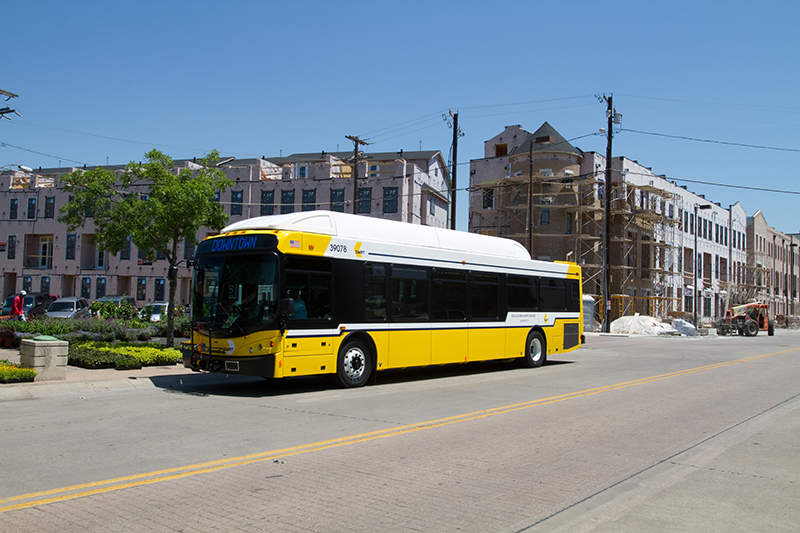
Ahead of votes in both Highland Park and University Park regarding continued membership in Dallas Area Rapid Transit (DART), a group of Park Cities interfaith clergy are calling on residents to support the transit agency.
In a joint statement, the group, which includes representatives of First Unitarian Church of Dallas, University Park United Methodist Church, St. Christopher’s Episcopal Church, and Christ Lutheran Church, argued that DART service cuts would imperil access to transportation for workers commuting to the Park Cities, people with disabilities, and others.
“Every weekend, we delight in seeing our members who arrive in their wheelchairs with the help of the on-demand service of DART. Others arrive by bus for worship because they don’t have cars or any other means of arriving. Throughout our days we see employees at stores, country clubs, health facilities, and more, arriving at stops by their places of employment near our congregations to help sustain this community in countless ways,” the statement read. “We stand in utter disbelief at the prospect that the very foundation of one of the most important human rights movements in the last century — bus service — will not simply need to be fixed or made more fair. It could vanish. The great teachers of all faiths urge us to look to the vulnerable among communities and how they are treated to determine the measure of that community’s blessedness and love. We pray, as always, that these great virtues will prevail as they do so often.”
Rev. T. J. Fitzgerald, minister of community care and engagement at First Unitarian Church of Dallas, said he became inspired to write the statement after the Town of Highland Park and the City of University Park opted to continue with plans to hold elections on DART membership in May.
“When I was watching many cities call off their elections, and I saw the news very quickly that the Park Cities and Addison did not call off their elections … I had hope that there wouldn’t be any need to worry about this, that the elections would be called off … When I saw they (weren’t), I reached out to folks who I know would also be impacted,” Fitzgerald said. “Other colleagues around here, other clergy, have folks that use DART, and I just asked the group if anyone would like to join in a statement.”
The DART board in February approved a plan that could return some sales tax dollars to the 13 member cities in an effort to persuade cities that had called withdrawal elections to cancel the elections. Some of the cities that have called special elections on DART membership, including Plano, Farmers Branch, and Irving, have since voted to call their withdrawal elections off, but Addison, Highland Park, and University Park are moving forward with theirs.
“Through its review, the Town Council evaluated DART membership, including the financial commitment required of Highland Park and the level of service provided in return. DART’s annual budget is approximately $1.7 billion. As a member, the Town is required to allocate one percent of its local sales tax to DART. That amount represents approximately half of the local sales tax revenue Highland Park is authorized to collect and exceeds $8 million annually. The Town’s contribution accounts for less than one half of one percent of DART’s total annual budget. Total contributions from Highland Park to DART since joining the system exceed $114 million,” a statement from the town read.
“The City of University Park continues to engage in ongoing discussions with DART regarding the value of transit services within the community and the City’s overall sales tax contribution. At this time, the City plans to move forward with a May election, allowing voters to determine the best path forward for our community,” a statement from a University Park spokesperson read.
Rev. Dr. Daniel Kanter, senior minister and CEO of First Unitarian Church of Dallas, said the means of contact and collaboration on the DART issue stemmed from University Park Mayor Tommy Stewart convening faith leaders to support youth struggling with mental health issues in 2023.
“One of the things I love about the Park Cities is how the clergy can come together when it’s around things that are important,” Fitzgerald said.
“I just want to remind people that even if they don’t use (DART), there’s good reason to have public resources for people who can’t … travel in their own cars or have disabilities and … need to be assisted, Kanter added.