
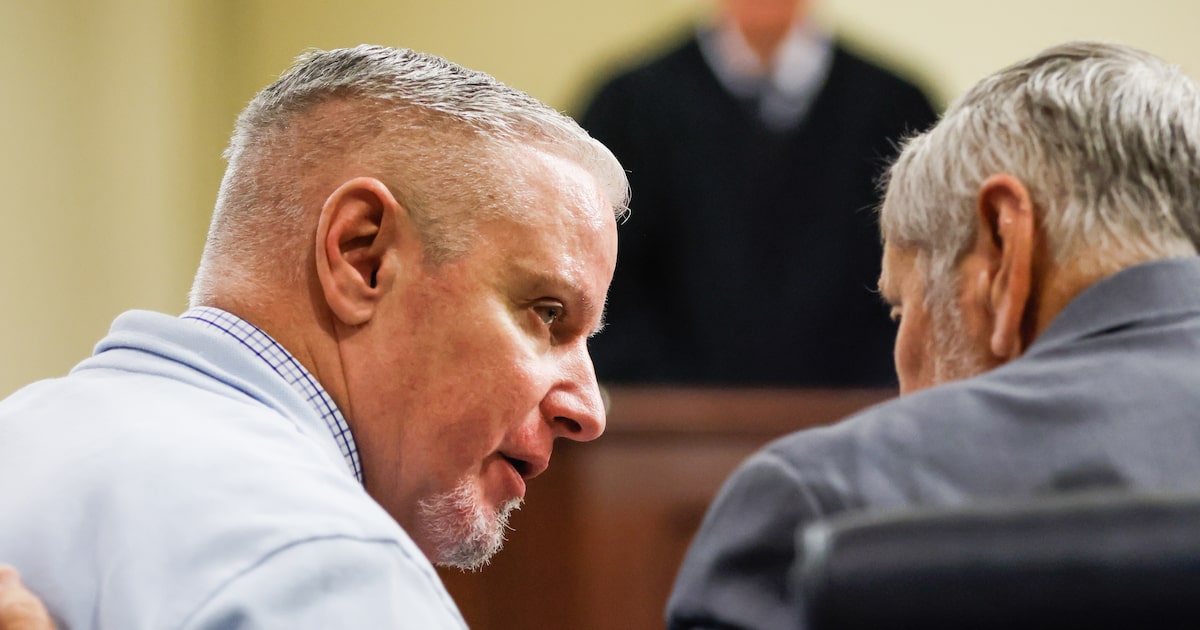

Tuesday, a Georgia jury reinforced a growing legal reality: Accountability in school shootings may not end with the shooter. Texans should take note.
Colin Gray, 55, faces up to 180 years in prison after a Barrow County jury found him guilty on more than two dozen counts, including second-degree murder. Prosecutors said he gave his son, Colt Gray, access to a semi-automatic rifle despite documented warning signs, including a prior law enforcement investigation into online threats attributed to the teen. Colt Gray is alleged to have killed two classmates and two teachers and wounded nine others at Georgia’s Apalachee High School in September 2024.
This is not the first time a jury has drawn that conclusion. In 2024, James and Jennifer Crumbley became the first parents in the United States convicted of involuntary manslaughter after their son carried out the Oxford High School shooting in Michigan. The Georgia verdict suggests the Michigan case was not an anomaly.
For decades, the national debate over school shootings has focused almost exclusively on the person who pulled the trigger, the weapon used or institutional failures. These verdicts shift attention upstream.
The pattern is consistent: leakage of threats, fixation on prior attackers, escalating instability — and access to firearms. According to the U.S. Secret Service’s National Threat Assessment Center, 76% of school attackers obtained their firearms from their home or from a relative’s home. Most often the weapons were legally owned. But when specific threats emerge and parents are formally notified of serious concerns, access can determine whether a crisis is contained or catastrophic.
Opinion
In both the Crumbley and Gray cases, authorities had documented troubling behavior. Parents were notified of credible warning signs.
I have studied this issue closely for nearly a decade — not as an abstraction, but as a father with two daughters in school at the time of the Parkland High School shooting in Florida in February 2018. That proximity drove me to speak with law enforcement, review research on targeted school violence and reach out to experts online.
I write this as a dyed-in-the-wool supporter of the Second Amendment. To be clear, responsible citizens have the right to defend themselves and their families. But rights do not erase responsibility.
Two verdicts in two states do not create a nationwide consensus. But they suggest that when documented warnings and weapon access intersect, juries may treat the resulting harm as foreseeable.
This is not a call for new laws, nor does it mean every parent of a struggling teenager faces criminal exposure. The line appears narrower: credible threats, formal warnings, unchanged access.
For Texans, where gun ownership rates are among the highest in the nation, that should matter.
After Uvalde, Texas focused on campus security. House Bill 3, passed in 2023, requires an armed security officer on every public school campus and increased funding for school safety. Many North Texas districts strengthened School Resource Officer programs and tightened controlled-entry protocols, adding layers between the parking lot and the classroom.
Those measures harden schools. These verdicts clarify responsibility inside the home.
The Second Amendment grants rights. It does not insulate negligence.
We welcome your thoughts in a letter to the editor. See the guidelines and submit your letter here.
If you have problems with the form, you can submit via email at letters@dallasnews.com