

U.S. Department of Energy approves expanded LNG export capacity at Cheniere Energy’s Corpus Christi terminal. Authorization covers additional exports supported by new liquefaction trains at the Gulf Coast facility. Decision comes as global LNG markets face supply disruptions from Qatar and heightened demand volatility.
For investors watching Cheniere Energy (NYSE:LNG), this approval directly relates to the company’s core business of exporting liquefied natural gas from the U.S. Gulf Coast. The Corpus Christi expansion, through additional trains, increases the amount of LNG that can be shipped under U.S. export rules at a time when buyers are looking for alternatives in response to supply disruptions from Qatar.
The decision also reinforces the role of U.S. LNG in global energy trade, with Cheniere positioned as a key exporter within that flow. As you consider the implications, potential areas of focus include contract structures, customer mix, and how added volumes fit into global demand patterns and ongoing supply uncertainty.
Stay updated on the most important news stories for Cheniere Energy by adding it to your watchlist or portfolio. Alternatively, explore our Community to discover new perspectives on Cheniere Energy.
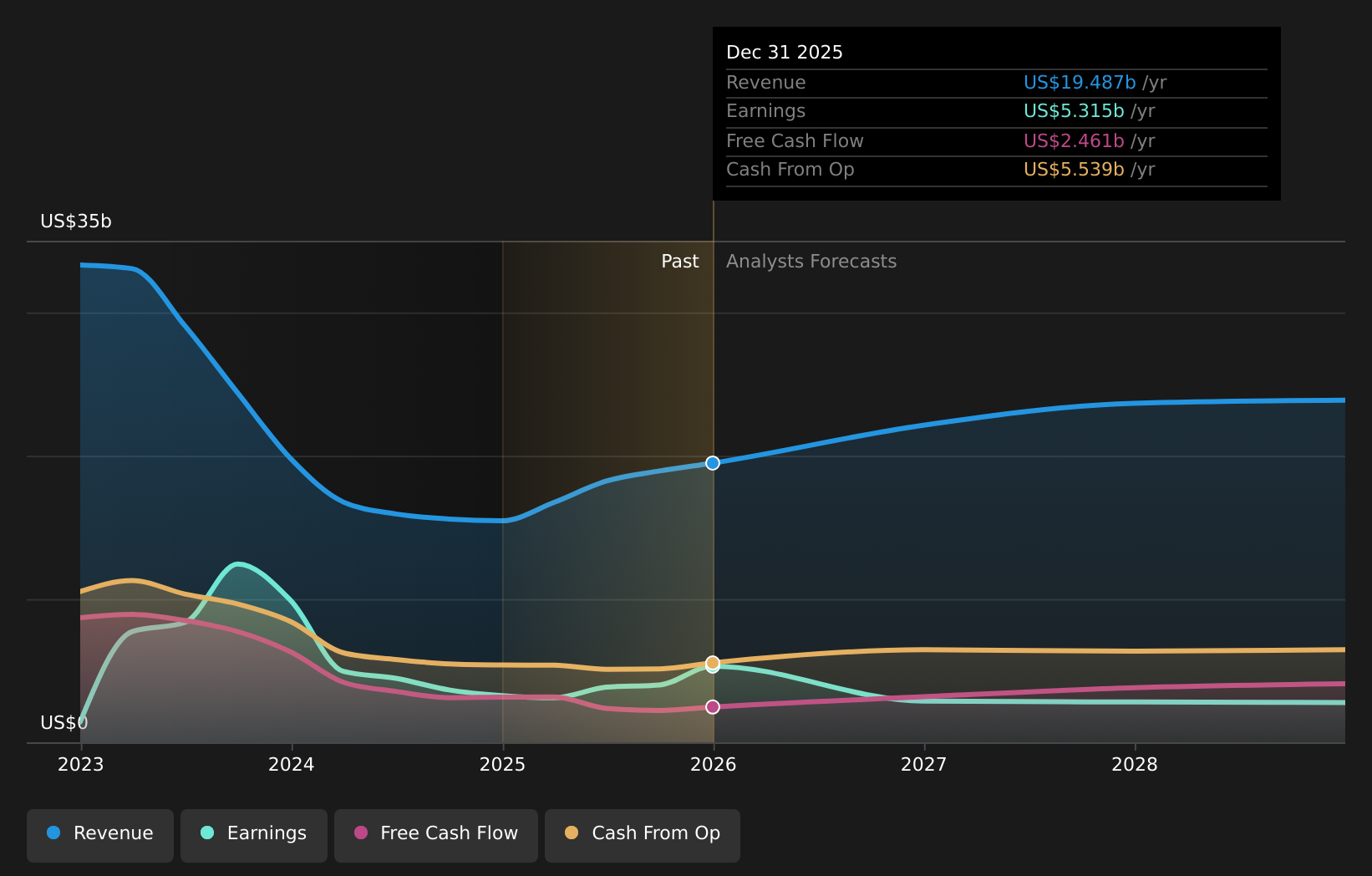 NYSE:LNG Earnings & Revenue Growth as at Mar 2026
The DOE approval effectively links Cheniere’s Corpus Christi expansion to a larger financing and growth plan. On one side, the non‑FTA export authorization for Trains 8 and 9 increases the volume Cheniere can sell into a tight global LNG market where buyers are looking for alternatives to Qatar. On the other side, the recently priced US$1.75b senior notes maturing in 2036 and 2056 give the company long dated funding that can support capital expenditure at Corpus Christi and potential refinancing of existing debt. For you as an investor, the key question is how efficiently Cheniere converts that additional export headroom into contracted volumes, especially versus peers like Sempra, Venture Global and ExxonMobil that are also competing for long term LNG supply agreements. The approval also feeds into the broader LNG supply story, where new U.S. capacity may help offset disruptions but could add to future oversupply risk if demand in Europe and Asia softens. That makes contract duration, pricing formulas and counterparties important details to watch alongside headline export capacity.
How This Fits Into The Cheniere Energy Narrative The DOE approval directly ties into the narrative that expanding LNG production capacity and long term export rights can support more stable cash flows when paired with firm supply agreements. The same expansion also touches on a key concern in the narrative, that a global LNG build out from the U.S., Qatar and Africa could eventually create oversupply and pressure contract economics. The authorization for extra Corpus Christi exports adds a regulatory and geopolitical angle that the narrative does not fully capture, particularly the impact of sudden supply interruptions from Qatar on how buyers view U.S. LNG.
Knowing what a company is worth starts with understanding its story.
Check out one of the top narratives in the Simply Wall St Community for Cheniere Energy to help decide what it’s worth to you.
The Risks and Rewards Investors Should Consider ⚠️ Analysts have flagged earnings risk, with forecasts pointing to average declines over the next 3 years even as capacity expands, which could become more pronounced if LNG prices soften or contract terms weaken. ⚠️ Cheniere carries a high level of debt, and issuing US$1.75b of new senior notes adds to fixed interest obligations that could weigh on flexibility if LNG margins compress. 🎁 Earnings grew by 63.4% over the past year and recent results showed higher revenue and net income, which may give the company more room to fund projects like Corpus Christi expansions and service debt. 🎁 The shares are reported to be trading at a discount to one estimate of fair value and at what is described as good value relative to peers and the industry, which some investors may see as compensation for LNG market and leverage risks. What To Watch Going Forward
From here, it is worth tracking how quickly Cheniere signs or extends sales and purchase agreements that utilize the new Corpus Christi export capacity and how those contracts compare to deals signed by competitors like Sempra or Shell. You may also want to follow progress on the pending FERC application to increase authorized production at the site, since that could further change the project’s scale. On the financial side, keep an eye on how the proceeds from the 2036 and 2056 notes are allocated between debt refinancing and new capital spending, as well as any changes in credit metrics or risk assessments. Finally, monitor how long the Qatari supply disruption persists and how European and Asian buyers adjust their procurement strategies, because that will shape the long term demand backdrop for U.S. LNG exports.
To ensure you’re always in the loop on how the latest news impacts the investment narrative for Cheniere Energy, head to the
community page for Cheniere Energy to never miss an update on the top community narratives.
This article by Simply Wall St is general in nature. We provide commentary based on historical data
and analyst forecasts only using an unbiased methodology and our articles are not intended to be financial advice. It does not constitute a recommendation to buy or sell any stock, and does not take account of your objectives, or your
financial situation. We aim to bring you long-term focused analysis driven by fundamental data.
Note that our analysis may not factor in the latest price-sensitive company announcements or qualitative material.
Simply Wall St has no position in any stocks mentioned.
New: AI Stock Screener & Alerts
Our new AI Stock Screener scans the market every day to uncover opportunities.
• Dividend Powerhouses (3%+ Yield)
• Undervalued Small Caps with Insider Buying
• High growth Tech and AI Companies
Or build your own from over 50 metrics.
Have feedback on this article? Concerned about the content? Get in touch with us directly. Alternatively, email editorial-team@simplywallst.com