
The award is a culmination of Yehia Mechref’s work to make Texas Tech nationally recognized
in the field of mass spectrometry.
CREATORS
Years before becoming a Paul W. Horn Distinguished Professor and the Robert A Welch Chair in Chemistry, Yehia Mechref stepped foot on the Texas Tech University campus. It was 2010, and Mechref was hired by President Lawrence Schovanec who was serving as interim dean for the College of Arts & Sciences at the time.
Mechref was brought on as a strategic hire for his work in mass spectrometry, an analytical
technique used to identify and measure the chemical composition of a substance.
“When I first came to Tech, if you mentioned ‘mass spectrometry,’ people would point
to certain places, some in Texas, but never Texas Tech,” Mechref said. “I have been
working toward changing that. That when people think of places for mass spectrometry,
Texas Tech University is among those first mentioned.”
More than 15 years later, the broader mass spectrometry community is taking notice.
In February, Mechref received the Frank H. Field and Joe L. Franklin Award for Outstanding
Achievement in Mass Spectrometry from the Division of Analytical Chemistry within
the American Chemical Society (ACS). The award recognizes exceptional development
or application of mass spectrometry techniques. Established in 1983, the award is
named for two scientists who helped shape the field.
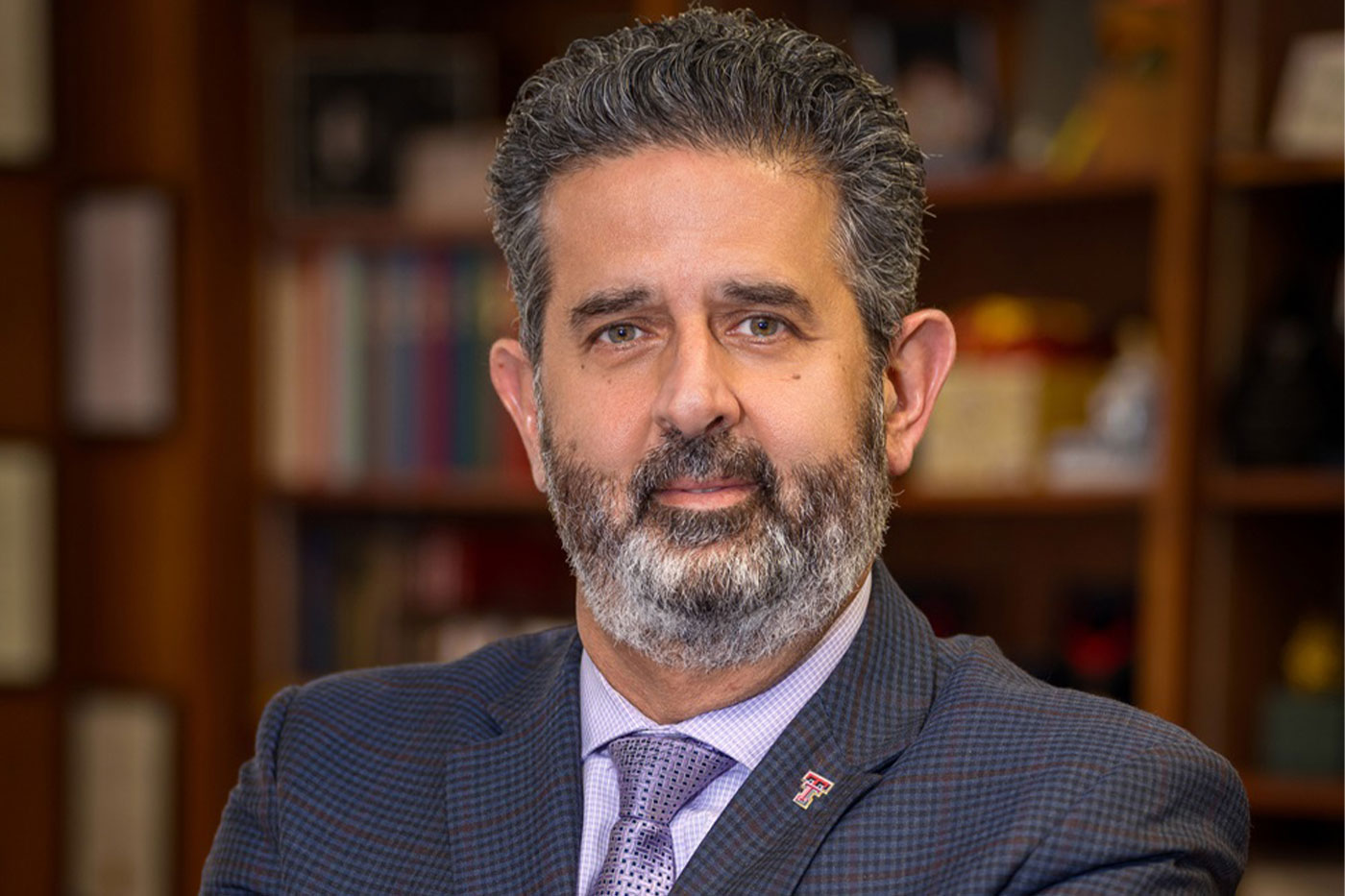 Yehia Mechref
“Dr. Mechref is one of Texas Tech’s top research professors in terms of grants, publications
and international and national recognition,” said Tosha Dupras, dean of the College of Arts & Sciences. “He has made significant contributions to
the study of disease and aging and has had (and will continue to have) great societal
impact in many areas including cancer and Alzheimer’s disease research.”
Mechref is no stranger to being recognized for his work in mass spectrometry. He was
named a Horn Distinguished Professor in 2018 and in 2024 earned the Global Vision Lifetime Achievement Award, given to an exceptional individual at Texas Tech whose long-term dedication to international
scholarship and teaching has significantly advanced the university’s global presence.
This most recent recognition from the ACS, however, hits a little differently for
Mechref.
“When you receive recognition like this, you’re being evaluated and recommended by
your peers,” Mechref said, pausing briefly. “You are standing shoulder-to-shoulder
with the people who have had an impact on the work, and now you feel that you have
had an impact yourself.”
Mechref’s research focuses on understanding how molecules change upon the development
and progression of disease, such as Alzheimer’s and certain types of cancers.
He and the graduate students in his lab group develop tools and methods that allow
researchers to spotlight a specific class of molecules and understand how those molecules
change in the body. Specifically, they look at the sugars that decorate proteins and
lipids that can control cell functionality and impact drug effectiveness.
One way to think of this is to imagine that a cell is a cargo ship. Each cell has
proteins that extend from it, like a gangway or ramp on a ship. The sugar that surrounds
the proteins and cell are the access codes that allow the cell to unload or take on
cargo.
“Professor Mechref’s work is exceptionally important both because of its inherent
quality and because the global impact of his group’s studies points the way for many
investigators to unravel the complex processes that define and regulate human biology,”
said Joseph Heppert, vice president for Research & Innovation at Texas Tech. “This work will help many current and future investigators identify
specific factors that contribute to human disease, as Dr. Mechref’s own work has done
in studies related to cancer and neurological degeneration.”
Mechref is quick to credit his lab group’s graduate students for making this award
a possibility.
There are currently 20 graduate students in the group, all working on multiple projects
at the same time. Each graduate student is responsible for a primary project and assists
the other graduate students with their primary projects.
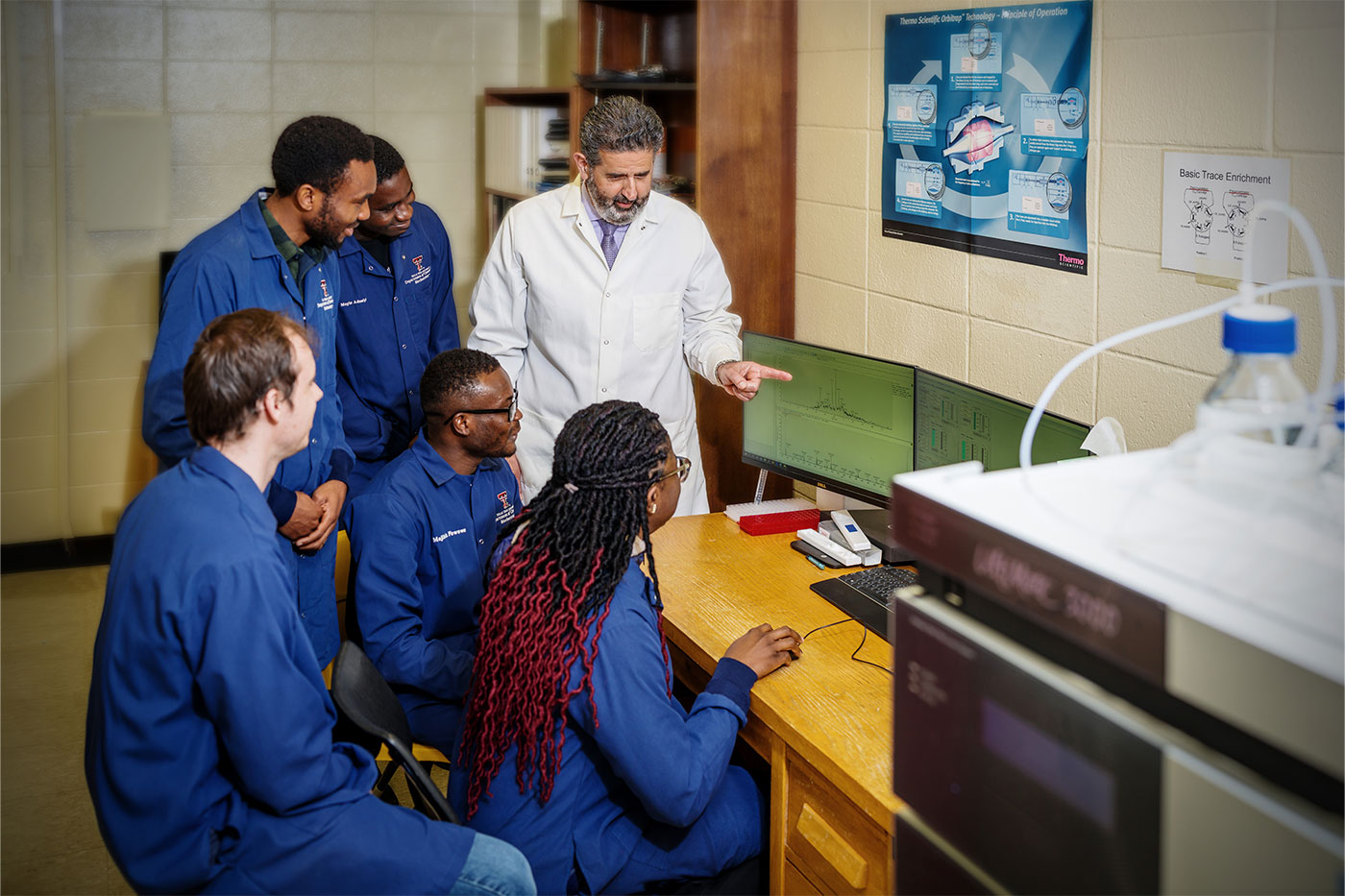
Mechref wants the students in his lab group to effectively multitask across several
important projects, a vital skill recruiters and laboratories look for in researchers.
“It’s a network of activities that actually trains the graduate students to be successful,”
Mechref said. “They have been trained to excel and set a high bar for what’s expected
of them, and this success hinges on the hard work of my graduate students and the
effective work I have with my collaborators.”
Along with his research and administrative responsibilities, Mechref is founding director
of the Human Molecular Aging Center (HMAC) and the director of the Center for Biotechnology & Genomics (CBG) at Texas Tech. HMAC works to advance collaborative research across
multiple fields to better understand the biological processes that drive aging and
age-related diseases while developing new ways to detect and treat those conditions
to help people live longer, healthier lives. Supporting this mission, the CBG provides
cutting-edge technology and resources and connects leading research groups across
the university with national and international partners.
On top of all his responsibilities, Mechref alternates teaching an undergraduate and
graduate course each semester. However, he sees teaching as something more than just
work.
“Teaching is my therapy,” Mechref said.
He enters a classroom and everything outside completely fades away. No emails. No
experiments. No meetings. It is just him, his students and various science concepts
for which he has an unending passion. Together, Mechref and the students work to increase
their knowledge and become better scientists.
Mechref sees this award and his collective work in the lab and classroom as a small
part of Texas Tech’s bigger strategic goal to gain membership into the Association of American Universities (AAU).
“There are so many faculty here at Texas Tech that are already operating at a level
of AAU and higher,” he said. “The recognition that this award brings is that we at
Texas Tech University are excelling and performing at a national level.
“Science advancement is going to put us in a much better position as a society. We
all benefit from it. It’s not one person or an elite group. Society at large will
benefit from advances in science that’s done at places like Texas Tech.”
Learn more about Texas Tech’s Department of Chemistry & Biochemistry.