
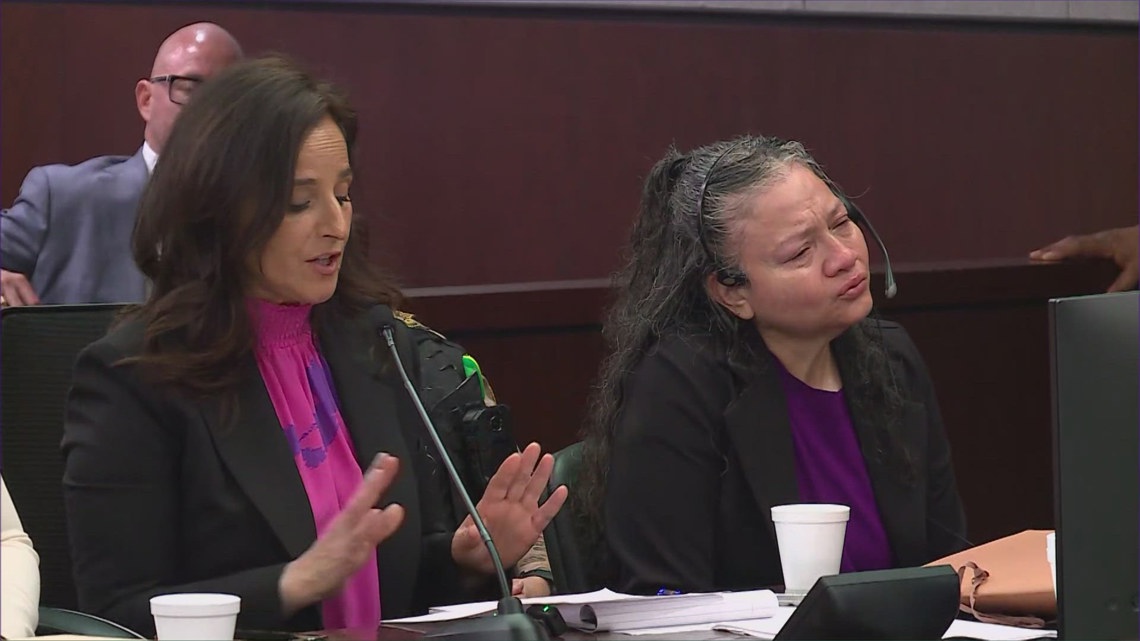
The Austin woman spent more than 20 years behind bars for a crime she did not commit. Now she faces the threat of deportation.
AUSTIN, Texas — A Travis County woman is one step closer to putting a decades-long legal fight behind her.
On Monday, a Travis County judge formally declared Carmen Mejia innocent after she spent more than 20 years in prison for a crime attorneys now say she did not commit.
But while the ruling clears her name, Mejia is not yet free. Her legal team said she remains in the custody of the Travis County Sheriff’s Office because of an immigration detainer.
Her attorneys say Mejia had legal status in the United States when she was originally charged in the case but lost it as a result of the conviction that has now been overturned.
Mejia was convicted of murder in 2005 and sentenced to life in prison. Prosecutors at the time argued she intentionally submerged an infant in her care in scalding bath water.
However, new evidence and testimony surfaced over the past two and a half years that cast doubt on the conviction.
Among the new information was testimony from one of Mejia’s daughters, who said she was the one who turned on the bath water while Mejia was out of the room.
Experts — including the original medical examiner on the case— later concluded the baby’s death was accidental.
In January, a state appeals court exonerated Mejia, paving the way for Monday’s ruling formally declaring her innocent.
During the hearing, Travis County District Judge David Wahlberg acknowledged the years Mejia lost behind bars.
“There’s no amount of money that will ever compensate you for losing the best years of your life,” the judge said. “I wish I had that power. What I can do is say to you that there is every reason to hope and believe that your future will be better every day from now on.”
Mejia’s attorneys and the Travis County District Attorney’s Office say the next fight will focus on ensuring she can remain in the United States.
“It’s been over two decades that she has been wrongfully imprisoned,” said Vanessa Potkin with the Innocence Project. “To now have her just transferred to another form of imprisonment rather than experience freedom would be the ultimate injustice.”
Mejia’s now-adult daughters were in court for the emotional moment. They spoke about their hopes to finally spend time with their mother and begin building memories together after spending most of their lives apart.
The judge also allowed Mejia to hug her daughters in court. They were young children at the time of the case and were later adopted by another family.