
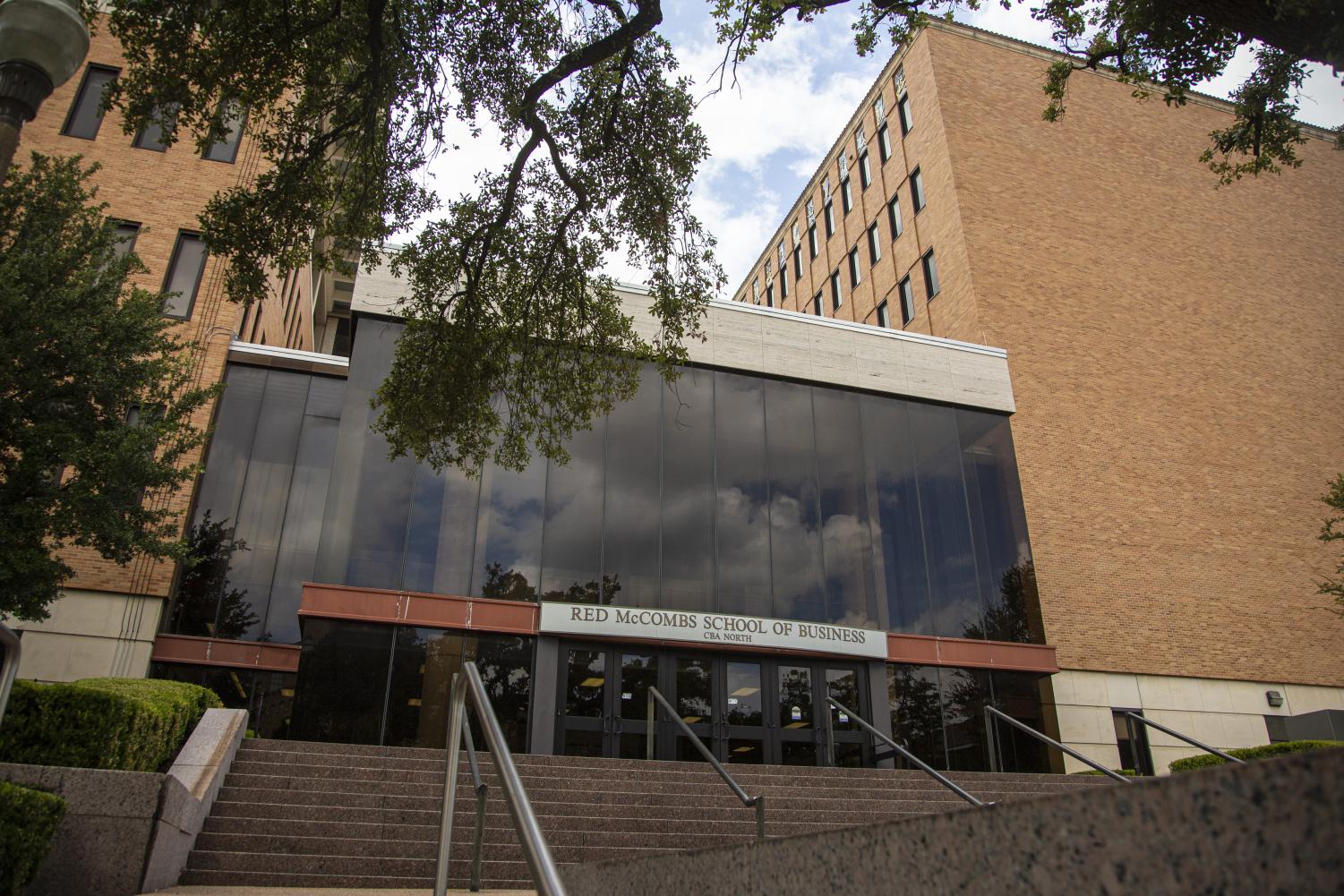
The University chose not to respond to a McCombs professor’s request for the United States Supreme Court to review his free speech case, UT spokesperson Mike Rosen wrote in an email on Monday.
On Feb. 3, finance professor Richard Lowery asked the U.S. Supreme Court to hear his free speech violations case against the University. He claimed that UT officials responded to his public criticism of diversity, equity and inclusion “hiring” and “ideology” in grant funding considerations by “threatening his job, pay” and “academic freedom,” according to documents.
In a meeting with Lowery’s direct supervisor, Carlos Carvalho, and other University officials, the representatives threatened to remove Carvalho from his position if he did not get “Lowery to behave,” according to court documents. Lowery declined to comment.
“People don’t need to agree with him, but part of having the First Amendment is to foster debate,” said Endel Kolde, a lawyer for Lowery. “Probably, a lot of UT students and UT faculty disagree with Richard’s views on DEI … but those students also benefit if they hear different viewpoints.”
The district court decided in October 2024 that although Lowery’s complaint showed “grumblings” from University officials, his viewpoint was not suppressed. Lowery then appealed the decision.
The U.S. Court of Appeals for the Fifth Circuit, which includes Louisiana, Mississippi and Texas, ruled in favor of the University and refused to rehear the case in January of this year.
The Fifth Circuit ruled that because Lowery did not suffer any “adverse action,” his claims failed. In the Fifth Circuit, a university needs to act against an employee rather than only threatening them for it to be considered a free speech violation, according to the decision.
“We are asking the Supreme Court to step in here and create a uniform standard for all circuits so that all public employees and university professors have essentially equivalent protection wherever they are in the United States,” Kolde said.
The University will file a response if one is requested by the court, Rosen wrote.