
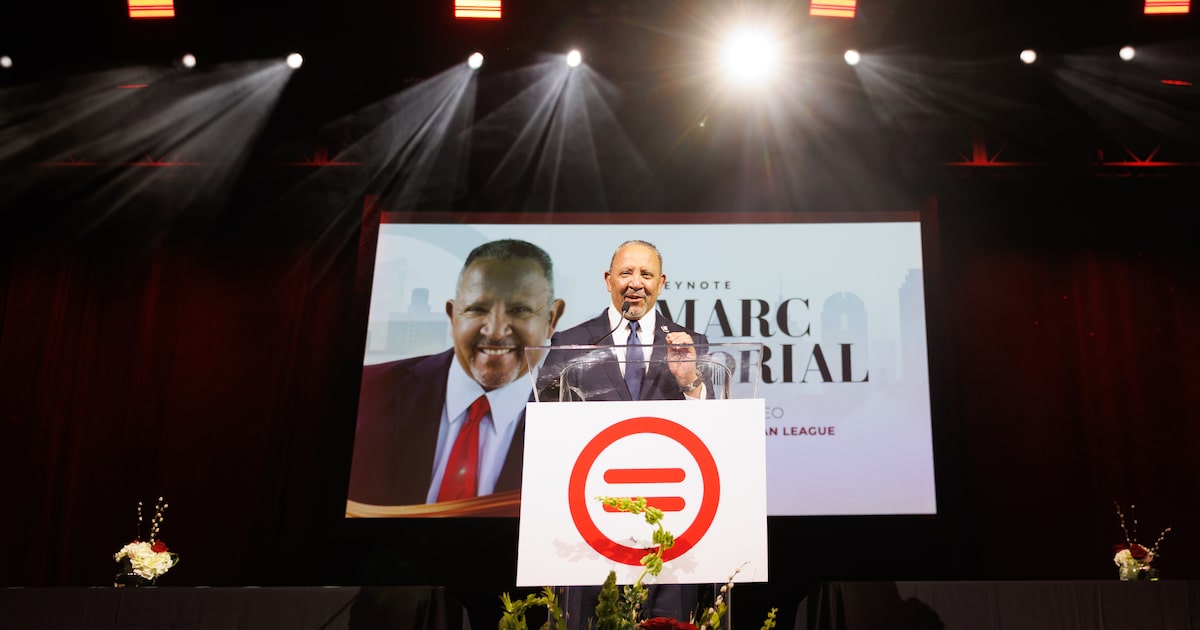
A decade after shutting down, the Urban League is back in the Dallas area with a new name, stronger alliances and renewed fight for economic and social justice.
More than 500 organizers, politicians and business leaders gathered at Gilley’s Dallas to launch the reborn Dallas-Fort Worth Urban League Monday, which will serve 13 North Texas counties.
“Texas is ground zero for the assault of civil rights and economic opportunity,” said National Urban League President Marc Morial, who headlined Monday’s local affiliate launch. “What we are building here is an institution that’s going to be an additive to the fight already underway.”
A core of North Texas young professionals partnered with their older counterparts to revive the venerable civil rights group and restore the services it provides for underserved communities.
Political Points
The Dallas area was the nation’s largest Black population without an Urban League affiliate. Morial said the booming North Texas economy and new frontiers like artificial intelligence made it essential for the Urban League to operate in Dallas.
“What we’re building is an institution that is going to prepare, train and develop the next generation of people who are going to work in this rising economy,” he said. “It would be a tragedy if this economic growth left Black Dallas and Fort Worth behind.”
Former State Rep. Helen Giddings, D-DeSoto, agreed the fast-growing Dallas area needed an Urban League chapter to help underserved communities deal with modern economic and social issues.
“Tonight is more than a launch, it’s a renewal,” she said.
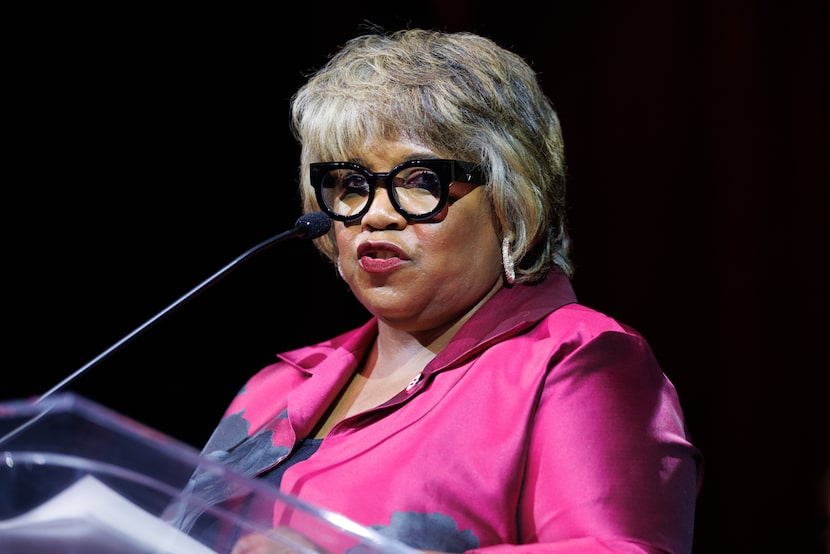
Marnese Barksdale Elder, interim CEO and president of DFW Urban League, makes a speech during a launch of an affiliate chapter of the Urban League at Gilley’s Dallas on March 9, 2026. (Photos by Nathan Hunsinger)
Nathan Hunsinger / Special Contributor
Marnese Barksdale Elder, the interim CEO of the Dallas-Fort Worth Urban League, said the group’s work has begun.
“We’re already deeply involved in building public and private sector relationships,” she said. “We’re developing a pipeline to help people stay employed.”
Fall, rebirth of local chapter
The National Urban League was established in 1910 to help Black residents achieve economic empowerment, civil rights, social justice and access to quality housing, education and health care. The group has 93 affiliates in 37 states.
The Urban League of Greater Dallas was an official chapter until 2015, when after nearly 50 years the national parent group removed its affiliate status, citing fiscal mismanagement, including failure to meet payroll or pay insurance premiums. The group’s problems were exacerbated by a loss of funding, former members have said.
That left only two affiliates in Texas – the Austin Area Urban League and the Houston Area Urban League.
When the Dallas chapter closed, the Young Professionals portion of the group stayed active and was overseen by the Houston chapter.
The Young Professionals never gave up hope of reviving the Dallas area chapter. Two years ago they developed partnerships with donors, activists and older civil rights and business leaders to regain affiliate status.
The National Urban League set stringent requirements for the local group to regain affiliation, including raising at least $1.5 million financial commitments over three years.
The Young Professionals teamed with veteran community and business leaders on the project and developed a tight bond.
Bemnet Meshesha, a vice president for the Girl Scouts of Northeast Texas who serves as chairperson of the Dallas-Fort Worth Urban League board, said the partnerships formed to bring the civil rights group back to North Texas was inspiring.
“We never lost sight that this is an intergenerational journey,” she said.
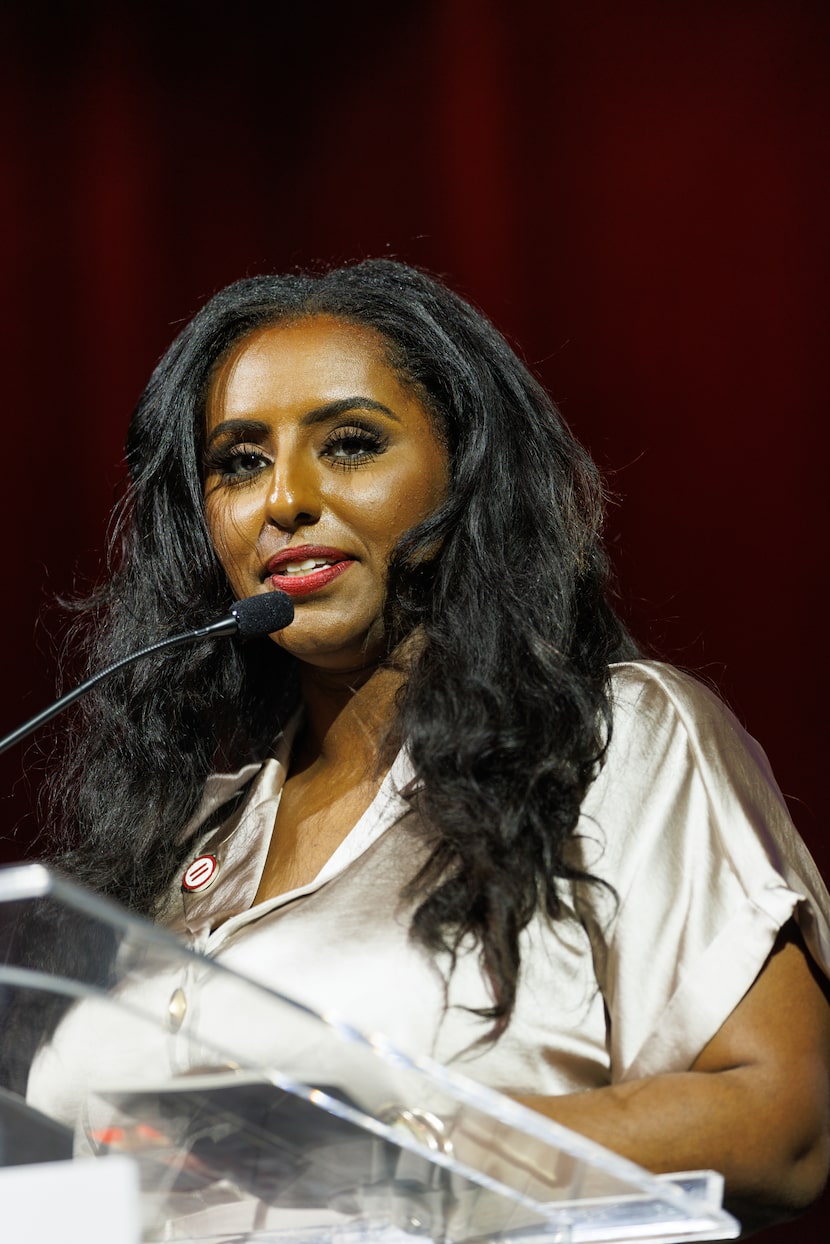
Bemnet Meshesha, board chair of DFW Urban League, makes a speech during a launch of an affiliate chapter of the Urban League at Gilley’s Dallas on March 9, 2026. (Photos by Nathan Hunsinger)
Nathan Hunsinger / Special Contributor
Last July at their annual meeting in Cleveland, National Urban League board members approved creating an affiliate chapter in the Dallas area.
“There were tears and claps,” Meshesha said. “The room was electric.”
Froswa’ Booker-Drew, founder of the Reconciliation and Restoration Foundation, a group that promotes Black nonprofits, was co-chair of the Sponsoring Committee that helped make local affiliation a reality.
“It’s up and running,” Booker-Drew said. “For me the gift is seeing this dream that the Young Professionals had for all these years. We’re now an official affiliate chapter of the Urban League and that feels good.”
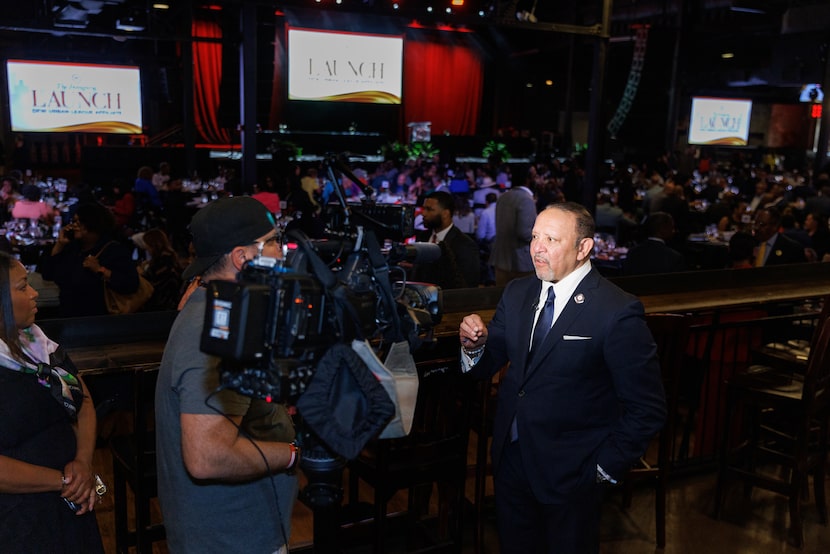
Marc Morial, president and CEO of National Urban League, talks to a reporter during a launch of an affiliate chapter of the Urban League at Gilley’s Dallas on March 9, 2026. (Photos by Nathan Hunsinger)
Nathan Hunsinger / Special Contributor
Serving the underserved
The Dallas-Fort Worth Urban League now begins the work of empowering underserved communities, particularly on the economic front.
That task includes amassing critical data on how to improve the lives of Black Americans.
One of the Urban League’s most notable projects is its State of Black America annual report. It provides a narrative about the condition of Black communities and spotlights data that could help provide solutions for economic empowerment in underserved and impoverished communities.
Elder, the interim CEO, stressed the Dallas affiliate would be more nimble and efficient.
Tops on their list is keeping residents from losing their jobs.
“We have a program committee from our board that’s focused on aligning existing workforce training programs with the industries that offer the greatest economic opportunities in the region,” Elder said.
Elder said being active across 13 counties would be challenging.
“We want to mobilize our services and be in really all places, if we can,” she said.
Protecting civil rights remains a core Urban League function. He urged activism against many of President Donald Trump’s policies.
“We have to be much more aggressive in using our voice of advocacy to defend democracy, to fight for voting rights, to voice why diversity and equal opportunity are important,” Morial said.
Dallas County Commissioner John Wiley Price thanked Morial and the National Urban League for giving the Dallas area another chance to join their struggle.
“We will not let you down,” Price said.