


MEXICO CITY, March 11, 2026: Although the rising cost of gasoline prices and other oil-based consumables due to the Iran conflict is starting to be felt by American and Mexican consumers, the regional winners in the conflict is México and other Latin American export markets. Among the emerging markets, the top five performing currencies are the Chilean Peso, the Brazilian Real, the Colombian Peso, the South African Rand and the Mexican Peso.

Gasoline prices in America have surged to around $3.48 a gallon with predictions suggesting that gasoline prices can go as high as $4.00 a gallon in the coming weeks, if oil price pressures are not addressed soon. Although gasoline prices – México imports gasoline from the U.S. – are increasing in México, Mexican president Claudia Sheinbaum said on Monday that she will use the Special Tax on Production and Services (IEPS) to mitigate the cost of gasoline to Mexican consumers.
The IEPS tax is added to certain consumables on top of the 16% IVA (sales tax) that Mexican consumers pay for products deemed non-essential, harmful to health or bad for the environment. Gasoline is among the consumables that carry the IEPS tax, making Mexican gasoline one of the most expensive in the world. But IEPS is often used by the Mexican government to offset rising costs to Mexican consumers. Mexican gasoline is around $1.45 per liter, or $5.49 a gallon. Around 64% of the price is from the IVA and IEPS taxes.
But as México is a net importer of gasoline from the United States it also a net exporter of oil. As oil prices rise from the Iran conflict, Mexican oil prices increase as well without the cost associated with the war, like oil transport logistics.
Around 20% of the world’s oil used to transit through the Strait of Hormuz. That traffic has largely stalled as Iran has effectively stopped commercial traffic since the war began. The latest reports suggest that Iran has started to mine the strait and that the U.S. has responded by sinking Iranian mine laying vessels.
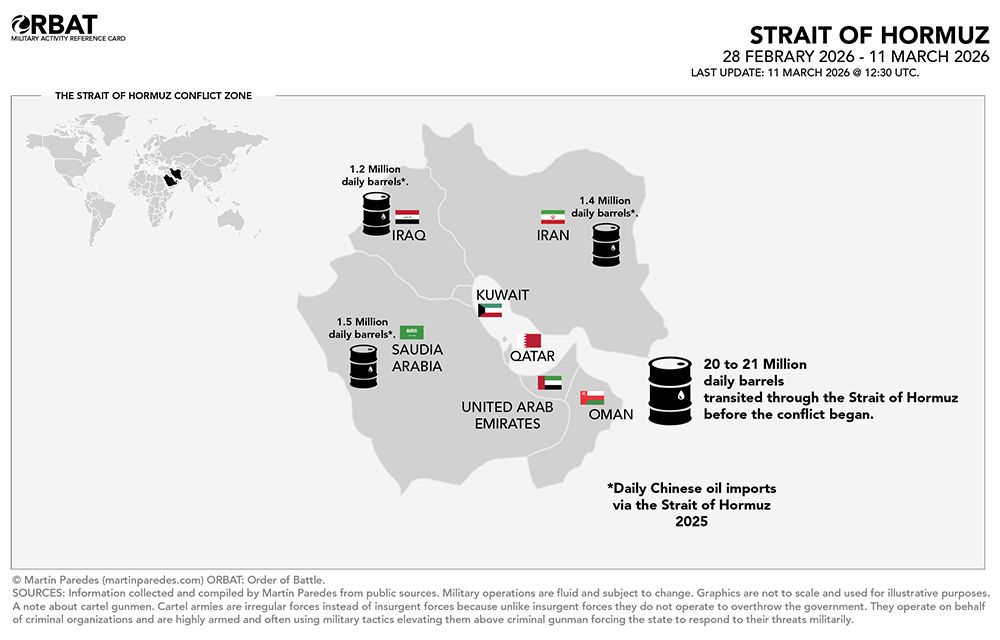 Oil Export Market Through Strait of Hormuz Before the Conflict, includes oil imports by China, Martín Paredes/El Paso Herald Post
México’s largest oil export market is the United States and it avoids the logistical problems the conflict poses for other oil exporters. India, South Korea and Spain also purchase Mexican oil. In 2024, México exported around $26 billion in Mexican oil with around half of it going to the U.S.
U.S. consumers are facing increasing financial strain as the Iran conflict continues because although America imports its oil from México, the Iran conflict has pushed the price of oil, including Mexican oil up. The longer the conflict lasts, the more impact it will have on American consumers.
Latin America, especially México, benefit from the conflict because the region represents a stable and rich-resource alternative to the Middle East. México, in particular, is a key partner to American and Chinese supply chains by diversifying their supply chains.
México is already America’s number one import and export market.
Brazil, the 11th largest global military also benefits from the Middle East conflict through its energy production and balanced trade with China, Europe and the U.S. One country quietly emerging as an oil producer is Guyana that is benefiting from the oil price spikes.
The second largest global economy, China, however, is particularly susceptible to oil disruptions in the Strait of Hormuz. Before the conflict began, around 45% of China’s oil needs transited through the strait. (see ORBAT above) China’s second source for oil was Venezuela. But since the United States began blockading Venezuelan oil tankers in January, Venezuelan oil reaching China began to drop. After American troops removed Nicolás Maduro from Venezuela, oil flows to China from Venezuela have continued to decline. China has an oil stockpile allowing it to weather the drop in oil imports in the short term, but the longer the conflict lasts the larger impact a shortage of oil will have on the Chinese economy.
However, for México, notwithstanding the short-term gains from the conflict, faces existential threats economically if the Iranian conflict lasts longer than the Trump administration hopes it lasts because it makes México vulnerable to security concerns that could upend the Mexican economy.
Like Us and Follow Us On Our Social Media!
Visited 14 times, 14 visit(s) today