
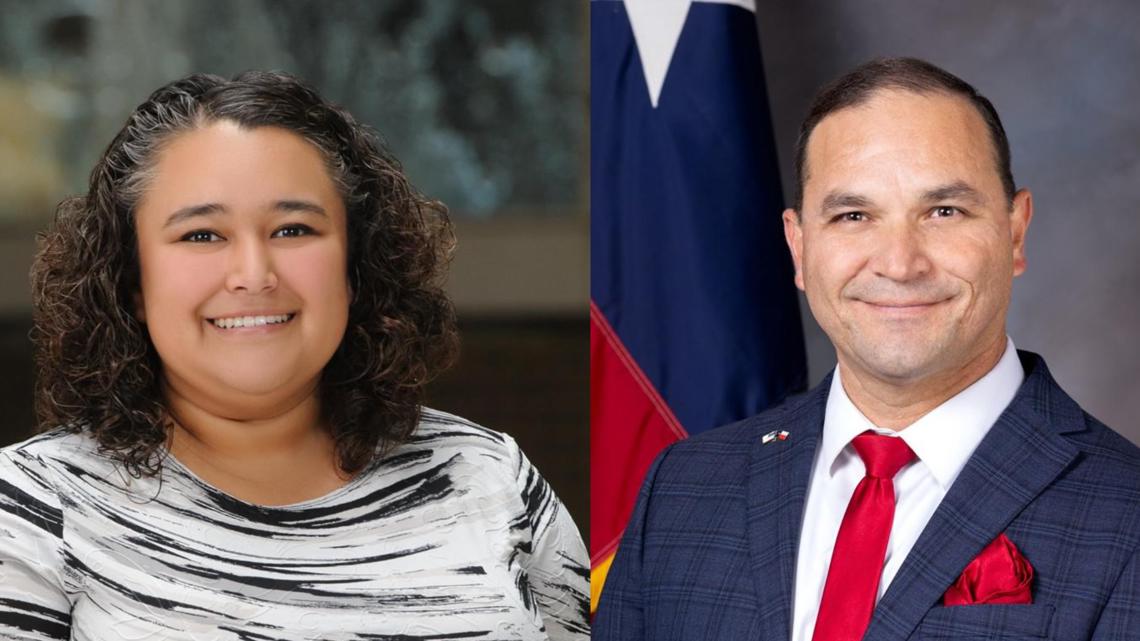
Senator Adam Hinojosa and Representative Denise Villalobos are warning that curtailment could start as early as May.
CORPUS CHRISTI, Texas — Corpus Christi could face water curtailment months earlier than previously expected, raising new concerns about how quickly the region’s water supply is shrinking.
The issue surfaced after State Sen. Adam Hinojosa sent a letter to city leaders indicating that water restrictions could potentially begin as early as May instead of November — a six-month difference that could have major implications for residents and industry.
City Manager Peter Zanoni said the earlier date may be tied to updated water-supply modeling that has not yet been finalized.
“If that’s the model he saw, it’s possible he was referencing one that hasn’t been released yet,” Zanoni said.
City officials say updated modeling on the city’s water supply should be ready for review at the next City Council meeting on March 17.
Mayor Paulette Guajardo said the possible six-month shift highlights the seriousness of the region’s water situation.
“A six-month shift in the curtailment timeline is a significant change and it’s very concerning,” Guajardo said.
Additional information shared with 3NEWS by State Rep. Denise Villalobos adds further context to the potential timeline change.
According to Villalobos, officials have outlined three potential scenarios for when curtailment could begin: May 9 as a worst-case scenario, Sept. 12 as a medium scenario, and November 2026 as the best-case scenario.
Villalobos said the City of Corpus Christi shared that information with her last Monday and that a presentation outlining the scenarios is expected to be given to the Corpus Christi City Council meeting next Tuesday.
Meanwhile, the mayor said she has been working with the governor’s office to speed up permits that would allow water to be released from new western well fields along the Nueces River. Officials believe that project could be one of the fastest ways to increase water supply for the city.
Another potential water source, the Evangeline Aquifer project, continues to face opposition from nearby communities.
Leaders in Sinton and the community of St. Paul have raised concerns about the project and say they have not been given enough information about its potential impacts.
Hinojosa called on representatives from those communities and Corpus Christi to meet and try to resolve their differences. However, Sinton officials responded with a letter declining to attend, saying the City of Corpus Christi has not shared key details about the proposal and no-showed the meeting.
Sinton City Manager John Hobson sent the following statement to 3NEWS on Wednesday in response to the ongoing issues and criticism from the state.
“The region is in dire need of water. As I stated at the GCD meeting, the water problem is a result of the inability of Corpus Christi to make crucial decisions over years and decades. They are now making water decisions at the expense of rural communities. Their current solution to the water scarcity becomes the problem of rural Nueces and San Patricio Counties, St Paul WSC, and of utmost concern to me, the residents of the City of Sinton. We look forward to the opportunity for due process that allows us to make our case of aquifer protection to the Groundwater Conservation District.”
Hinojosa warned that if local governments cannot resolve the issue, higher levels of government could eventually step in.
“There may come a point where it is beyond our control,” he said. “Whether it’s from the state or the federal government.”