
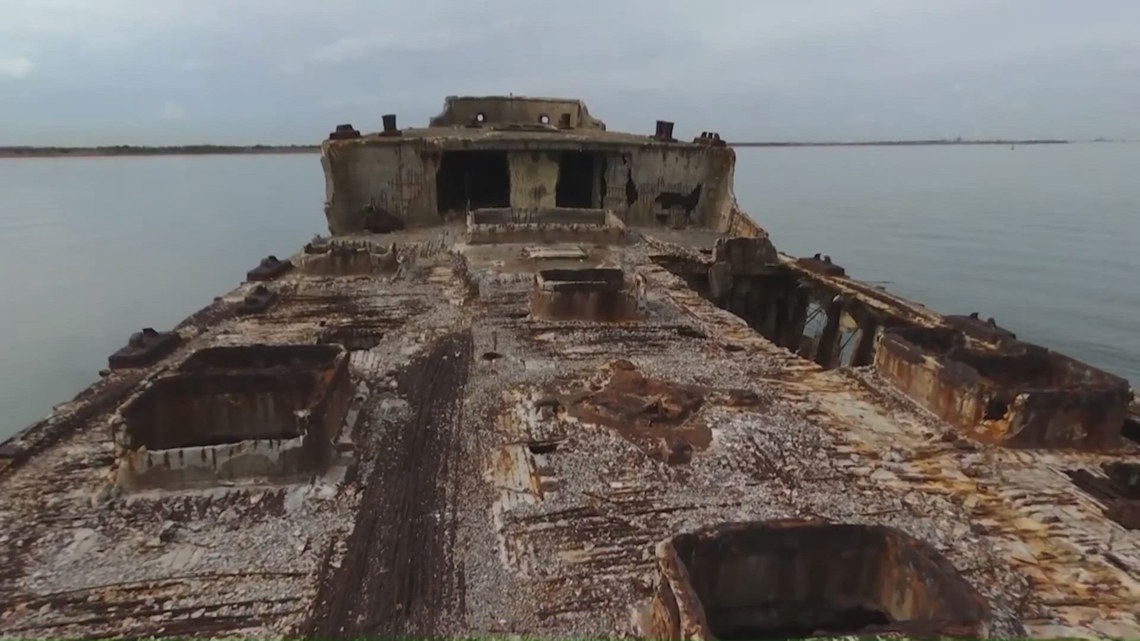
The remains of the SS Selma, made of concrete, sits abandoned in the waters outside Galveston.
AUSTIN, Texas — Rising out of the waters of Galveston Bay, looking like some sea monster frozen in time, not much remains of the once mighty SS Selma: just the skeleton of the nearly 500-foot-long ship that made history.
A little over 100 years ago, the Selma was part of one of the most unusual merchant ships in the American fleet – ships made of re-enforced concrete, also known as ferrocement.
When the U.S. entered World War I in 1917, shipyards were under enormous pressure. Merchant vessels were desperately needed to transport troops, fuel and supplies to Europe, but steel was being diverted to weapons, armor and warships.
So, the U.S. ordered two dozen ships made of concrete. The oil tanker SS Selma was launched in 1919 from a shipyard in Alabama.
Despite skepticism, the ship worked. They were slow and heavy, but seaworthy.
So, what happened to the Selma?
A few years after it was launched, the ship struck a jetty in Tampico, Mexico, that caused a 60-foot crack in the concrete hull. The Selma was sent to Galveston for repairs, but facilities lacked experience with concrete vessels. In 1922, the ship was intentionally scuttled away from busy Galveston Bay shipping lanes near Pelican Island.
It’s been reported that during Prohibition, large supplies of liquor were hidden in the ship. And there’s the story of a man who long ago made the shipwreck his home. It’s said he would wave to passing boaters.
Over the decades, storms and saltwater have worn away the structure, hastening the end of a true ghost ship that holds a fascinating history.