
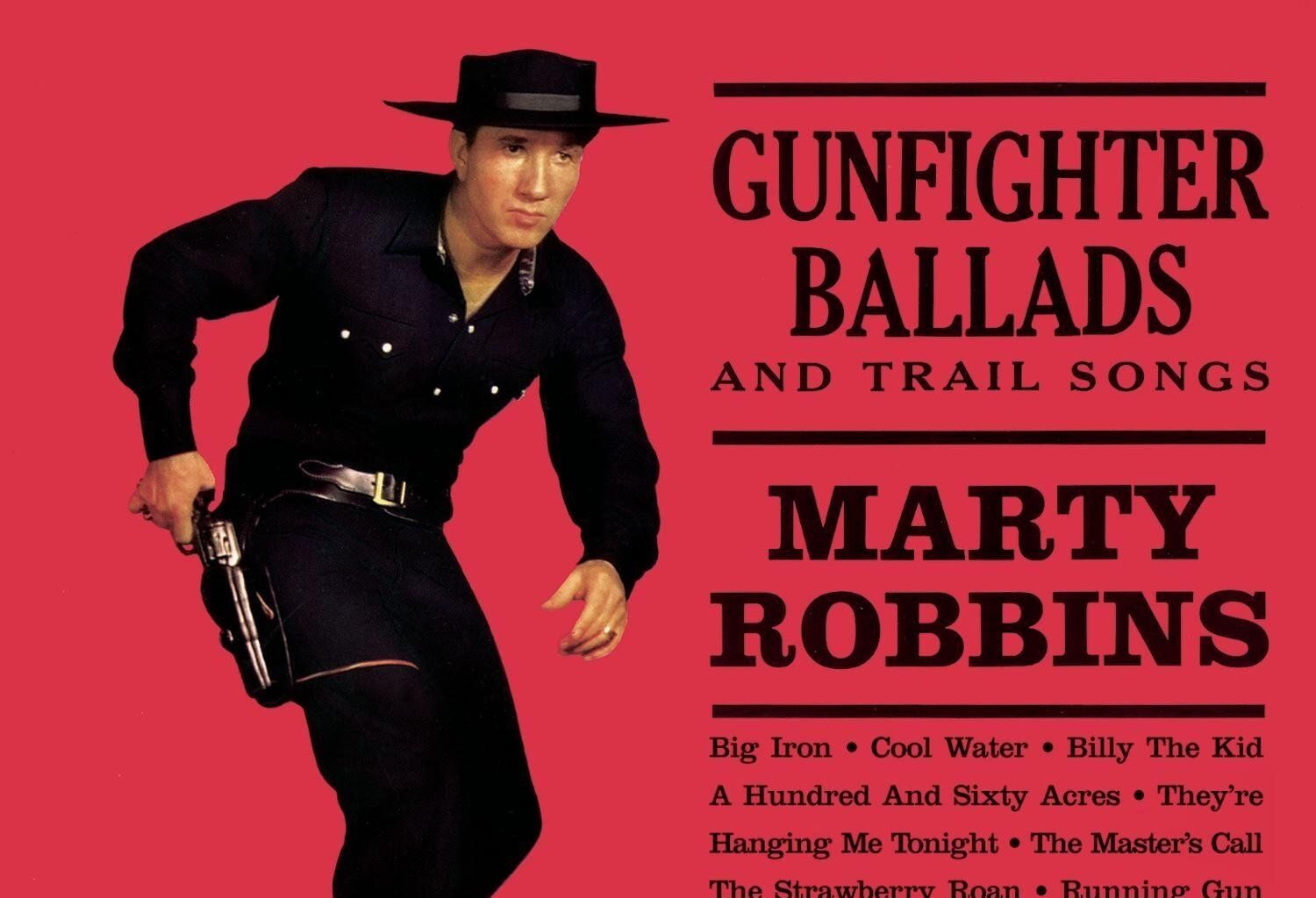
Sometime in your life, you may have been captivated by the story of a cowboy who fell in love and died for a dancer named Felina in the West Texas town of El Paso. Marty Robbins’s 1959 hit “El Paso” is the perfect example of country music storytelling – not just with its commercial success but through his ability to tell a story from beginning to end in a concise yet emotional fashion. Country music, specifically, has been revered for its ability to tell heartfelt tales in a simple, relatable way – Marty Robbins being hailed as one of the best at writing them. What is it about songs like this one that makes them so memorable?
Quality storytelling usually contains three ingredients: A compelling plot, vivid imagery, and intriguing characters, including protagonists and antagonists. Compelling plots with good characters give the listener a story to follow, while the vivid imagery allows them to use their imagination and create the story for themselves. Good songs do not differ much from other forms of narrative media, as they also contain these three ingredients, and songwriters face an additional challenge: the entire story must typically fit within 3-5 minutes.
Narrative Structure
At a runtime of four minutes and nineteen seconds, “El Paso” is essentially a short Western film—containing a scenic introduction, a conflict, and a resolution. The first verse of the song immediately introduces the location, characters, and emotional premise: a West Texas town called El Paso and Rosa’s Cantina, where the narrator confesses, “I fell in love with a Mexican girl.” This line also serves as a thesis statement for the entire story.
The next section introduces the conflict and the initial antagonist: a young cowboy. “Dashing and daring, a drink he was sharing… with wicked Felina, the girl that I loved.” The protagonist challenges the stranger to a standoff and wins by shooting him dead in “less than a heartbeat,” one of many ways this story evokes the Wild West’s intense atmosphere.
The song shifts after the protagonist flees El Paso. Yet, he yearns for Felina and realizes that his love is stronger than his fear of death, foreshadowing the plot by leading him to make the ultimately fatal decision to return. The stakes escalate as more antagonists enter: “…five mounted cowboys,” then “…a dozen or more.” Robbins uses strong imagery to depict the bullet-ridden pursuit that leads the character to the back door of Rosa’s, bringing the story full circle. The cinematic and tragic resolution details almost frame by frame as the narrator watches the “white puff of the rifle” as it shoots him in the chest, falling off his horse but into the arms of his love Felina, where a final kiss completes the tragic story arc.
Intriguing Characters
With minimal details, Robbins pens intriguing characterization through perspective and action, specifically with the narrator and main protagonist of the story – a passionate lover driven to visit Rosa’s Cantina to see his love. As the song plays, the listener experiences his love’s perspective, which intensifies from “I fell in love with a Mexican girl” to “My love is stronger than my fear of death.” His actions, like a true Wild West gunfighter, bear fateful consequences, and we experience his character arc in its full circle.
The other characters in the story are defined primarily by their actions rather than their perspectives. The young cowboy boldly courts Felina and challenges the narrator to a gunfight; like the protagonist, he meets a tragic end. Throughout the story, both the narrator and the listener are propelled forward by hope in the line “down the hill to Felina I go.” The mounted cowboys serve as a plot twist, and their pursuit of the narrator frames their antagonistic role. Felina’s actions—simply being herself—shape the plot as well. She dances and inspires rivalry, and in the final moments, she kneels beside her love, kissing him goodbye.
Memorable Imagery
Between the Spanish-style guitar lines and soothing melodies, Robbins immediately creates imagery for Rosa’s Cantina as we hear our first description of Felina, whirling around with eyes “blacker than the night.” The narration of the cantina, the cowboys, and the gunfighters all make it easy for the listener to imagine a western movie set in the American Southwest playing out through their speakers.
The imagery becomes more dramatic as the song progresses – a standoff between the narrator and a wild cowboy ends in bloodshed and leads to a horseback getaway through the “badlands of New Mexico.” The narrator’s deep longing compels him to return to El Paso, and we can imagine his intense emotions as he rides “alone in the dark” until he reaches the hill overlooking the city. The imagery of him overlooking the town, knowing that Felina is there, not only furthers his theme of profound love but also represents the turning point in the story, as his decision to ride down seals his fate. The final scenes depict a classic western shootout, and the closing image of a dying cowboy, held by his lover and being kissed goodbye, stays with you forever.
More than sixty years after its release, “El Paso” remains a defining example of narrative songwriting in country music. Through a tightly structured plot, memorable characters, and vivid imagery that feels lifted from a classic Western film, Marty Robbins proved that a song could function as a complete story with a beginning, middle, and tragic end. The ability to transport audiences into another world is what has allowed songs like “El Paso” to endure for generations.