
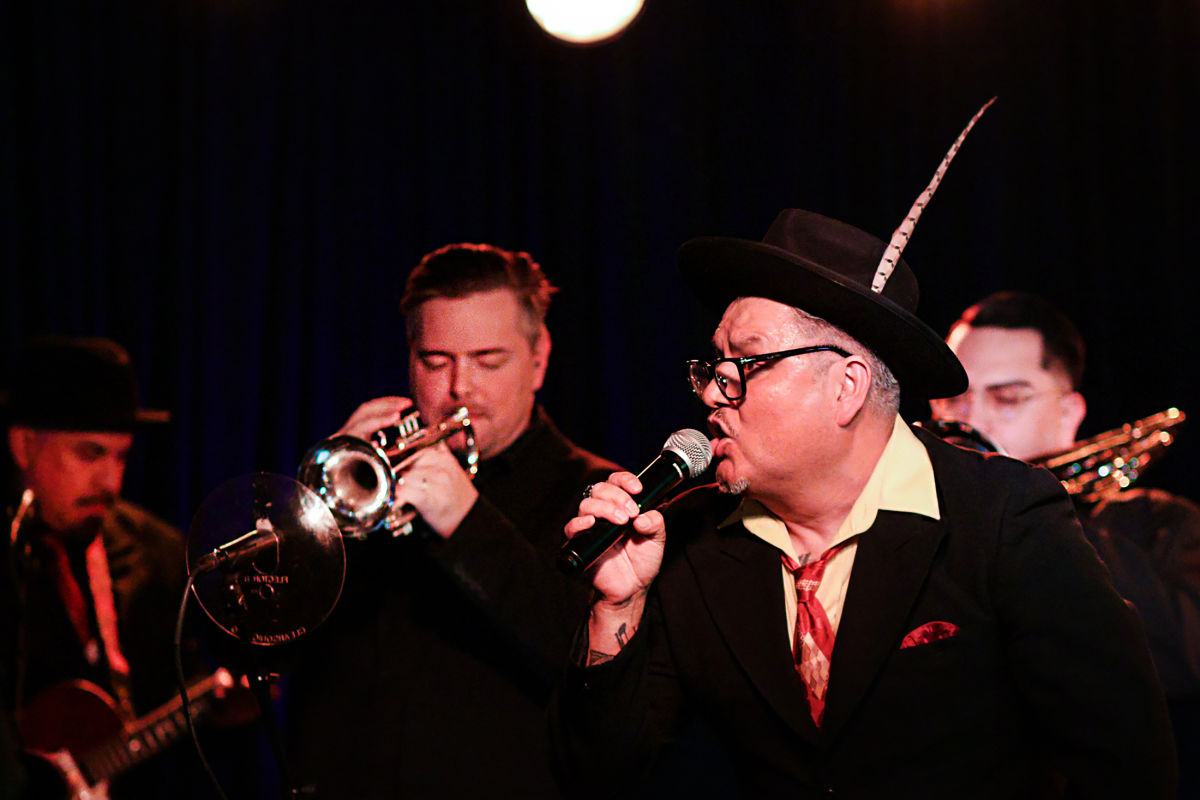
Los Skarnales has gone through many different lineups in its three decades performing, but they’ve all given audiences bold, playful sounds that simultaneously defy and define genres.
Hou Should Hear This is Houstonia’s new monthly music column profiling musicians living in the Houston and Galveston regions.
On a late night in 2016, I tightened my grip on the railing that outlined Fitzgerald’s indoor upstairs balcony. Los Skarnales took the stage, and the packed first floor below looked like Pamplona: people giddy and flushed with adrenaline, moving together, forming currents out of bodies. Horns rang out in staccato bursts, bass and drums thundered, and the 100-year-old building in the Houston Heights shook.
Felipe Galvan, Los Skarnales’ frontman, took the mic. Wide-brimmed fedora slightly askew and dark zoot suit in immaculate place, Galvan unleashed rapid-fire lyrical punches in Spanish. I looked up at my boyfriend, Shawn, and grinned. “I told you!” he shouted over the wild punk rock concoction rewiring my nervous system. “One of the best live shows you’ve ever seen!”
Fitzgerald’s is gone, thanks to one more developer who paved paradise and put up a parking lot. But Los Skarnales, bayou saints be praised, are still here.
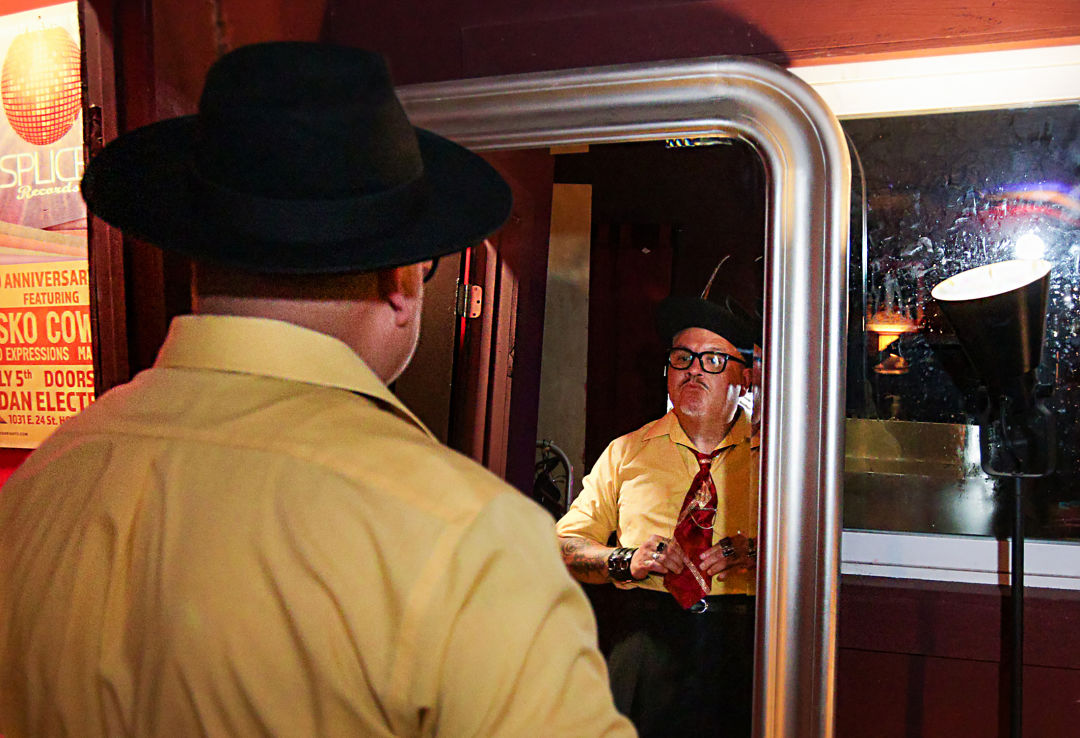
Los Skarnales: just as much style as it is substance.
The legendary Los Skarnales has toured for more than 30 years, developing massive followings throughout Mexico and the US and a foothold in Europe. But here in Houston, spoiled fans can see them year-round.
The band was formed in the city in 1993. Growing up in Spring Branch, drummer Felipe Galvan and guitarist Jose Rodriguez first turned heads in the music scene as cofounders of punk trio Desorden, but the pair had more in mind. “We had this concept,” Galvan remembers. “I would write the lyrics. Jose would write the music. We were into ska, rockabilly, punk, big band. We thought, ‘Let’s mix it all up.’”
So Galvan and Rodriguez spun off to launch Skarnales. Still anchored in punk’s raw defiance and unfussy arrangements, Skarnales began experimenting; reggae, cumbia, ska, mambo, and rockabilly seeped into songs. Idols, including the Clash and French group Mano Negra, served as guides alongside Chicano influences closer to home.
The Skarnales look? Zoot suits. In the early ’90s, Galvan hunted for vintage ’40s suits, hungry for the real thing, not late-century imitations. When the band hit the stage, sounding unruly but looking dapper, some fans asked, “Why suits?” Galvan’s explanation: “I’d rather wear a zoot suit than a green mohawk that came from England and doesn’t say anything about my roots or struggle.”
To Galvan, origin stories matter. His father, Raul Galvan, drummed for a Mexican rock-and-roll band, Los Johnny Jets, that inked a deal with CBS Records. His mother sang traditional mariachi under the stage name Rosita del Llano. Galvan often speaks of his parents’ support and the lessons he learned from his father, who taught him not just how to play the drums but also about giants like Chuck Berry and Jerry Lee Lewis.
The sweat and sneering virtuosity of those rock-and-roll titans pulses through Skarnales, thanks in large part to Galvan’s swagger out front. But he actually began in the back, singing from behind the drum kit (“Like the Eagles,” he says, laughing). A saxophonist in an early iteration of Skarnales told the band he could play drums, too, and suggested that Galvan might like to hop out front. So, one night, that’s exactly what he did. The audience came unglued.
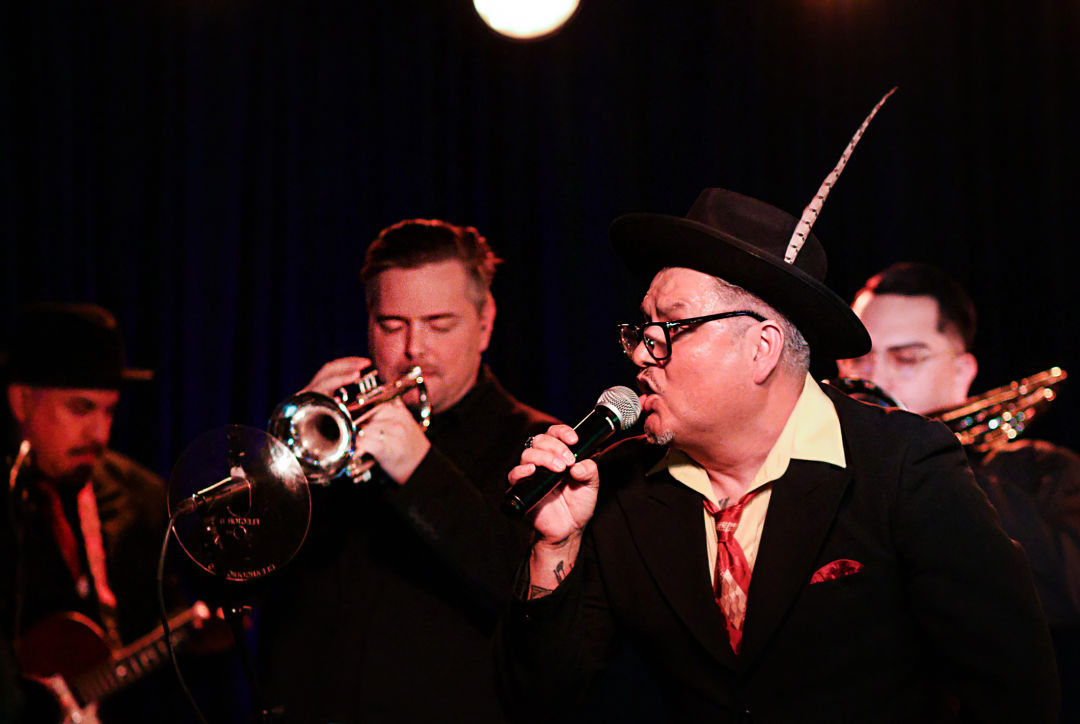
“It could go from pachuco boogie to Jamaican ska, all Chicano style, from song to song—even within a song. The constant has always been Felipe [Galvan].” —Nick Gaitan, former Los Skarnales member
Nestor Aguilar, a longtime friend of Skarnales who ultimately became the band’s secondary vocalist and percussionist, watched the scene unfold from the crowd. “He said, ‘Man, when you came to the front, you were like a caged-up lion,’” Galvan says. “‘They had you in the back, opened the cage, and then you were just all over the place.’ After that, I thought, ‘Man, we need to find a drummer.’”
And they did. Guitarists, bassists, and horn players, too. The roster of musicians who have rotated in and out of Skarnales’ lineup over the years forms a musical family tree as impressive as an ancient live oak, branches unwieldy and strong, fanning out into new territory but still connected to the sturdy base. The late Chris LaForge of 30footFALL spent time in Skarnales, as did the Suffers’ Michael Razo and Jose “Chapy” Luna. The branches twist, turn, and split; Kevin Bernier, another Skarnales alum, also played in the Suffers, and now performs in the Lonesome Haunts and DEM Roots. Mark Speer of Khruangbin served as guitarist on a Skarnales tour in the early ’00s. The ranks of aces who spent time backing Galvan over the last 30 years could—and probably should—fill books.
Nick Gaitan, an acclaimed singer-songwriter and Chicano culture historian and scholar, played upright bass for Skarnales from 1999 until the fall of 2006. “We’d always joke that everybody in Houston is either a member, a former member, or a cousin of a member of Los Skarnales,” he says. “To many people all over, but especially if you’re from Houston, this is a band you know. I knew a long time ago they were special, when I heard about them in high school.”
Skarnales’ followers remember Gaitan’s time in the band as the pachuco era: the first and only stretch without horns. “During different eras, they’d lean heavily into different genres,” Gaitan says of Skarnales’ sound. “It could go from pachuco boogie to Jamaican ska, all Chicano style, from song to song—even within a song. The constant has always been Felipe.”
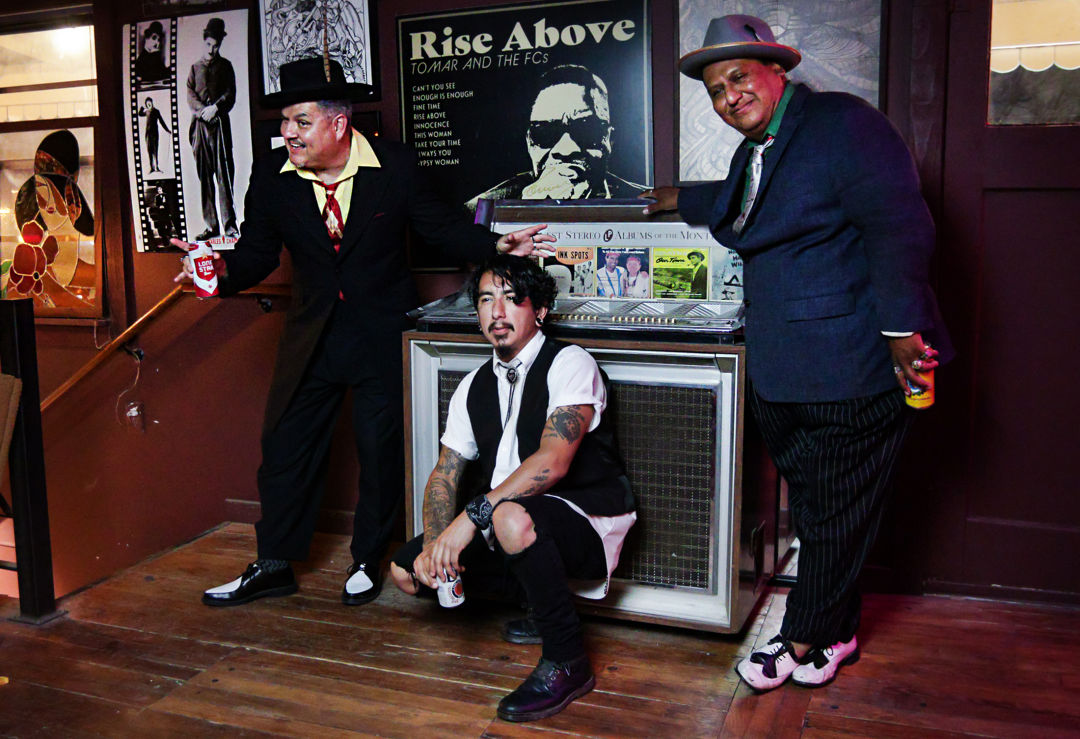
The signature sound of Los Skarnales takes inspiration from a wide variety of genres and subcultures.
Galvan prowls the length of the stage as frontman. Devotees point to his relentless energy, while close listeners fall hard for his lyrical delivery, which hypnotizes through loops of strategic repetition, mastery of tempo, and wily cadence. “I grew up listening to a lot of ’80s early hip-hop,” Galvan says. “Then, ’40s jazz, like Cab Calloway and Louis Jordan, plus Mexican entertainer Germán Valdés, scatting. I was blown away by how people use their vocals as instruments.”
In the band’s evolution, as people come and go, what surrounds Galvan changes, Gaitan explains. “There’s this cool transformation of energy over the years,” he says. “Trying to describe Los Skarnales’ sound is like trying to describe a sunset. It’s forever transforming.”
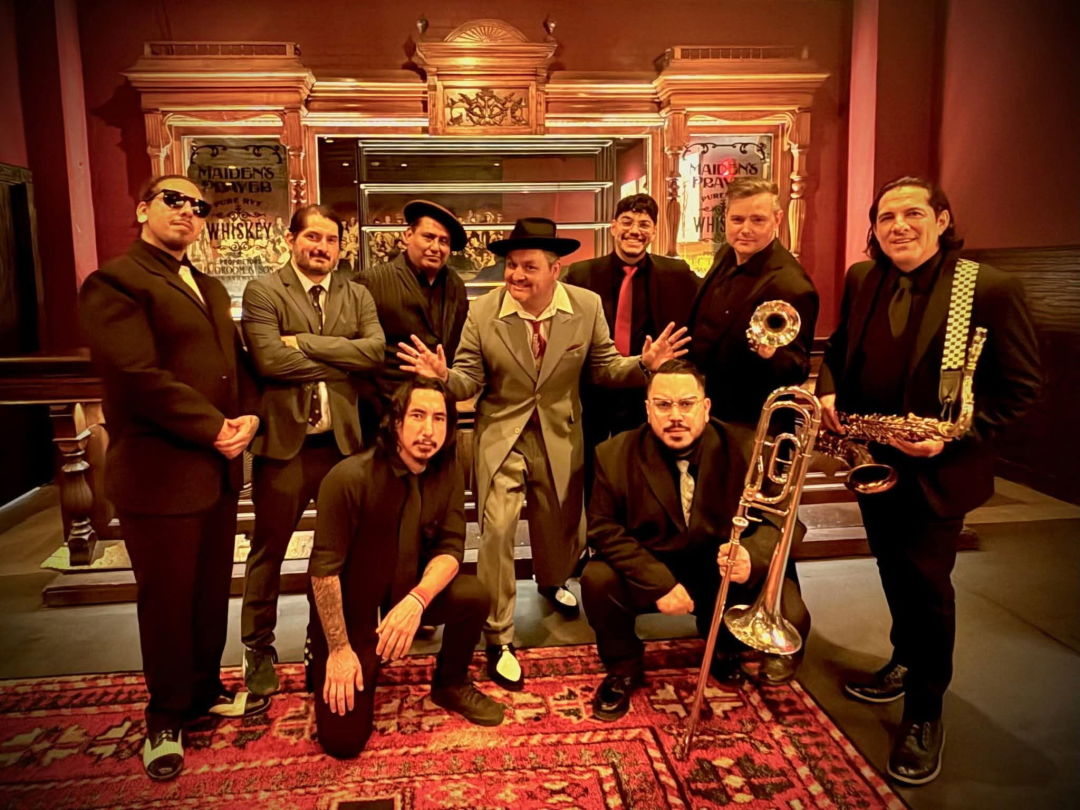
The band continues to evolve. The current lineup includes nine members: Ricky Tijerina on drums, Jeremy Gonzalez on bass, Tristan Alaniz on guitar, Richard Molina on keyboard and organ, Aaron Koerner on trumpet, Daniel B. Lopez on trombone, Chuy Terrazas on saxophone, Aguilar, and, of course, Galvan. Upcoming performances include a New Orleans Jazz & Heritage Festival debut in April 2026, as well as a set at Belgium’s Sjock Festival in July. In Houstonians’ ongoing embarrassment of riches, Skarnales will play another hometown show at Moon Tower Inn on March 14. Later this year, the group will also release a new single, “Cumbia Pachucona,” featuring special appearances by Mexican artists El Gran Silencio and Son Rompe Pera.
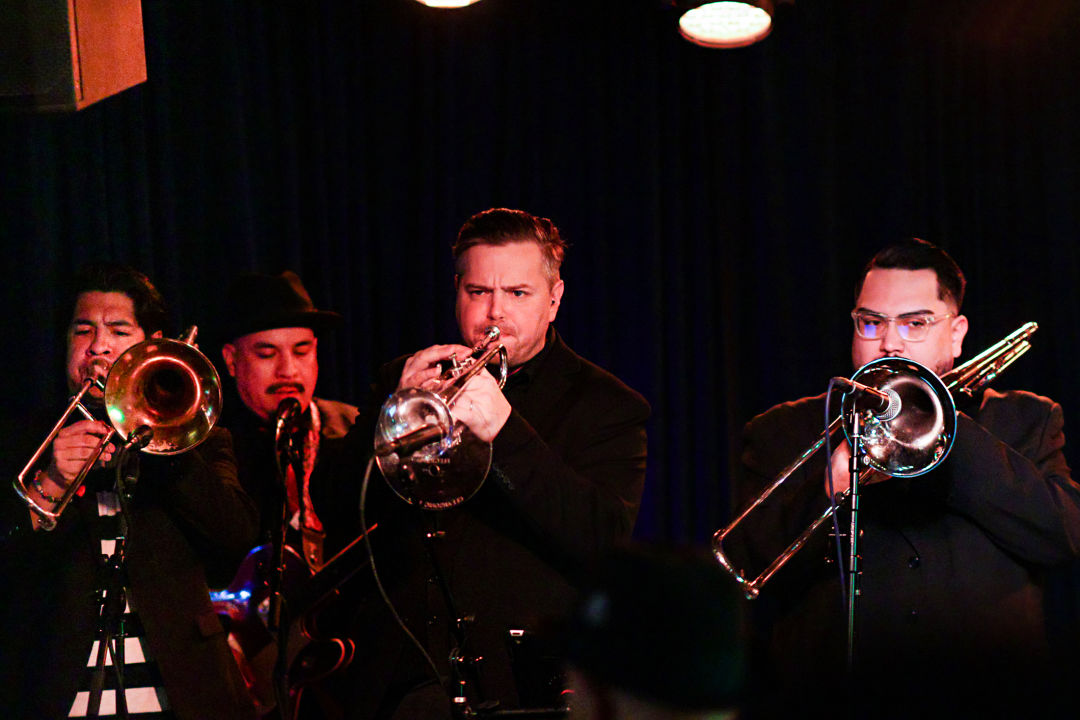
Los Skarnales is well known around Houston for its family-friendly, highly energetic live performances.
If Skarnales’ sound defies tidy categorization, so does their fan base, which crisscrosses generations. On a recent winter day at a middle school in the heart of Houston’s East End, my son wore a Los Skarnales hat after catching the band at Wonky Power. His friends cornered him, impressed and excited, asking, “You like Los Skarnales?”
Adolescent rebellion helped fuel Skarnales’ launch. Galvan and Rodriguez wanted punk, not their parents’ mariachi. But the sound Skarnales set out to make wasn’t an outright rejection of the past, either. It was a new idea about where Chicano music could go, and an open invitation for everyone to come find out.
I ask Galvan not just how it feels to know that 12- and 13-year-olds in 2026 love Skarnales, but how the band keeps pulling that off. A frenetic performer, he is calm, quiet, and quick to smile off stage. He laughs. “We’ve been doing this a long time, and to have kids be hip to it? That’s the ultimate proof it’s still good,” Galvan says. “When I see a kid getting into it at a show, I feed off of that. It’s punk rock. It’s fun, and it’s honest.”
Music Notes: March
Houston music happenings you should know:
Good Junk Vintage orchestrates another Houston Record Swap on Sunday, March 29, from 2pm to 6pm at Axelrad.
Houston Music Classifieds recently relaunched its Song Swap, a series of shows featuring local artists performing original work at Bad Astronaut Brewing. Applications to participate remain open through the end of March.
A few residencies worth Houstonians’ time and dollars: Tim Kochen’s East End Jazz, every other Tuesday at Neighbors; Matt Harlan’s Songwriter Showcase, every other Thursday at Anderson Fair; the Mighty Orq’s Sunday Blues Extravaganza, usually the last Sunday of the month at the Old Quarter Acoustic Cafe; and Pot Roast every other Wednesday at Raven Tower.
We hear Kam Franklin’s first full-length solo album will drop this summer. Rumor has it Sergio Trevino (Ancient Cat Society and Buxton) will release his first solo record later this year, too.
On Galveston Island, Tyson Webb just released Awoken by the Birds, an album full of literary songwriting and acoustic guitar, punctuated by trumpet; “Interstate Cigarettes” hooked us. Other recent local releases we recommend include Galvezton’s Ocean Cabaret and Sorry, Sarah’s eponymous debut.