
Dallas THC businesses are facing difficult decisions with new state regulations taking effect at the end of the month.
Some Texas lawmakers, led by Lt. Gov. Dan Patrick, fought a campaign during the last legislative session to heavily restrict or ban the sale of hemp-derived THC products outright in the state with Senate Bill 3. Gov. Greg Abbott ultimately vetoed the bill in June and instead called on state agencies, such as the Texas Department of State Health Services (DSHS), to heavily regulate the $5.5 billion industry. Federal lawmakers are also considering a sweeping ban on THC products.
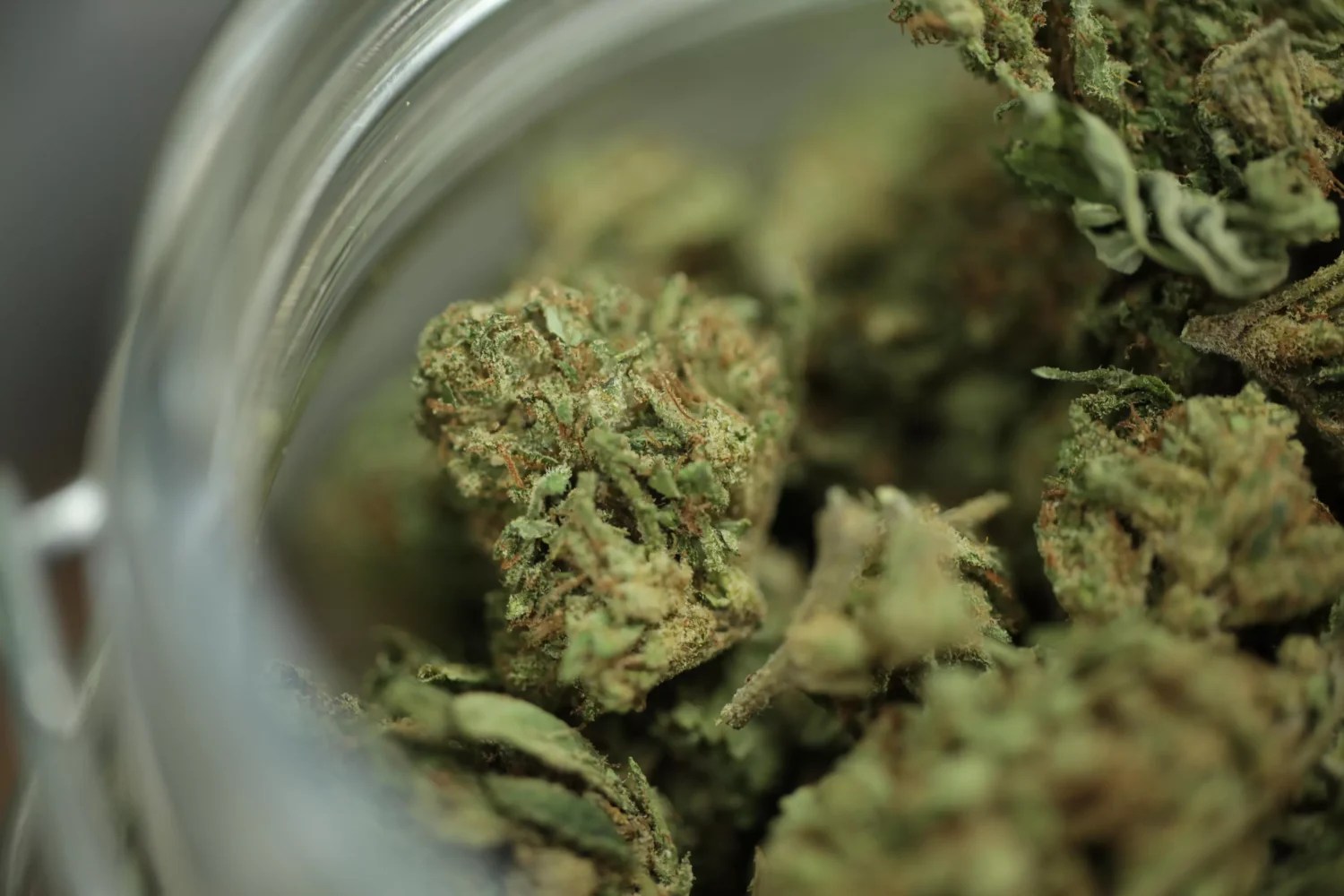
Last week, DSHS revealed what the regulation will look like. Under new rules set to take effect March 31, virtually all smokable cannabis products, including flower and extracts, will be banned due to a change in the way the state evaluates THC content.
Previously, the legality of cannabis or hemp products was determined by delta-9 THC content.
Delta-9 is the primary psychoactive compound found in cannabis. Any product containing under .3% delta-9 THC by dry weight was considered legal under a 2019 hemp law.
Under the new DSHS regulation, products will be evaluated based on total THC content. Why the change? Hemp products sold in stores often contain THCa, a non-psychoactive cannabinoid that converts to delta-9 when heated. If the regulation isn’t successfully challenged in court, THCa will be included in how the state calculates legal THC content.
Heather Fazio, director of the Texas Cannabis Policy Center, said while she agrees with parts of the regulation that strengthen consumer protections and set age limits for THC products, the total THC standard will drive consumers to other, even less legal sources.
“Effectively, this is going to ban hemp flower from the legal marketplace,” Fazio said. “Consumers enjoy the natural product with naturally occurring levels of THC in the hemp flower, and changing to these unreasonably restrictive testing standards would push this marketplace underground, handing it over to illicit operators because legitimate businesses can no longer sell it. That means that products are going to be untested.”
The regulation also raises fees for THC business owners. Retail businesses will have to pay a $5,000 annual fee, while manufacturers are on the hook for $10,000 every 12 months. The fees, DSHS officials said, will help pay for costs associated with regulating the industry.
The fees are considerably lower than the $20,000-plus fees previously considered by officials, but will still hurt small businesses, Fazio said.
“It seems like these high fees are punitive in nature,” Fazio said. “We’re concerned that they’re using these fees in a punitive way, rather than simply to cover the cost of effective regulation. We certainly agree that resources are needed to enforce the regulations on the books and make sure that bad actors are held accountable. That has to be a number one priority when regulating this industry, but unreasonably high licensing fees do not better serve that purpose.”
There are more than 9,100 stores licensed to sell consumable hemp in Texas, according to previous reporting by KUT Austin.
The Impact
Tracy Bowen is the manager of CBD House of Healing in Lake Highlands. The business opened four years ago and sells an array of THC smoothies, edibles, tinctures, prerolls and loose flower, which is displayed deli-style on the shop’s “bud bar.” Most of his customers suffer from chronic illness or use the products to ease conditions like insomnia and anxiety, he said.
He also sells THC-free products primarily containing CBD, the non-psychoactive element found in cannabis, but that likely won’t be enough to keep the doors open if the smokable products that account for roughly half his business are banned.
“It’s going to be very, very difficult for us to survive as a store and a company if we’re not able to sell the products that are outlined in this new verbiage,” Bowen said.
Other products Bowen sells, like edibles and other non-smokable THC products, will still be allowed, although businesses like his will have to comply with stricter packaging regulations.
The $5,000 retail fee is already crippling, he said, but the definition of manufacturing put forth in the new regulation will make it harder for shops like his to remain flexible with inventory. Yearly fees for retailers had previously been $150, with manufacturers paying $250.
“If I’ve got, say, a 30-count of a product, and I want to sell it in smaller quantities… I want to just put it in smaller packages to sell them as singles or pairs or whatever; that’s considered manufacturing,” Bowen said. “And it’s going to cost me $10,000 a year to be able to do that.”
As defined in the new DSHS rules, businesses that repackage, relabel or privately label are considered manufacturers.
Bowen said the state’s efforts to regulate the industry in recent years have forced him to nix plans to open a second store in Dallas.
“It’s a recipe for shutting down this industry, which, of course, is what this is,” Bowen said. “It’s an attempt to ban the industry.”’
Shan Claudio opened Dallas Hemp Co. in 2022 after launching a local catering business, Dallas Culinary Company, the year prior.
The two crossover when making cookies, shakes and other edible THC products, Claudio said, but like Bowen, his business will now be considered a manufacturer and a retailer.
“It seems like a government takeover, essentially, and it’s a pay-to-play type of environment,” Claudio said. “Now, the fees for a small business like mine, we’ll have to fork out $15,000 to stay operational within 20 days, I think, is what I’m understanding. And I mean, for us to do that is next to impossible.”
Claudio employs five people but said he had to downsize in September 2025 following the state’s ban of THC vapes, which caused him to lose an estimated 30% of his business. If the new regulation sticks, he estimated roughly 75% of his products will have to be taken off the shelves.
He said he isn’t opposed to regulation, but thinks the new rules aren’t about keeping people safe.
“This isn’t a fight against regulation. This is a fight against big business killing small business. And I think in general, that’s what’s happening in Texas,” Claudio said. “Nothing is easy for a small business anymore.”