
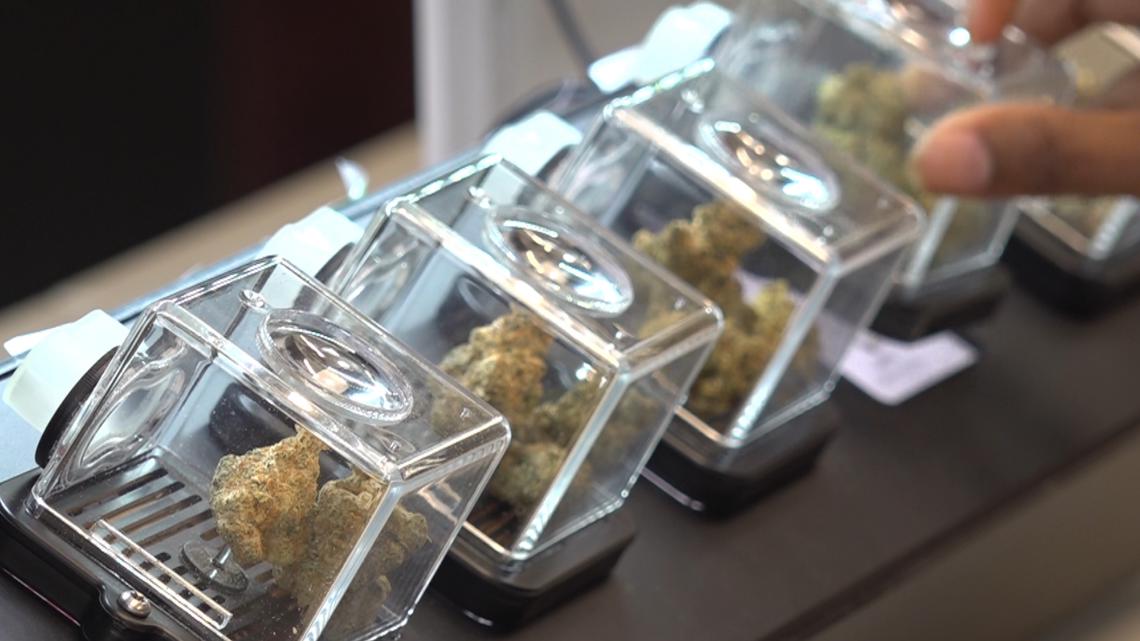
A new rule taking effect March 31st will change how THC levels are calculated in hemp products — effectively banning smokable hemp flower.
TEMPLE, Texas — A new state rule to take effect in less than three weeks is sending shockwaves through Texas’s hemp industry, and one Waco business owner says the impact could force him to shut down part of his operation.
Starting March 31st, the Texas Department of State Health Services will change how it calculates legal THC levels in hemp products. Under the current rule, only delta-9 THC counts toward the state’s 0.3% legal threshold. The updated rule adds THCA to that formula — a cannabinoid that converts to delta-9 THC when heated or smoked. The change effectively bans nearly all smokable hemp flower in Texas.
For Callan Salganik, owner of Treehouse Dispensary — which has locations in Waco and Temple — the timing couldn’t be worse.
“Full-spectrum hemp flower is 70% of our sales,” Salganik said. “So it’s going to be a devastating hit — and it’s very nerve-wracking because we still don’t really know how we’re gonna navigate that.”
Salganik says not everything in the new regulation is bad news. He says he supports several of the incoming requirements — including mandatory childproof packaging, full-panel lab testing, and a hard enforcement of 21-and-up sales. He says responsible retailers like his were already voluntarily following those standards.
But his frustration lies with the timeline. With the March 31st deadline just days away, he says manufacturers cannot deliver compliant packaging to retailers in time, and the state has not offered any grace period.
“We’ve been given these rules with a March 31st effective date and a lot of these packaging changes — we don’t have time to comply,” he said. “We asked for a grace period, and we weren’t given one. It’s very, very stressful.”
‘The Only Thing That Works’
Beyond the business concerns, Salganik says his customers are the ones he worries about most.
Full-spectrum hemp flower, he explains, contains the plant’s full range of cannabinoids — including CBD, CBG, and THCA — which work together to produce what advocates call an “entourage effect.” For many users, he says, that combination provides relief that isolated products simply don’t match.
“We have customers that have PTSD. We have customers that suffer from a lot of different things — and hemp flower is really, for a lot of them, the only thing that works,” Salganik said. “So it’s not only that I’m concerned about my business — but also my customers too.”
Without access to legal hemp flower, Salganik worries customers won’t simply stop — they’ll find another source. And those sources, he says, won’t come with lab testing or safety guarantees.
“A lot of people are instead going to go to the black market — and these are products that aren’t tested,” he said. “These are fueling cartels, fueling criminal organizations. I just don’t think it makes sense.”
If the rule goes into effect as written, Salganik says he will likely be forced to close at least one of his two locations.
“If these rules go into effect as they are, we’re absolutely going to have to close down at least one of our locations,” he said. “I hope to be able to keep the rest open — but that’s a real risk.”
He is urging customers, community members, and fellow business owners to contact their legislators before the March 31st deadline.
What the Rule Change Means
The updated DSHS rule — 25 Texas Administrative Code Rule 300.101 — takes effect March 31, 2026. It changes the formula for calculating acceptable hemp THC levels to include both delta-9 THC and THCA. The previous version of the rule, in effect since August 2020, only counted delta-9 THC.
This rule change is separate from Texas’s existing ban on THC vapes and e-cigarettes, which went into effect in September 2025 under Senate Bill 2024. Selling vape products containing any cannabinoids is a Class A misdemeanor under Section 161.0876 of the Texas Health and Safety Code.