
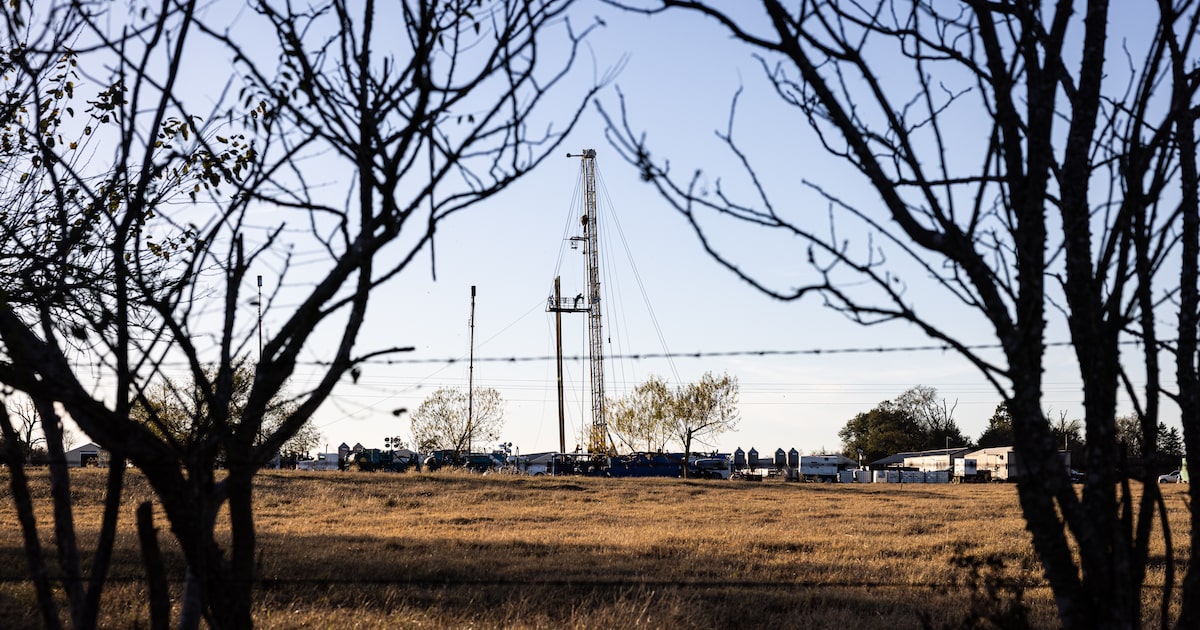
FRANKLIN COUNTY – Inside his office just off Mt. Vernon’s town square, attorney B.F. Hicks lays a map out on his desk.
At speed, he points at different tracts of land, reciting who lives there, what size their property is and which companies he’s heard have sent landmen to knock on their door to negotiate lithium leases.
What happens in northeast Texas could shape America’s energy future. The region has emerged as a key player in the domestic race for lithium — the mineral essential to the batteries in electric vehicles, cellphones, and renewable energy storage — as the U.S. scrambles to secure its own supply.
For a few years now, the infiltration of companies into this rural region of Texas searching for lithium – a critical ingredient for storing solar energy and powering electric vehicle batteries – has become a topic of conversation over dinner at the local chophouse or in catching up at the historical society meeting. Sometimes, it’s behind closed doors as friends, family and neighbors gossip about who’s getting the best offers for their mineral rights.
Being an energy frontier for other parts of Texas isn’t new to residents in Franklin and surrounding counties, as some of their backyards have started to fill with solar panel farms and battery energy storage systems, all fuel powering the “green economy.”
Breaking News
But now, they’re learning that deep beneath their feet is salty water that could become a key resource in the United States’ global fight for full energy independence.
The Smackover Formation, which broadly sweeps from East Texas to Florida and once gushed with oil, is now being hailed as containing some of the purest lithium brine in the world.
Hicks, one of the most vocal local leaders with opposition to industrial-scale solar projects, actually welcomes the potential lithium can bring to the community.
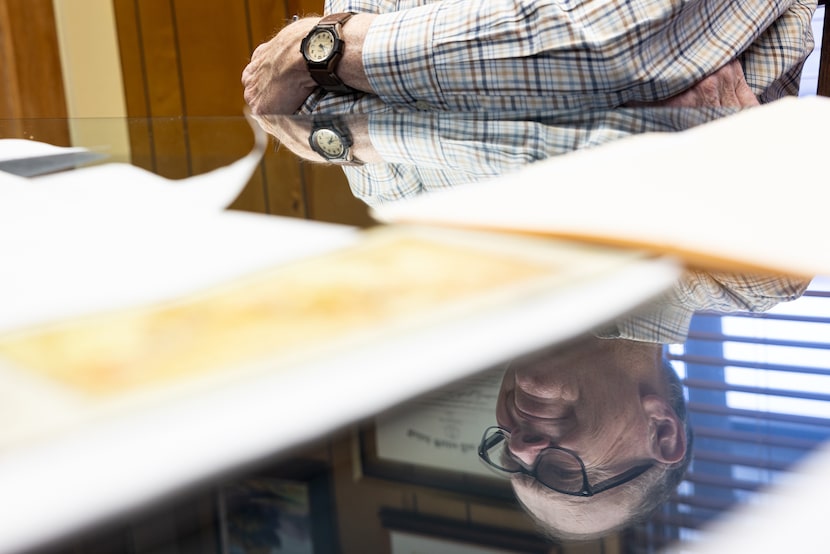
B.F. Hicks lays out maps and talks to The Dallas Morning News about lithium leases in Franklin County on Feb. 5, 2026, in his Mount Vernon law office.
Angela Piazza / Staff Photographer
The historian and longtime attorney has signed a lithium lease for a portion of his pristine Daphne Prairie; he’s now helping others do the same. He’s hoping to get the best deal for his clients – and perhaps most important, make sure the surface land is as protected and preserved as possible.
“I want to call myself an environmentalist,” Hicks said, bringing his freckled hands to his face as he looked down at the map. “But this is going to bring a lot of money into our community.”
‘Another opportunity to prosper’
U.S. consumption of lithium is projected to increase 74% annually by 2029, according to a recent report from S&P Global. Future investments in processing could transform the lithium supply chain, boosting local production and decreasing reliance on foreign sources.
Electric vehicles have been, and will continue to be, the largest consumer of lithium globally, but grid-scale battery energy storage systems are expected to drive lithium demand, a symptom of the increasing emphasis on grid stability as electrification continues and renewable energy sources multiply. BESS can also be used to power the surging number of data centers.
While its infrastructure isn’t ready to meet domestic needs, North America’s lithium sector is poised for significant growth. And Texas – already an energy powerhouse independent of lithium – is emerging as a major focus of that activity.
Already, some of the world’s largest energy companies, like ExxonMobil and Chevron, have staked claim to portions of the Smackover Formation, announcing drilling and large acquisitions of land. The former said it is targeting its first lithium production for 2027.
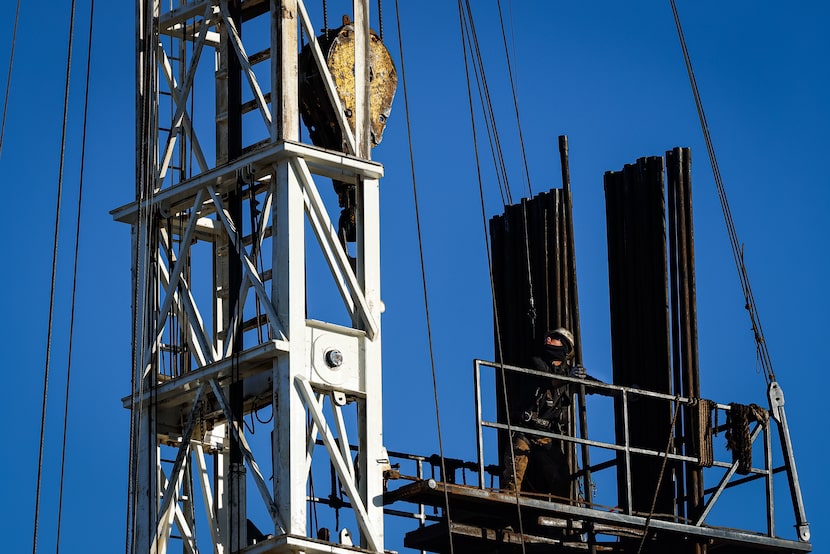
A derrickman guides pipes into a block while drilling a direct lithium extraction test well on Nov. 11, 2025, in Franklin County.
Angela Piazza / Staff Photographer
Standard Lithium, a leading near-commercial lithium company from Canada who has had a presence in the formation’s Arkansas region for years, created Smackover Lithium, a joint venture with Norwegian energy company Equinor.
Other players are also placing bets on the Smackover, including GeoFrame Energy, and newly founded T5 Smackover Partners.
The businessmen are quick to assure residents that the race for lithium isn’t a gold rush or boom-and-bust scenario, but some have admitted the early stages, including landmen knocking on doors for leasing, has felt a little like the Wild West.
“God has granted us in rural northeast Texas another opportunity to prosper,” Texas Railroad Commissioner Wayne Christian said during a crowded town hall hosted by Smackover Lithium in Mount Pleasant last fall.
Christian compared what lithium extraction could be to previous prosperous ventures in oil and gas in Texas. He said the area has the opportunity to change the world while benefiting from the economic impact, including tax boosts and new jobs.
He listed products that have lithium-ion batteries and talked about the electrification of energy, boasting the significance of powering artificial intelligence.
“God looked down again and said, ‘I guess they need a little lithium for this stuff and batteries,’” Christian told the crowd. “And, where did he pick? Texas.”
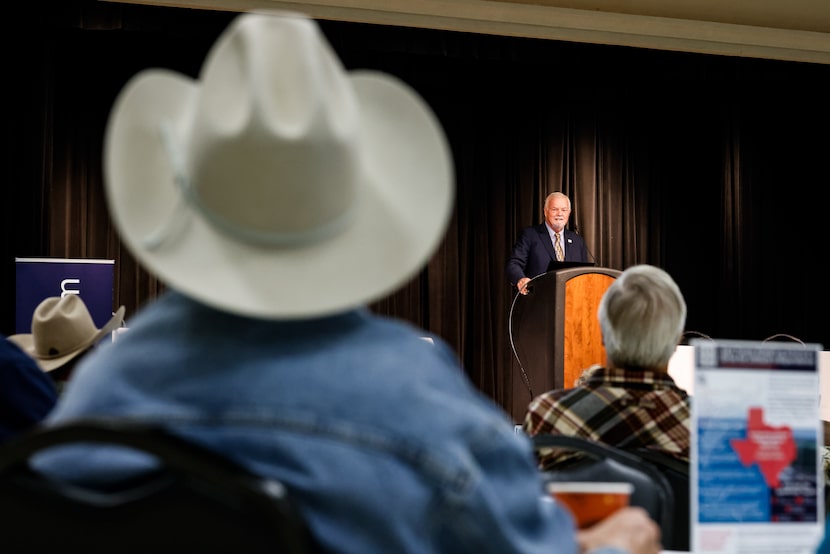
Texas Railroad Commissioner Wayne Christian deliveries a speech on the pros of lithium extraction in Northeast Texas during a community meeting held by Smackover Lithium on Nov. 11, 2025, in Titus County.
Angela Piazza / Staff Photographer
Fierce race for critical minerals
The U.S. has remained dependent on lithium imports from Latin America and China. But recent efforts, like what’s taking place in the Smackover Formation, are trying to remedy that.
Currently, Nevada is a leader in domestic lithium projects, and has the only fully-functional lithium mine. Still, energy companies have been eyeing lithium in the Lone Star State for a while, even figuring out how to give new life to produced water from oil and gas operations.
Last month, Gov. Greg Abbott joined Fort Worth-based Element3 in the Permian Basin as it opened its lithium carbonate production plant that will use oilfield waste, a first-of-its-kind facility in the U.S. in half a century.
“Texas is America’s undisputed energy leader,” Abbott said at the event. “The future of America depends on producing the elements essential to our supply chain for products we use every day. … By the grace of God, we have lithium and other essential rare earth materials right here in our own state.”
On the opposite side of the state, Mariana Minerals and Select Water Solutions broke ground in the Haynesville shale region last fall on the Texas’ first commercially produced water lithium extraction facility.
And down south, Tesla earlier this year opened a lithium refinery in Robstown, near Corpus Christi. Elon Musk called it the “most advanced lithium refinery in the world.”
Old oil fields throughout Texas are being reimagined into lithium sources, but the Smackover has drawn the most interest – becoming ground zero in the effort to produce lithium, according to a 2024 report from the Federal Reserve Bank of Dallas.
Bromine has been extracted from the Smackover in Arkansas for decades, but commercial interest in the formation’s lithium is much more recent – likely beginning less than a decade ago.
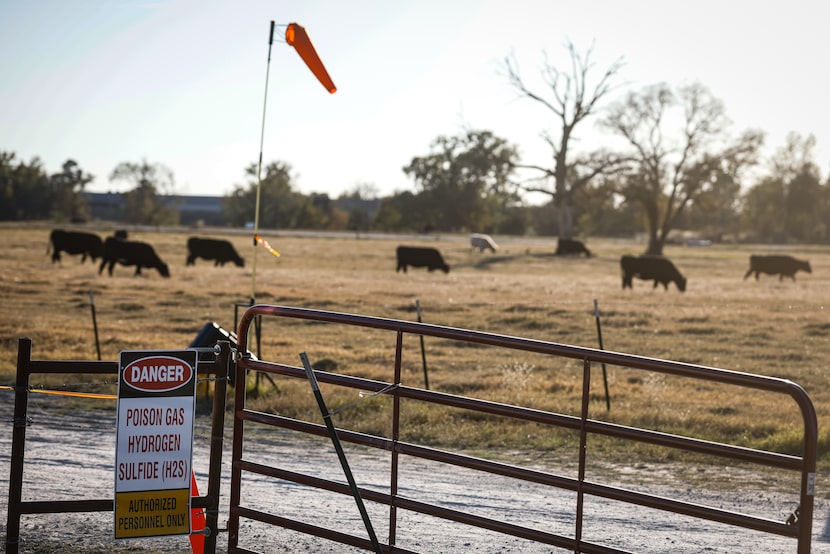
Cattle grazes in a pasture surrounding a direct lithium extraction test well on Nov. 11, 2025, in Franklin County.
Angela Piazza / Staff Photographer
“Demand for lithium has boomed in recent years amid rising global sales of electric vehicles and increasing use of lithium-ion batteries to store electricity,” the report said. “These developments – important features of the energy transition – are expected to continue, with many forecasts anticipating a doubling or tripling of lithium demand by the end of the decade.”
A distinguishing feature of the Smackover is the technology.
In other parts of the world, lithium is generally produced using massive evaporation ponds or from hard rock mines. But in the Smackover, and other basins in the region, companies are using direct lithium extraction (DLE).
This approach utilizes a much smaller footprint of the surface by drilling a well thousands of feet into the ground, pumping the brine from the aquifer to the surface, treating it at a facility, then pumping the brine sans lithium back into the underground reservoir.
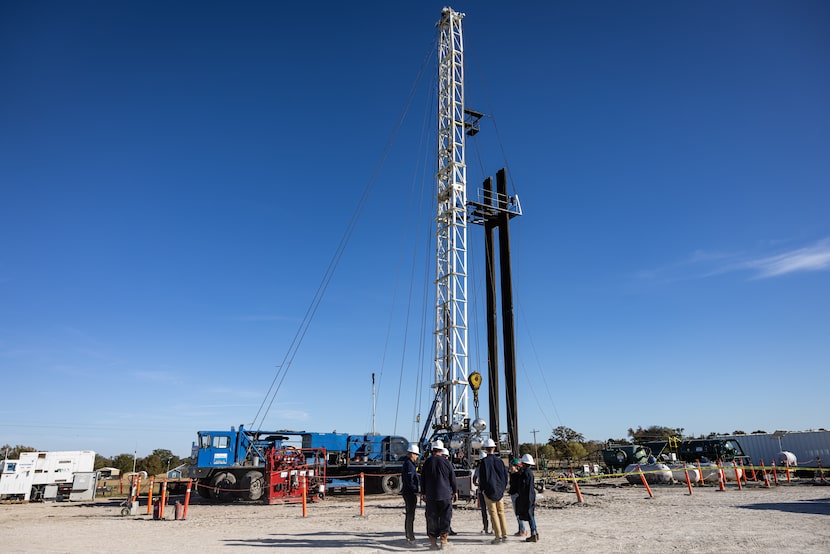
A Standard Lithium and Equinor tour group visits a Northeast Texas test well site, Nov. 11, 2025, in Franklin County.
Angela Piazza / Staff Photographer
‘Texas lithium for Texas’
The race for lithium has been both fast and slow.
To keep a competitive edge, companies like Smackover Lithium, initially moved throughout the region quietly. They first wandered over the state line from its Arkansas operations four or five years ago. Leasing, in earnest, began within the last couple years.
“We were trying to secure the best resources in the state, which we have done,” Standard Lithium president and COO Andy Robinson, said. “We’re super pleased with what we’ve done over the last few years.”
Now, the company has shifted to talking publicly about its efforts in the formation, and up first is the Franklin Project. Robinson said Standard Lithium prides itself on transparency.
In October, the company hosted a half-day workshop at the Mt. Pleasant Civic Center in Titus County. The room was packed with curious residents, attorneys who had been advising on leases like Hicks and Wyatt Hinson, and industry folks from as far as Houston who wanted to hear firsthand what was taking place in northeast Texas.
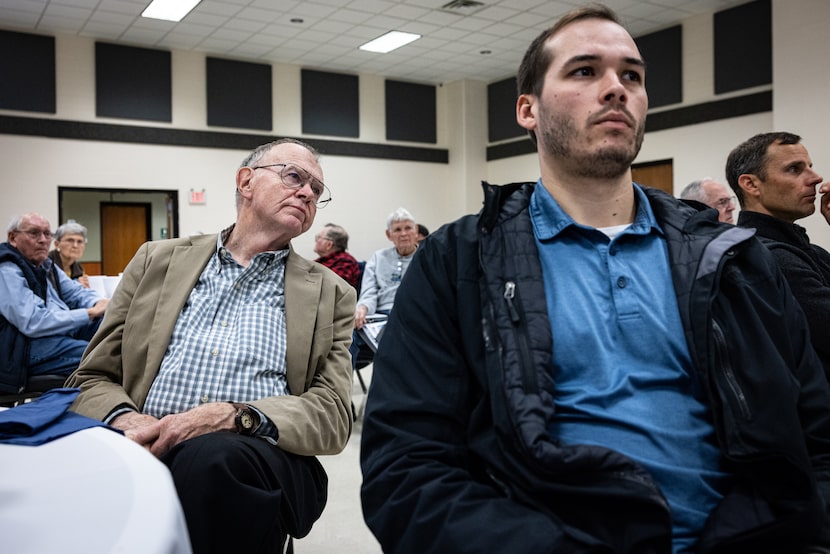
Attorneys B.F. Hicks, left, and Wyatt Hinson listen to a presentation on direct lithium extraction in Northeast Texas during a community meeting held by Smackover Lithium on Nov. 11, 2025, in Titus County.
Angela Piazza / Staff Photographer
The discussion went in depth, even pointing out lithium on the periodic table at one point, but finally gave community members access to company executives, technical experts and regulators.
They shared what they’ve done with lithium extraction and processing in Arkansas, answered questions and tried to ease any concerns about how, what or why.
Leadership also wanted to make clear that despite flashy headlines: There isn’t a boom.
“These things are not overnight by any stretch of the imagination,” Robinson said in an interview ahead of the workshop. “They take years to de-risk and develop and understand before you’re ready to build and produce from a project.”
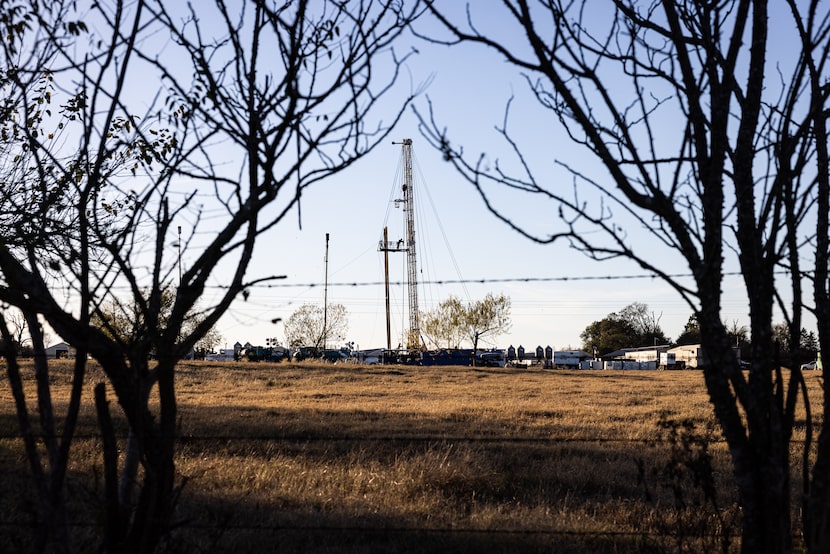
A derrickman guides pipes into a block while drilling a direct lithium extraction test well on Nov. 11, 2025, in Franklin County.
Angela Piazza / Staff Photographer
Robinson said these are long-lived, long-life assets.
“They are in production, particularly lithium brine projects, for decades,” he said. “So whilst I understand there’s a new emphasis on lithium and people like to think of booms, etcetera, it’s actually kind of a long, slow, slightly boring industry. They’re going to be there for a long time and they operate for decades.”
After the civic center cleared, some Smackover Lithium employees hopped in their vehicles and drove a few miles nearby to one of their test sites.
Dressed in hard hats and protective glasses, they watched crews funnel thin pipes into the ground from atop a tall, temporary rig that overlooked a chicken farm and roaming cattle.
Drilling superintendent Matt Dangerfield explained the process, which was testing the pressure, seeing how the brine would flow and collecting samples from different distances.
“This is Texas lithium for Texas,” he said.
‘Couldn’t be better positioned’
On a stretch of warm, sunny days in early February, the Plantinga brothers, Sjouke and Auke, tended to their family business at Pleasant Hill Dairy.
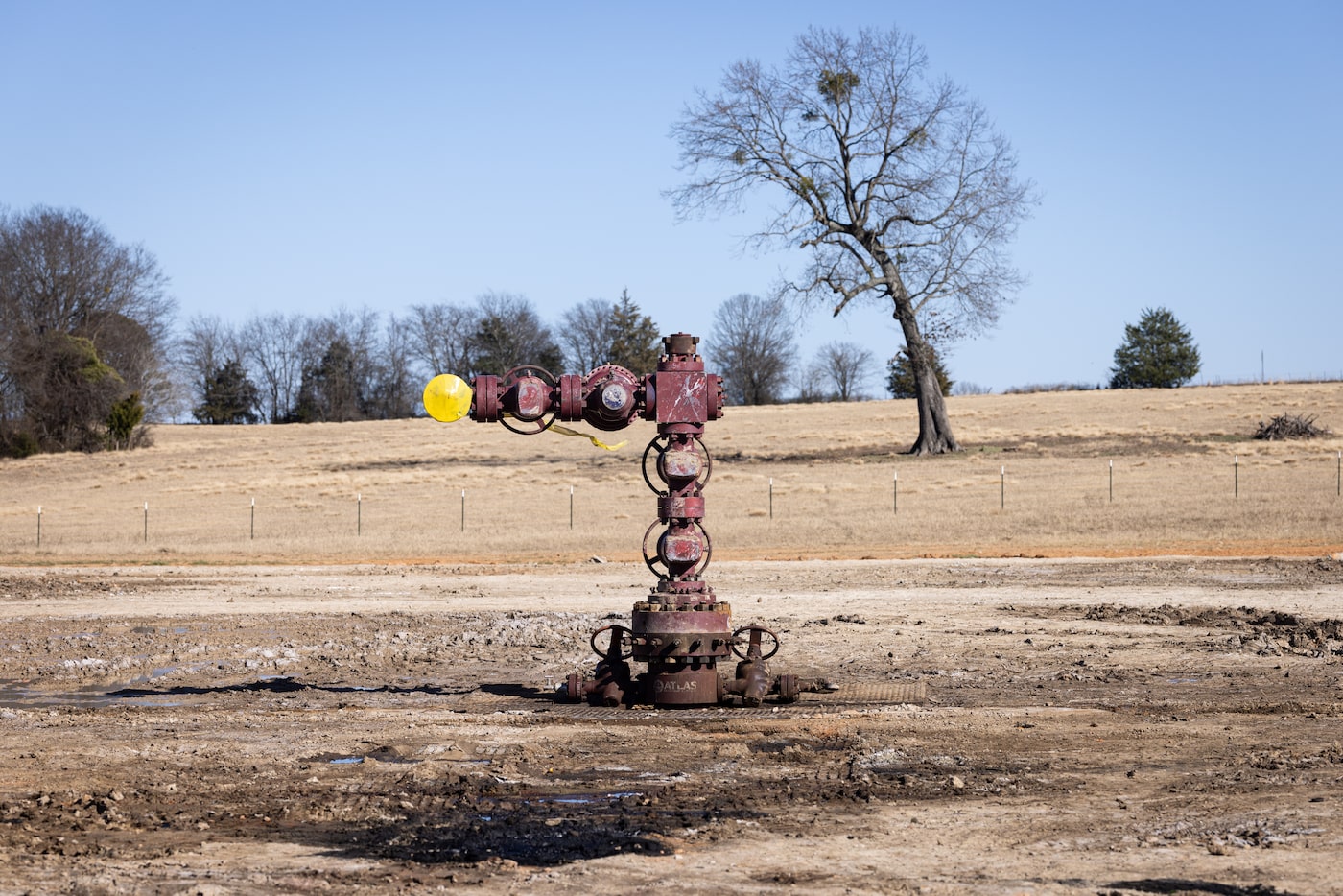
Far away from the milking operations, a wellhead from a testing site sits on their property in a grazing field.
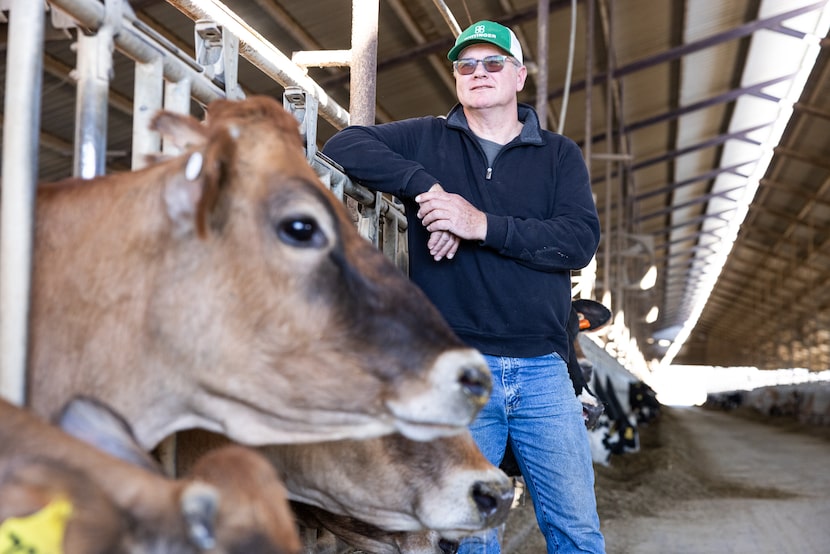
Dairy farmer Sjouke Plantinga leans against barn railing while Jersey heifers poke their heads out on Feb. 6, 2026, in Franklin County.
Angela Piazza / Staff Photographer
The Plantingas, who immigrated with their parents from the Netherlands to the Purley community of Franklin County in 1986, were among the first to sign a lithium lease.
“We signed way too early to tell you the truth,” Auke said, trying to remember how many years had passed. He said that about a year after they signed, they heard others got agreements for three or four times as much.
“We missed out on a little bit of money but it’s not where our income comes from so…,” he said.
For the most part, especially since there aren’t any active drilling or extraction efforts at the moment – and their concerns over possible contamination or impacts to the water have been eased – lithium is mostly out of sight, out of mind for the Plantingas.
“If they do it right, it should be OK,” Sjouke said.
Across the county, one of T5 Smackover Partner’s sites, Blondie Lady, was also beginning to quiet as crews packed up, leaving just the wellhead behind.
T5 is probably the newest company to enter the Smackover, and they say they’re moving at a pace that can’t be matched.
T5’s co-founder and CEO Bruce Thompson is a longtime Dallas entrepreneur turned sort-of wildcatter these last couple years.
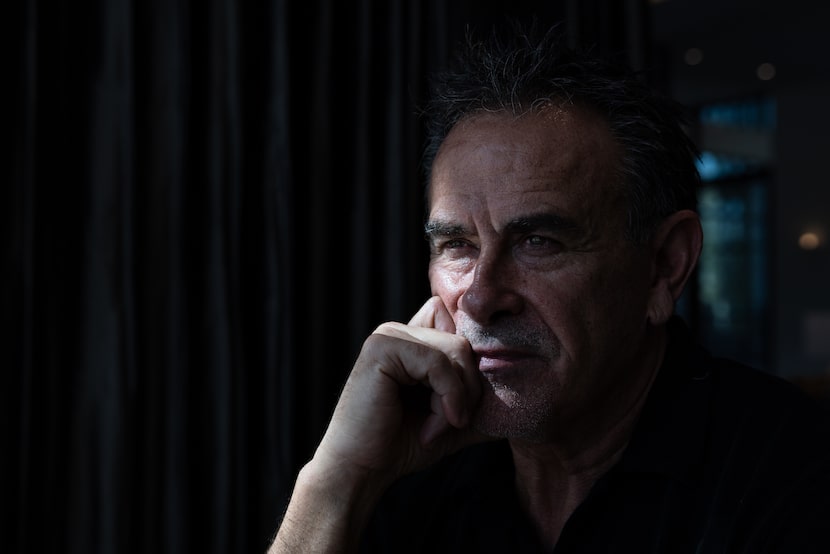
Bruce Thompson, founder and CEO of T5 Smackover Partners, sits at his dining room table during an interview with The Dallas Morning News, on Feb. 17, 2026, in Dallas.
Angela Piazza / Staff Photographer
“We did not know what we were doing,” he said with a laugh. “All I knew is that there was something here. I felt it.”
Thompson purchased about 1,200 acres straddling Franklin and Titus counties from Luminant with intentions to retire with his wife Michelle.
Then, a lithium landman came knocking.
Instead of negotiating a lease, Thompson hit the books – and the road – to learn about DLE from the “Godfather of lithium,” mineral leases, geothermal wells, what’s already been done in the Arkansas’ portion of the Smackover Formation and more.
“I totally believe we were brought up there for a reason. I had no idea there was anything underneath that ground,” Thompson said. “ … I started doing homework and research and we are right there in the sweet spot. We couldn’t be better positioned than where we are.”
Thompson’s background in technology taught him speed-to-market matters, he said. With the foundation of his business experience, new knowledge and an idea, he brought on a team to help him execute, including T5 co-founder and president Cole Fisher.
The men said they’re different from the “big players” in the Smackover right now, in the fact that they’re neighbors to the folks signing leases but also in their business model.
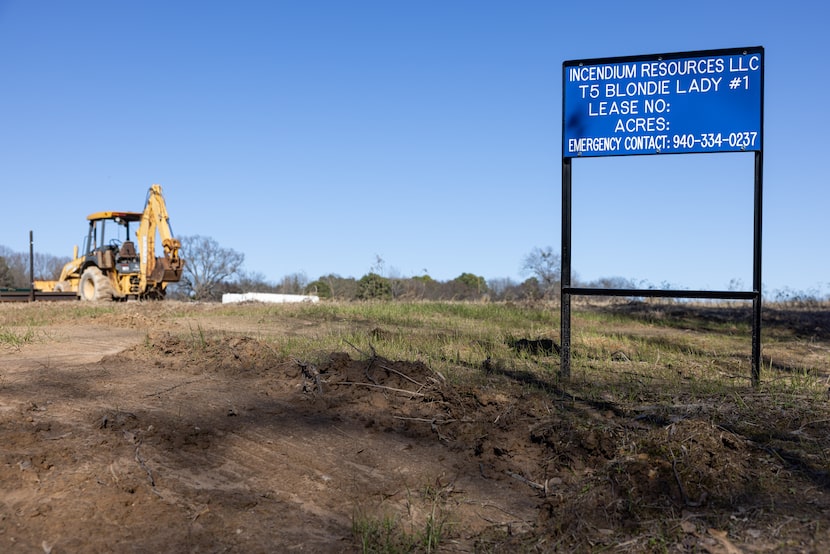
A lithium lease sign owned by Bruce Thompson’s T5 Smackover Partners on Feb. 6, 2026, in Franklin County.
Angela Piazza / Staff Photographer
“It’s not just the goals of our business and the mission of the business, but also the way that we’re going about doing things and at a speed in which we’re going to give a return to people,” Fisher said.
T5 has offered five-year leases with no extensions, a fraction of the length of other leases residents have reported. Thompson said they told lessees they’ll let them out of the contract if T5 drills and is unsuccessful.
“I told them, ‘I’m not here to hold you up, I’m here to get something done,’” Thompson said, adding he’s confident they will.
Their first well was drilled on Nov. 28, Thompson’s birthday.
T5 is planning to produce with a modular plant by the end of 2026, and grow the operation as they go, eventually expanding into secondary minerals and long-term scalable production with geothermal energy projects.
“What’s in the ground is just insane to me,” Thompson said. “The numbers will boggle your mind. I don’t say them because I don’t want to jinx myself.”
How lithium extraction is transforming northeast Texas
 View Gallery
This reporting is part of the Future of North Texas, a community-funded journalism initiative supported by the Commit Partnership, Communities Foundation of Texas, The Dallas Foundation, the Dallas Mavericks, the Dallas Regional Chamber, Deedie Rose, Lisa and Charles Siegel, the McCune-Losinger Family Fund, The Meadows Foundation, the Perot Foundation, the United Way of Metropolitan Dallas and the University of Texas at Dallas. The News retains full editorial control of this coverage.