
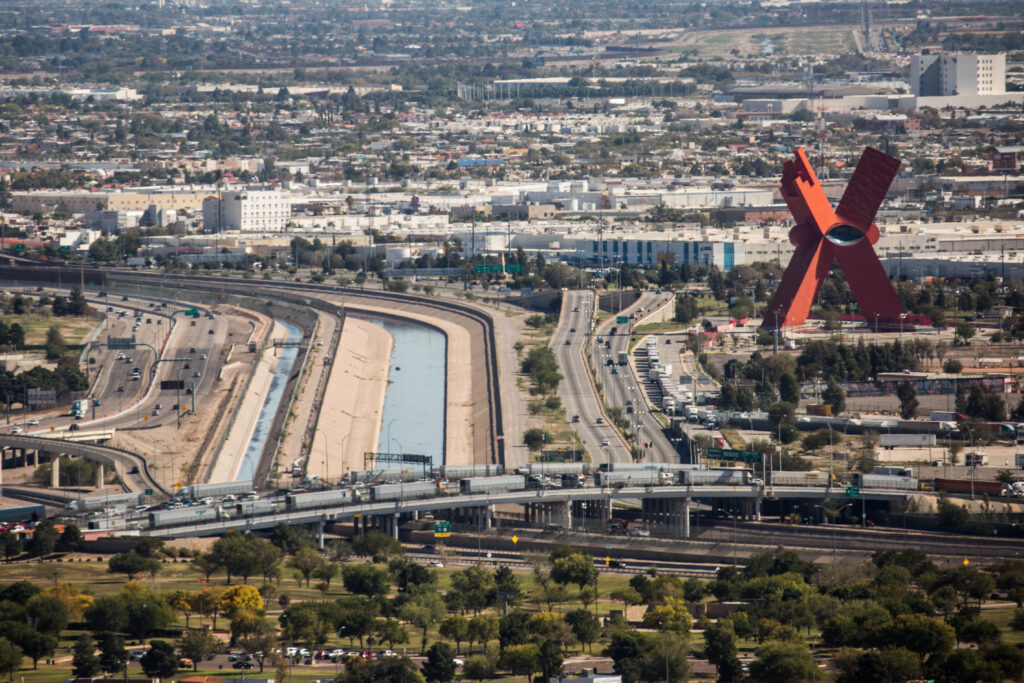
The West Texas town of El Paso is one of the largest in the nation, but tucked away in the Chihuahuan Desert, it’s often misunderstood by the country. Portrayed as a “no man’s land” and “wide open border,” the reality of El Paso’s history of trade, diversity and migration has been largely overlooked in modern culture.
Jazmine Ulloa, a New York Times reporter originally from El Paso, has reported on her home city frequently, including in 2019 when a gunman targeted Hispanic people at a Walmart in the town. The hate crime left 23 dead and 22 wounded, becoming the seventh deadliest mass shooting in American history.
In her new book, “El Paso: Five Families and 100 Years of Blood, Migration, Race, and Memory,” Ulloa works to capture the reality of the city’s history over the past century through the lives of five families with deep ties to the region.
Ulloa spoke with the Texas Standard about her reporting process and the broader implications the region’s history has for the U.S. Listen to the interview in the audio player above or read the transcript below.
This transcript has been edited lightly for clarity:
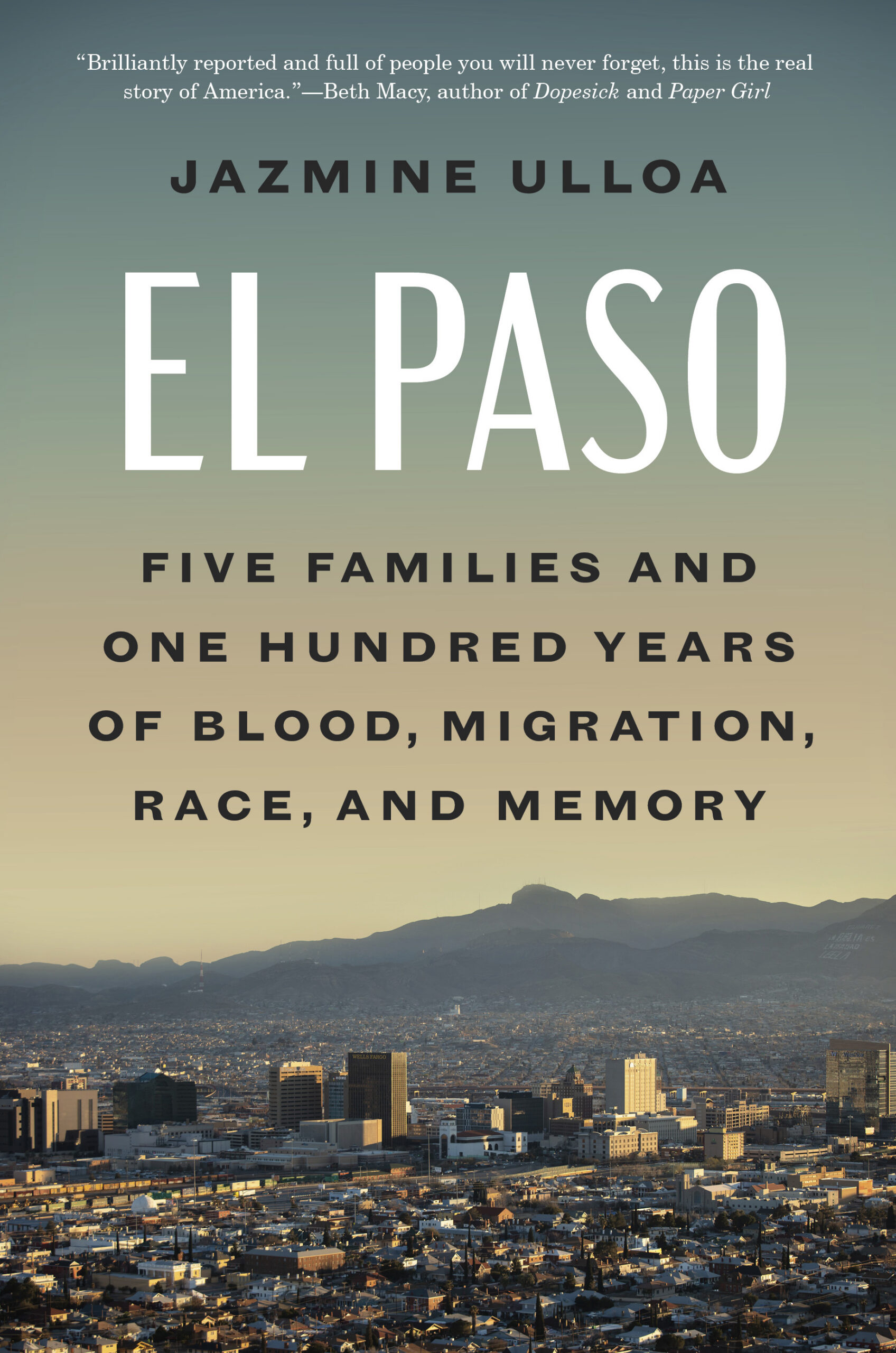
Courtesy of Penguin Random House
Texas Standard: What inspired you to write this book and why now?
Jazmine Ulloa: I was born and raised in El Paso, went away for college, but in 2019, as you referenced, this self-proclaimed white supremacist drove into El Paso from the Dallas area and opened fire at a Walmart, decrying what he called “the Hispanic invasion of Texas.”
And this massacre happened three minutes away from where I went to high school, Burgess High School, and it affected people that I knew and loved and had grown up with. My best friend’s own father had been at the store that day.
At the time, I was a national political reporter for the Boston Globe. And at the same time we were watching El Paso become this backdrop to these really intense battles over immigration. And already the images from my hometown had been jarring, right? We were seeing images of children getting separated at the border and migrants being shackled at the Santa Fe Bridge.
And so as I was there covering this horrific crime, I was thinking about how I wanted to tell a different story about the place where I’m from, a much deeper story, and really understand this violence, not as a rupture in our history, but part of this much larger legacy, a continuation of the past that hasn’t really given El Paso its due, or its Mexican and Mexican-American workers (their) due in our society.
Yeah, a very complex history. The five families, how did you choose the characters and why these families?
I wanted to capture the multiracial, multiethnic flavor of the region. I was looking for families who were very emblematic of not only that migratory experience — this ebb and flow of blue collar workers and intellectuals and activists that had been coming and going through El Paso since the Mexican Revolution — but also captured the diversity of the reason that we don’t often see, that even many Fronterizos don’t often see.
Like I said, I was born and raised in El Paso, but there were so many things about El Paso that I didn’t know, including its rich Chinese-Mexican history. So I was really digging for that. I had been covering immigration for more than a decade at that point in some form or another, and so some of the families I had met through that reporting and others kind of found me.
So what can the rest of the country learn from El Paso and the border residents that call this region home, especially at a time when the country is so divided?
Over the past year, immigration reporters have been at the front lines of the harshest immigration crackdown we’ve seen since World War II.
We’ve been watching masked officers apprehend people at workplaces, at courthouses, outside of their homes. We’ve been seeing these raids that are sweeping up not only undocumented immigrants, but people with all kinds of legal residency and even U.S. citizens born and raised in the United States, but detained or apprehended because they speak English differently or because they look a certain way or their skin is a different color.
I think to understand where we are today, we really have to understand El Paso’s history, the foundations, the rhetoric, the treatment, this machinery – all of it was built brick by brick, decade by decade in El Paso.
And so that history of violence at the border is at play here, but then there’s also the flip side, the resistance to that and what I call “la conciencia colectiva,” this ethic that has existed in El Paso for a very long time of people coming together for the collective good and neighbors pushing back against these notions of race.
» GET MORE NEWS FROM AROUND THE STATE: Sign up for Texas Standard’s weekly newsletters
Yeah, the collective consciousness. Talk about the period – the 100 years that the book covers, historically, as you tell this story.
Yes, so I found five families. I really wanted it to center around the lives of five families and how immigration has shaped their experiences and how they, in turn, have shaped El Paso and the nation.
And so I felt like I had to go all the way back to the beginning, and that’s why it spans a hundred years. I wanted to tell this deeper story and so I had to go back to the beginning and I think the Mexican Revolution was a critical time to start that story because that is when you first begin to see these large numbers of Mexicans coming across and you first began to hear rhetoric very similar to what we’re hearing today – that these are dangerous criminals, that they’re-gun runners.
And some of them were running guns back into Mexico from the United States to help rebel factions of the revolution that were fighting, but many of the people who were also getting labeled were these intellectuals who were carrying these bold ideas, these bold progressive ideas at the time that we’re still debating today, such as workers’ rights, fair treatment of Mexican workers in the United States, fair wages, and they were organizing with workers as far as the Midwest. And so that was also cast as dangerous at the time.
Very, very fascinating chapters, and I think people will learn a lot. One review said you “paint the city as a microcosm for all that is good and bad about the United States.” How so?
Well, as I was writing this book, I was also a national political reporter for the (Boston) Globe, and then I moved on to cover politics for the (New York) Times. So this book got written all across the country.
I was carrying books in my backpack and my suitcases, I was trying to read during downtime at the airport, I was writing in coffee shops and hotel rooms. And at the same time I was going out to events, I was trailing candidates, I was interviewing voters in all different states – Latino voters in all different states – and with each cycle, immigration was just becoming a more and more urgent issue, and we were hearing candidates from one party in particular paint this really dystopian picture of the border and saying “every city is a border city,” “every state is now a border state.”
But when they would talk about that, they were only talking about the ills of migration and conflating immigration with crime and so I wanted to explore that idea that I am from a border city, I am from El Paso – what does that really mean? Because that’s definitely not the border I grew up with, the El Paso I grew up with.
I grew up moving back and forth between Mexico and the United States, going over to Juárez for birthday parties and dentist appointments. Many of my friends came over every day, crossed the border every day to go to school with me.
And I wanted to capture that counter image; that it’s not so scary, that things don’t have to be so black and white. There’s a lot of gray at the border. There’s a lot of complexity.
Well, finally, in the little time we have, what do you hope readers will take away from the book?
I hope people will take away that there’s a lot of lessons here for Americans and that it deserves to be at the center, not the margins, of our history.
Immigration has become this issue that now many people understand is really at the center or at the crux of this threat to democracy, because when we fear “the other,” when Americans fear “the other,” it softens the ground for the erosion of civil liberties and that is what we’re seeing across the country.
So El Paso offers lessons on how that’s happened before and will be here again, but it also shows that there has been a pushback to that type of thinking.