
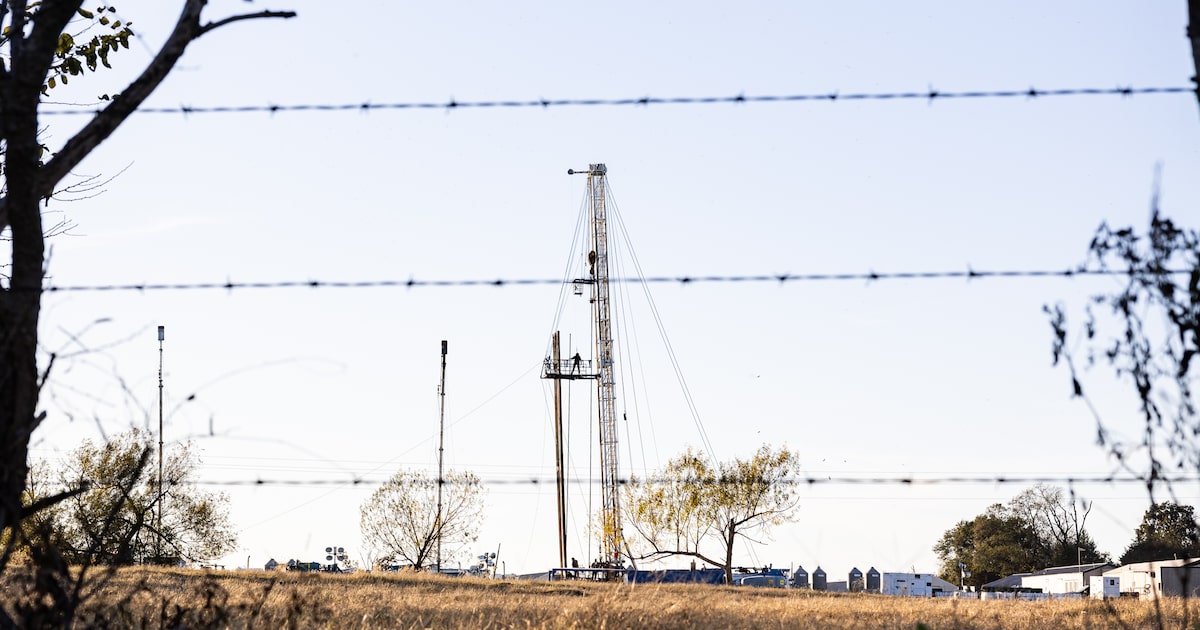
The Lone Star State is already a literal powerhouse that bestrides domestic energy production. Lithium — the stuff that consumer technology, electric vehicle batteries and solar panels are made of — is in abundant supply around the world and here at home, including Texas.
There’s an estimated 9 million tons of the alkali metal scattered in reserves around the U.S.; while we don’t have nearly as much as Australia, China or other countries abroad, that hasn’t stopped an enterprising number of domestic players from vying to tap into the emerging market.
Related

Except that trend has now lost momentum, and the economics of a would-be gold rush are running headlong into reality. Once upon a time, lithium was seen as the avatar of a green energy economy that got lots of attention and subsidies from the Biden administration — but has had the rug largely pulled out from it as EV demand has tumbled, and as President Donald Trump has pulled back on government-funded initiatives his predecessor championed.
All of which helps set the stage for Lana Ferguson’s Business Sunday stellar cover story, which spotlights how one corner of Northeast Texas has become an epicenter of the possibilities of lithium production, and some of the challenges therein. One local attorney told The Dallas Morning News that he’s banking on lithium production “to bring a lot of money into our community.”
Business Briefing
Related

And yet, there are reasons why out of 66 projects spread out across the country, the sole operational mine exists in Nevada.
While the budding boom can’t quite be described as a bust, the industry is being forced to evolve in the face of unavoidable realities impacting the sector — namely that the federal government isn’t throwing obscene amounts of money at green economy boondoggles anymore, especially with EV sales struggling.
And as the battery-powered vehicle future takes a turn for the worse, gigafactories — centers meant to produce lithium-ion batteries — have followed suit. In the Biden era, dozens of them were announced, representing billions of dollars worth of investment and tons of jobs.
“Over the past year, though, it has become clear these ambitions will not be realized, and automakers and battery companies are reassessing the future,” the Federal Reserve Bank of Dallas wrote in a recent analysis, breaking down how the industry is pivoting.
“Many companies have made painful cutbacks. At the same time, those battery manufacturers in the right position are shifting toward new opportunities, some that do not rely on the EV market for success.”
Even if there was a sudden upturn in the market for lithium, there are still significant barriers to scaling it quickly. A critical element to understanding the lay of the land comes from Ferguson’s story, where one executive makes it clear that people shouldn’t see this as easy money.
“These things are not overnight by any stretch of the imagination,” Standard Lithium COO Andy Robinson tells The News’ Ferguson. “They take years to de-risk and develop and understand before you’re ready to build and produce from a project.
“So whilst I understand there’s a new emphasis on lithium and people like to think of booms, etcetera, it’s actually kind of a long, slow, slightly boring industry. They’re going to be there for a long time, and they operate for decades.”
Wise words, as lithium’s evolution is likely to be more of a marathon rather than a sprint. And certainly not a gold rush.