
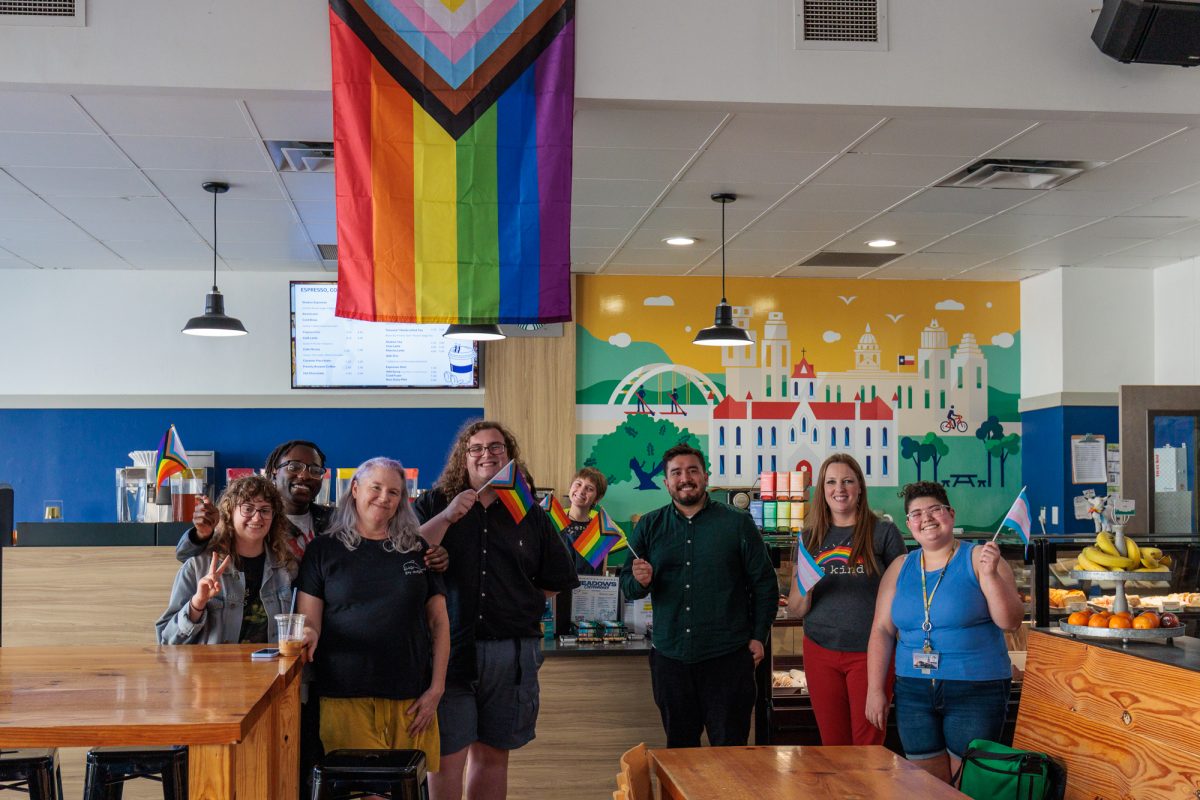
The two year anniversary of the student-led protests that led to the reinstallation of the Pride flag at Meadows Coffeehouse was celebrated on Feb. 27. Student leaders from the Trans Wellness Organization and PRIDE gathered at the St. Edward’s University seal, along with faculty members Lionel Lopez and Alexandra Barron, to celebrate the anniversary, how far the university has come since then and to remind the community of the importance of inclusion.
“We’re also celebrating the work that has been accomplished over the last two years, much of the lead of our students along with administration,” said Lopez, who is also the assistant director of the Office of Student Belonging and Inclusive Excellence. “Since the protests, our campus has been able to maintain the culture of inclusivity and welcomeness for all individuals, regardless of sexual orientation and gender identity.”
Although there weren’t many community members in attendance, Lopez and Barron, along with master’s student Logan Counce, spoke in front of the small crowd. Barron recalled several conversations regarding the Pride flag and what it meant to those people.
“I had so many prospective students and families, faculty and staff, come up to me at different points and say ‘You know, I was worried I was coming to a Catholic school, and I didn’t know what that meant for me as a queer student, and I didn’t know if I’d be welcomed at this Catholic school,” Barron said. “‘But I saw that flag, and I thought maybe it’s gonna be okay. Maybe this is a good place for me.’”
Lopez highlighted that the student protests built momentum and that the sense of community grew in a “pretty extraordinary” way since then. For those who were on campus at the time, the memory of those events is still fresh in their minds.
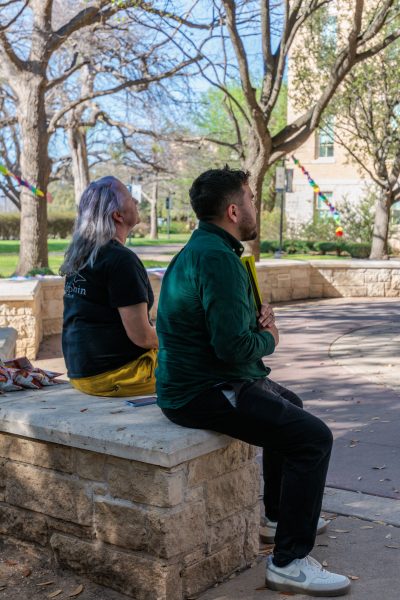 Barron (left) and Lopez sit by the University Seal while Counce recalled their experience as a student at St. Edward’s “One of the things that I wanted to be consistent was the sense of belonging that encouraged me to come to this school in the first place,” Counce said. “One of the reasons I intended to go here was because the push for inclusion, acceptance and diversity is so heavily engrained into the school’s very mission as an institution.” Counce highlighted that community action served to bring everyone together and to push for representation and visibility across all community groups. (Dani Brannon / Hilltop Views)
“The first thing that I remember is how quickly students galvanized student support and peer to peer connection,” Lopez said. “What I remember the most is how students came together; they spoke with one voice, many different people, but all for the same goal of making sure that representation was being held, that we were holding people accountable and that we did not partake in the system of slowing down and getting comfortable. That’s not who we are at St. Ed’s.”
Kris Feck, TWO’s president, recalls the initial conversations and the confusion that students felt throughout the first few months since the Pride flag had been taken down. The lack of transparency, accountability and of clear information given to students by the administration was one of the things that frustrated them the most at the time.
“When the protests actually started, there was a lot of behind the scenes stuff that I was helping out with since I work at the Student Belonging Office with Lionel,” Feck said. “It was really nice to see faculty, staff and students really rally together for this.”
Many community members who were not here at the time ask Feck about why those protests were so important, to which they respond by highlighting the broader societal and legal context of the time, both locally, statewide and nationally.
“The implications of taking down a very prominent Pride symbol is more than just the flag, is the right to express ourselves and make sure that we hold the campus and the administration accountable for the Holy Cross mission of being inclusive and accepting,” Feck said, “You can’t just be inclusive when it’s beneficial to you, you have to be inclusive no matter what.”
Since the “Where Did the Pride Flag Go?” movement, the university has implemented initiatives and projects that have aimed to create a safer, more inclusive and welcoming environment for all. OSBIE has recently created the Residential Inclusive Community Housing program for LGBTQIA+ community members and the student task force to identify affinity flags, and continue to implement ally training and Redefining Me(n) meetings along with fostering identity-based student organizations. Ballroom Extravaganza and the Queer Expo have become annual events, where students come together to showcase their work and celebrate their identities.
“It’s important for us to revisit where we have been, the work that has been done, in order for students to remember that they play a big part in creating a legacy here on campus and that they can see themselves in movements that play a role in creating change,” Lopez said.