
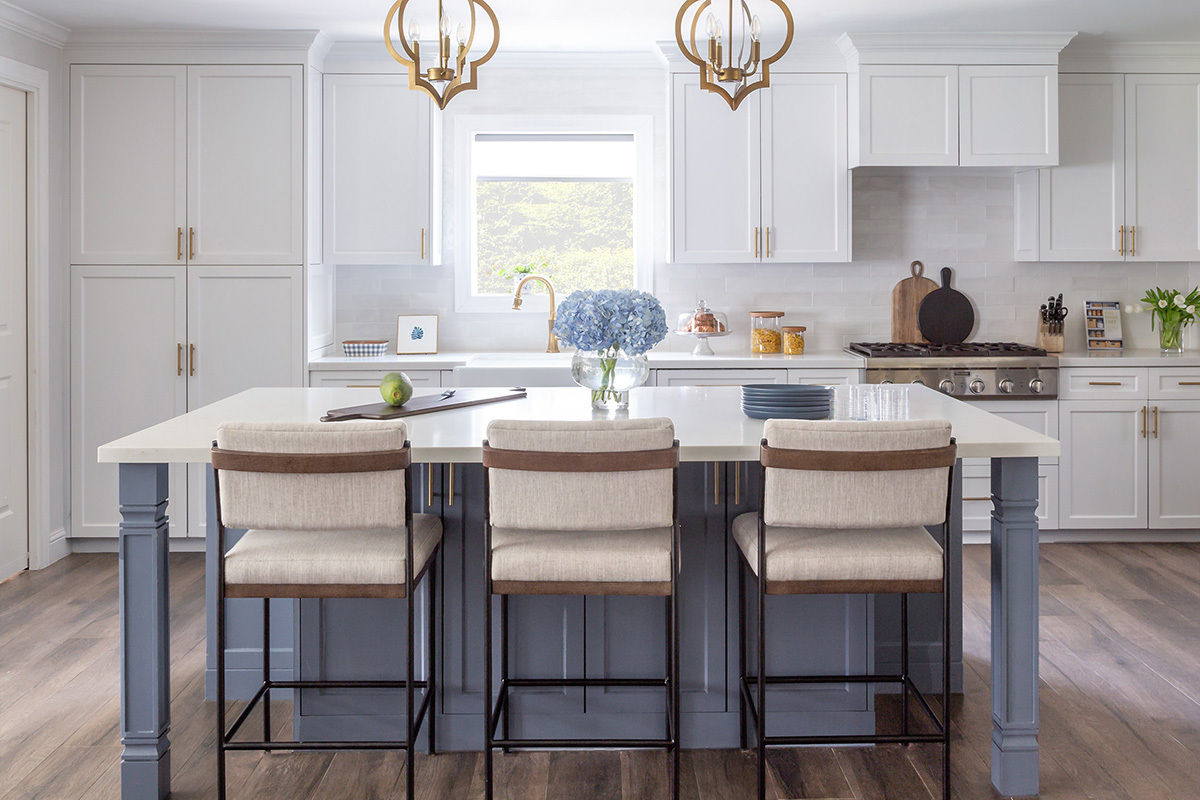
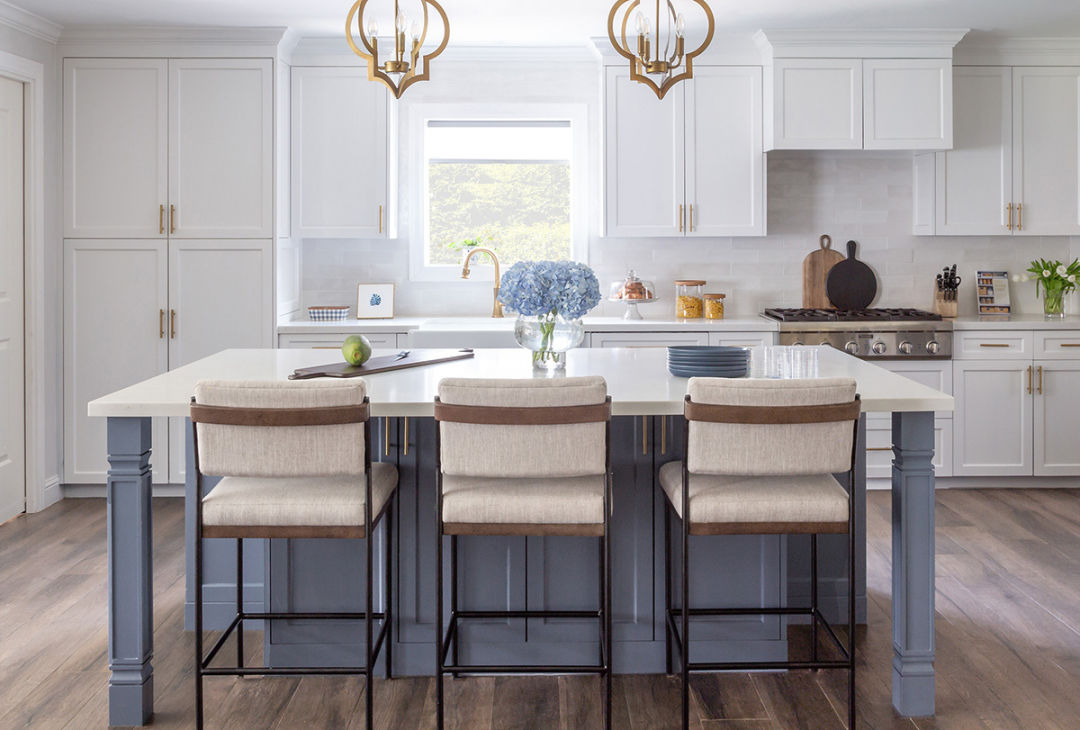
Interior designer Karen Davis of Marker Girl relies on luxury vinyl plank flooring instead of hardwood for low maintenance and durability.
No one thinks twice about purging the contents of a closet. The aftermath is always worth it, and often freeing, so what about going bigger and purging your entire home?
It’s worth considering, especially if you’re not using your space wisely or in a way you truly enjoy. Such an undertaking does require some thought: Which rooms rarely get used? Which furnishings no longer serve you? Which cabinets are so dark in the back that you don’t even know what’s in there?
An inventory of your home can be the start to making your space more efficient and more pleasant to be in.
“When you design around your own needs first, and then layer in quality materials and strong design, the result is a home that works for you long term,” says interior designer Karen Davis of Marker Girl. “That’s what truly makes a difference.” Here are eight tips on how to make your home work for you.
Reimagine underused spaces
The easiest place to start? Turn little-used rooms into something more intentional. For many, that means transforming an underutilized dining room into a lounge, home gym, playroom, or hobby room.
Interior designer Rhonnika Clifton of Rhonnika Clifton Designs loves the idea of a music room. Maybe it holds a piano for someone in the family to play, or a stereo and comfortable chairs, making a space where homeowners and guests can relax to soothing tunes. Numerous studies show that listening to music can improve your heart rate, motor skills, and mental health.
Incorporate Vinyl 2.0
It wasn’t that long ago that vinyl flooring was a cheap, unimpressive option. Not anymore. Luxury vinyl planks that resemble wood are a popular, practical choice for flooring, Davis says.
“It’s moisture-resistant, and if you have a pet, it won’t scratch. People can spill, and it’s easy to clean up,” says Davis, noting that it’s much softer to walk on than porcelain planks or actual hardwood. Her favorite brands are COREtec, Mohawk SolidTech Plus, and Karastan LuxeCraft.
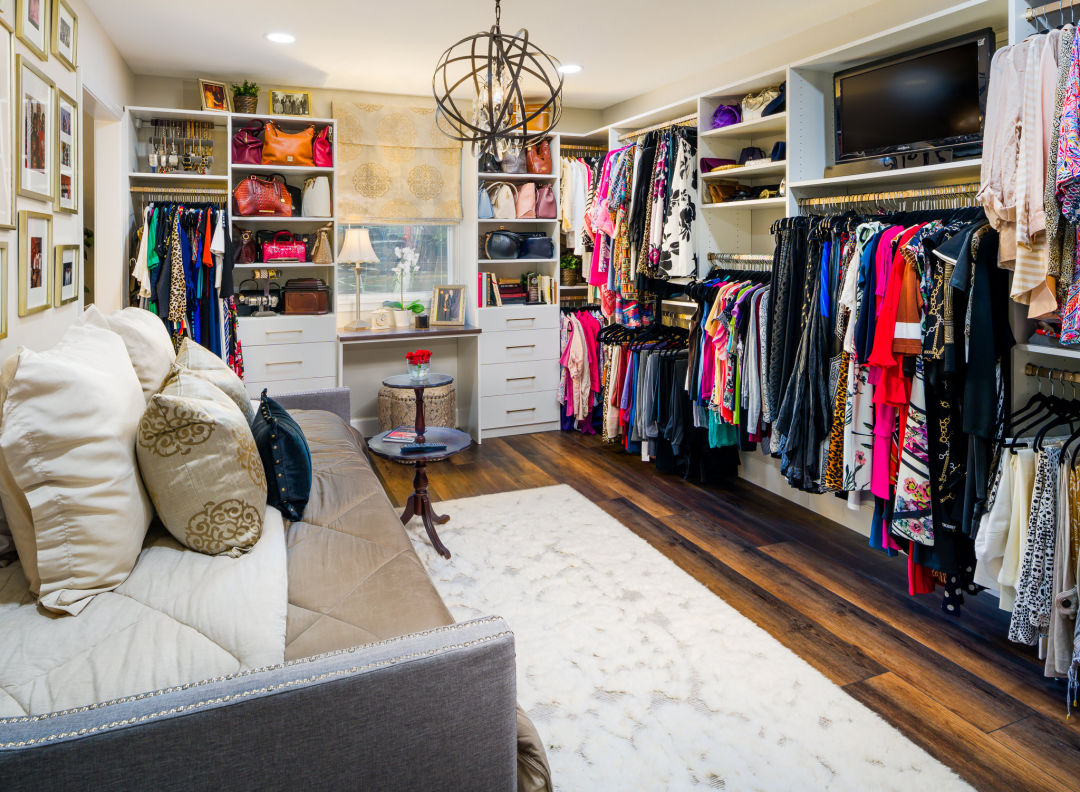
A beautiful and well-organized closet makes getting ready for work and play much easier, says interior designer Rhonnika Clifton of Rhonnika Clifton Designs.
Consider closet couture
Today’s closets look more like stylish boutiques than just a place to store clothes. To achieve this look, Davis and Haley Ottmann, of Home Girls Design, recommend starting with an inventory of clothes, shoes, handbags, and jewelry. The closet needs enough rod space for hanging things (pull-down rods are best for items that are too high for comfort). Optimize clothing storage by making room for a dresser or built-in drawers, incorporating shelves for stackable items, and ensuring shoe racks accommodate tall boots and your highest heels.
Davis says one of the most-asked-for features now is valet rods—small rods that pull out of a wall where you can hang a few pieces of clothing.
Elevate the space with a chic rug, a chair or daybed for lounging, and a chandelier. If you want to go all out, work in a beverage fridge stocked with mini splits of champagne and sparkling wine to celebrate.
Work those wall pantries
If you’re in a home that doesn’t have room for a walk-in pantry, Davis says there are still ways to maximize food storage in a wall pantry. A popular option is to install large doors that open to shallow shelves where you can see everything and drawers in the below-counter cabinets for overflow.
Cue the kitchen niches
Ottmann and her mother, Brigitte Howell, partners in Home Girls Design, specialize in remodeling projects, many of which are kitchens. Two popular niche areas—the baking zone and the coffee bar—are their most-requested details.
Special drawers hold baking sheets and pans upright, and counter-height cabinets can store heavy appliances, such as stand mixers and food processors, out of sight. Coffee bars offer a charming place for a coffee maker, shelves for mugs, and drawers for coffee and mix-ins. Take the experience up a notch by installing a refrigerated drawer. You won’t even have to cross the kitchen for creamer.
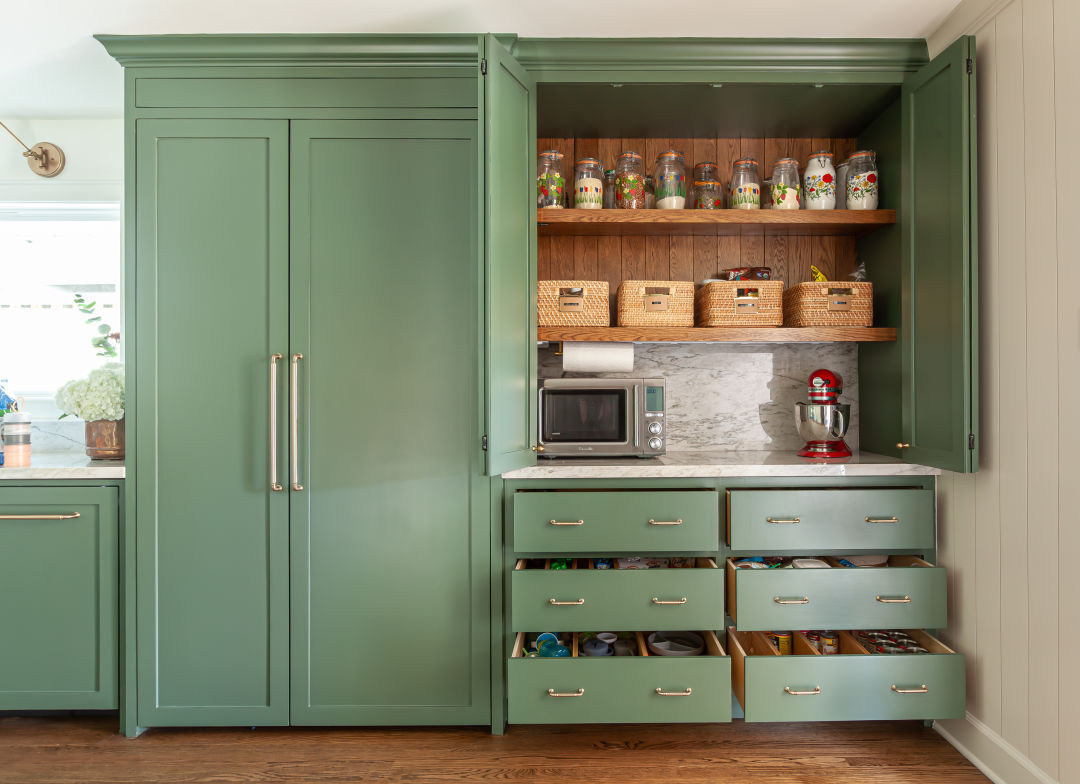
Haley Ottmann of Home Girls Design created this wall pantry for a homeowner who didn’t have room for a walk-in pantry.
Adapt to aging
Even if we’re lucky enough to age in place, it’s still important to think about things that will keep us there. Clifton urges removing trip hazards—such as rugs—and incorporating thoughtful furniture placement and better lighting. In a bathroom, a zero-threshold shower entry and handheld showerheads are worth prioritizing.
Take time when choosing colors, patterns, textures, and shadows, Clifton adds. “When we talk about function, we talk about organization and storage, but we don’t think about our senses,” she says. “Eyesight is a huge driving force.”
Automate
Whole-home automation is easiest to implement in new home construction, where wiring can be planned from the start. Still, there are plenty of things that can be done in an existing home.
Start with automated blinds. Though they’ve been on the market for a while, the price hasn’t yet decreased, but they’re a game-changer for out-of-reach windows in rooms with two-story walls. With the push of a button, automated blinds can shut out heat and help keep utility bills down. On a budget? Focus on windows with western or southern exposures.
Charge up
Charging stations have been around for a while, but it bears repeating that a well-made charging station will keep a family sane for anyone who’s ever torn through the house hunting for the right cord and an outlet plug. Even in an existing house, electricity can be extended into a drawer, where you can install the plugs, store cords, and the works. The best part is that you’ll never have to use the Find My Phone app at home because you’ll know exactly where it is.