
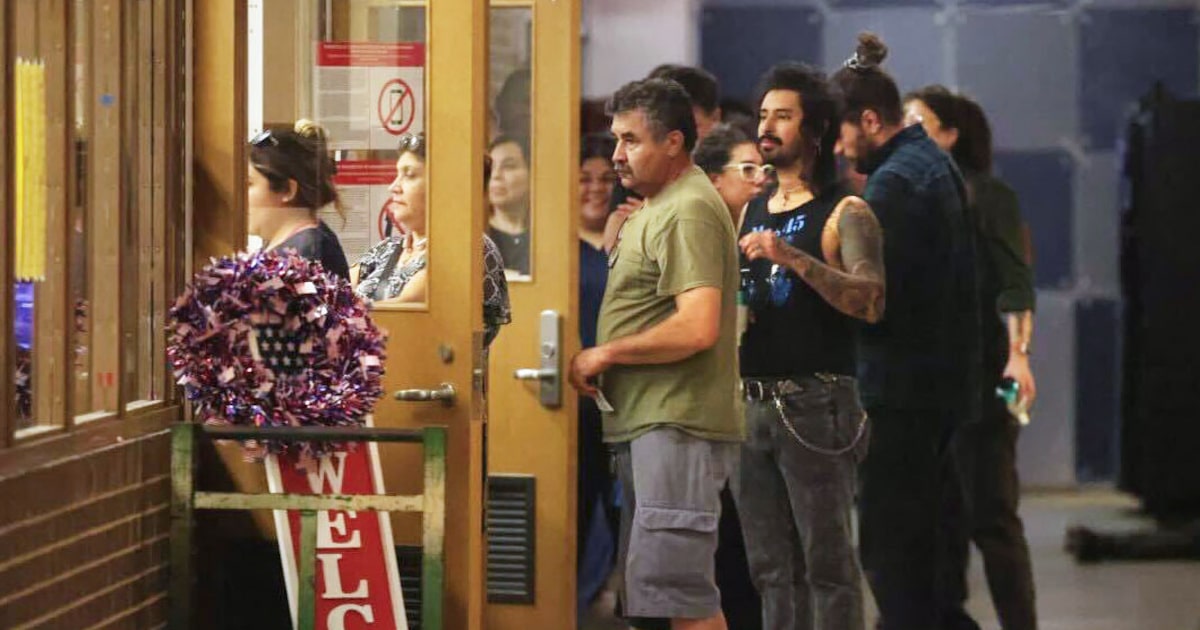
AUSTIN – Pollsters at the University of Texas at Tyler predicted about a week before the primary that U.S. Rep. Jasmine Crockett would cruise to the Democratic nomination for Senate with 55% of the vote. She lost.
A survey by Emerson College the weekend before the March 3 primary gave Attorney Gen. Ken Paxton a solid lead over Sen. John Cornyn in the GOP Senate showdown. Voters instead left him in second place, sending both to a runoff.
And a poll released on the eve of the primary by YouGov, an online research firm, predicted Cornyn would get barely a third of the Republican vote. He beat that by 10 points.
Such are the perils of polling in which thin samples, shaky turnout guesses and voters who increasingly refuse to answer surveys can produce numbers that look precise but badly misread the electorate.
Political Points
When those numbers are amplified by campaigns, media and political operatives, they can shape expectations about races that the actual vote quickly shatters.
“Frankly, you should rarely ever put too much stake into polls of primary elections,” according to a Feb. 25 analysis by the FiftyPlusOne, a polling and data review group led by G. Elliott Morris, a former lecturer at the University of Texas at Austin, nationally recognized polling and data science consultant, and author.
And while polling in general elections can be slightly more reliable for several reasons, they often run into the same shortcomings. In the coming months, independent groups, media outlets and campaigns across, will flood the country with hundreds of polls before the midterm elections in November.
Most of the surveys circulated by Texas campaigns, universities and advocacy groups in the days and weeks leading up to the primary pointed to tight races or looming upsets in the major races, but several proved off the mark once ballots were counted.
The biggest failures occurred in the Senate primaries – both sides – with wildly disparate vote counts estimated and the projected winner changing by the day.
Experts warned early that primary polls were too close to predict much beyond a tight race.
Polling averages in the final week showed Paxton leading Cornyn by three points in the Republican matchup. Cornyn edged Paxton in the final results, but neither got a majority, forcing a rematch May 26.
The same averages showed Crockett, the Dallas congresswoman, ahead of state Rep. James Talarico of Austin by about same spread in the Democratic fight. The opposite happened on election night.
Most statewide political polls carry margins of error of about 3 to 5 percentage points, meaning a candidate shown leading by only a few points may actually be tied or even trailing.
Such slim gaps in primary polls are “essentially coin flips,” wrote researchers at FiftyPlusOne.
Its national analysis of major statewide races since 2014 found polls picking the wrong winner in about two of every 10 competitive primaries, meaning races in which the margin between candidates was less than 10 points.
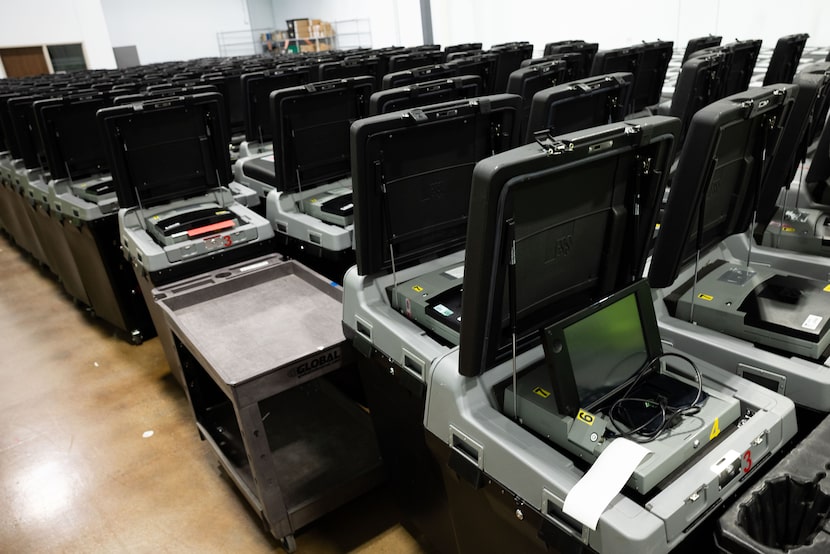
Vote tabulators in storage at the Dallas County Elections Operations Facility on Wednesday, March 4, 2026, in Dallas.
Juan Figueroa / Staff Photographer
Survey pitfalls
Weaknesses in survey models are sharper in primaries because turnout is low and voting histories of those taking part are less reliable than in higher profile general elections.
Still, for the considerable number of people who base careers and livelihoods on politics, it helps to have at least an idea – even if it’s uncertain – of where races are going, said James Henson, director of the Texas Politics Project at UT-Austin.
“It’s better than a crap shoot, but there’s a lot of variance,” he said. “There’s a lot of inherent error that is just never going to be solved in primary polling.”
Polls also capture only a moment in time.
Voters are asked how they would vote that day, even though Election Day may be weeks away and opinions can shift before ballots are cast or even before the poll is released.
Events that follow the survey, a viral video, a scandal or a sudden wave of campaign spending and advertising can quickly reshape the race and render those snapshots outdated.
In the Texas Senate race, for example, an unexpected, nationally televised event boosted Talarico’s campaign in mid-February, Henson said, just days after his group finished a poll that showed Talarico slipping against Crockett.
Talarico’s name recognition outside his Austin legislative district had been low last fall, but his approval ratings were strong, an advantage that dipped when Crockett got into the race in November, Henson said.
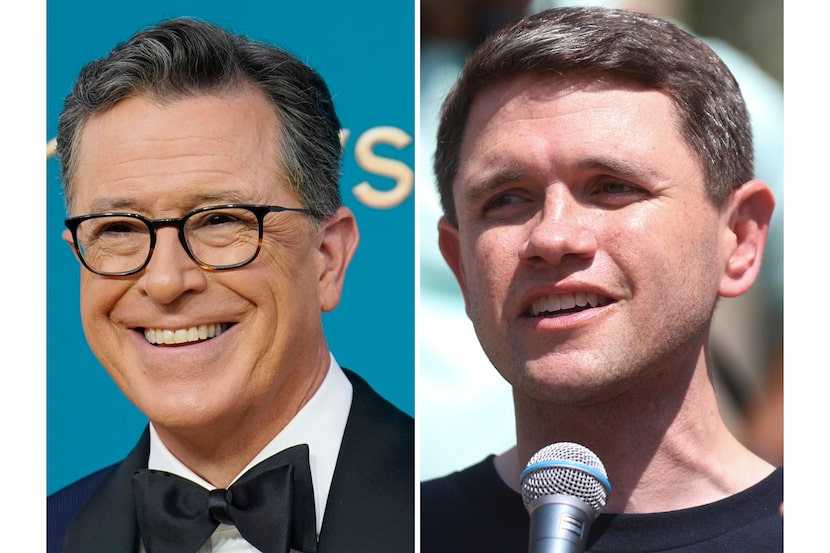
A photo combination of talk show host Stephen Colbert and state Rep. James Talarico. (AP Photo/Talia Sprague, Jae C. Hong, file)
Talia Sprague, Jae C. Hong, / AP
UT researchers had only stopped polling a few days before what Henson calls “L’Affair Colbert,” when talk show host Stephen Colbert told viewers that CBS wouldn’t let him air a Talarico interview. The moment went viral, getting attention that helped Talarico raise $2.5 million.
“They got a magnitude more bump than they expected, right when they needed it, and then they had the money and the campaign skill to drive it,” Henson said.
One of the closest predictions came from Boston-based Emerson College, which projected Talarico winning 52% to 47% over Crockett. The final vote was 52% to 46%, a difference of roughly 10,000 votes out of 2.3 million cast.
But it faltered in the GOP Senate contest. The Emerson survey showed Paxton with 40%, besting Cornyn’s 36%, with U.S. Rep. Wesley Hunt bringing in 17% and forcing a runoff.
The race was much tighter and the results flipped. Paxton came in behind the incumbent, with 41% to Cornyn’s 42%. Hunt got 14%.
Big poll, wrong result
Timing and number of voters absolutely matter, but big samples don’t always net correct predictions.
The University of Texas at Tyler indicated Crockett grabbing 55% over Talarico, based on a survey of 959 likely voters the third week of February.
That survey also was off on the Republican primary for attorney general, saying U.S. Rep. Chip Roy would pull a 10-point lead over state Sen. Mayes Middleton, with both advancing to a runoff. The race ended with Middleton ahead by seven points and still a runoff.
The Tyler researchers could not be reached for comment.
If results are often unreliable in primaries, why do it?
Campaigns use polls to decide where to spend money and deploy volunteers, and, when they can afford it, to commission surveys that sometimes cast their candidates in the best light.
In turn, strong numbers attract donors and publicity, while weak ones can drain money and momentum.
Independent polls from news organizations or universities can offer a less partisan view, though not always an accurate one.
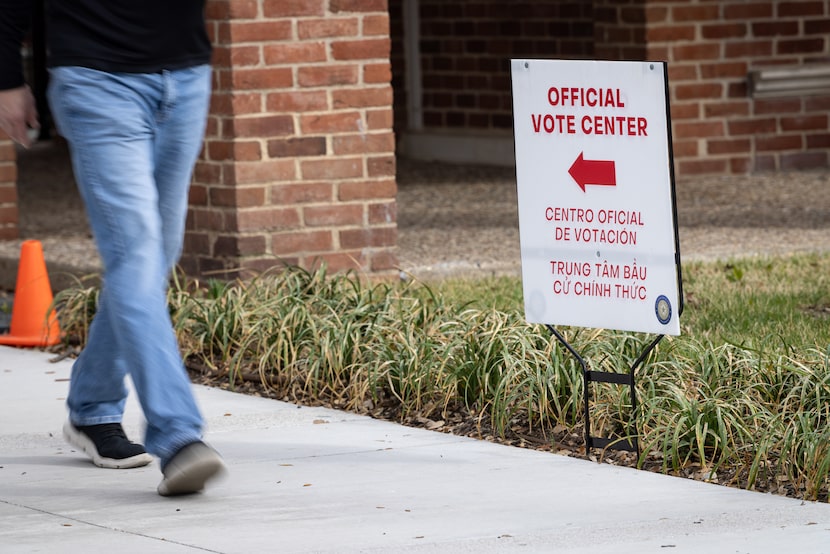
A voter exits a primary polling center at University Park United Methodist Church on Tuesday, March 3, 2026.
Angela Piazza / Staff Photographer
That’s because fewer Americans answer polls at all.
Decades ago, phone surveys reached large shares of voters. Today, response rates are often in the single digits, forcing pollsters to rely on small samples and heavy statistical weighting to approximate the electorate, a process that can amplify errors.
Polling tends to be more reliable in general elections in which turnout is higher, voter pools are broader and past voting patterns offer clearer guidance.
But in primaries, and even the upcoming Texas runoffs, the FiftyPlusOne report offered a blunt warning: “Don’t be surprised by a surprise.”
Why polls missFewer people answer: Response rates have fallen sharply, forcing pollsters to rely on smaller samples and heavy statistical weighting.Guessing who will vote: In primaries especially, turnout is unpredictable, making “likely voter” models shaky.A snapshot in time: Polls capture opinion on the day respondents are contacted, but races can shift before Election Day.Late campaign shocks: Viral moments, scandals or sudden ad blitzes can reshape a race after a poll is taken.