
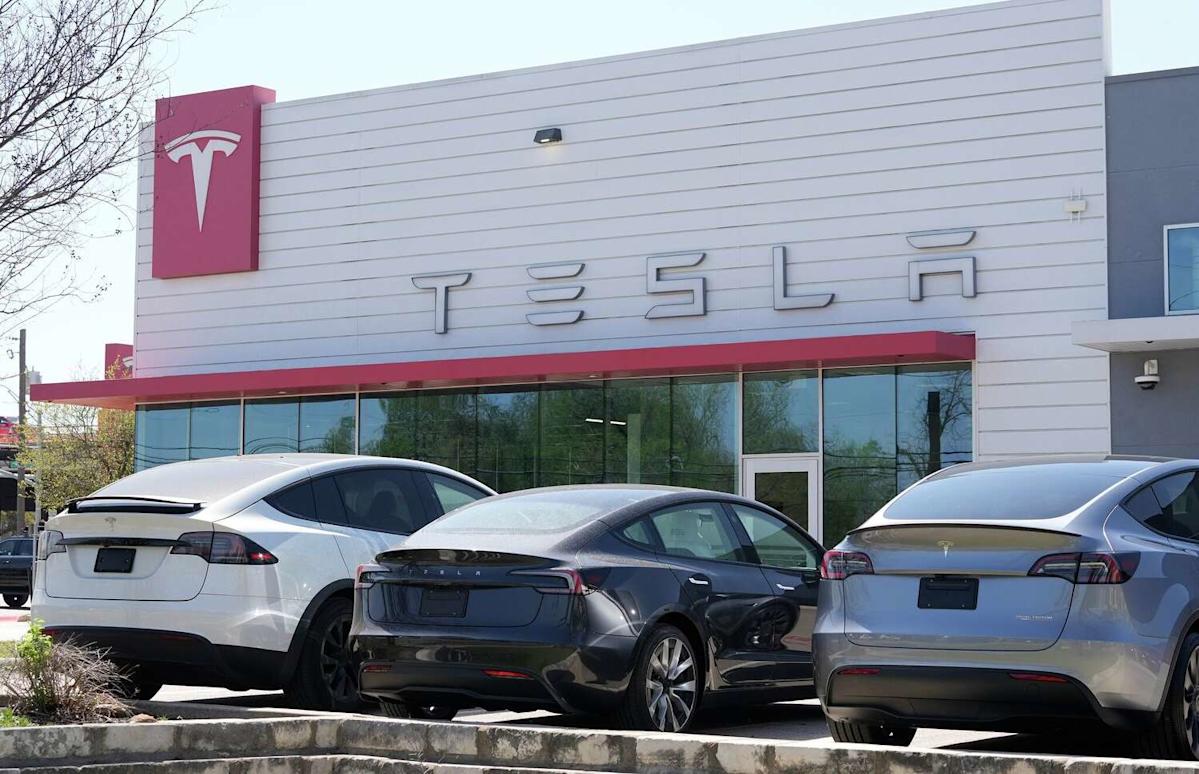
A Texas Tesla owner is accusing the Austin automaker of fraud, claiming his vehicle has barely half the range the company advertised.
James Dondero bought a 2022 Model X for $106,290, taking into account Tesla Inc.’s advertisement that the vehicle would travel more than 300 miles on a full charge. He also paid an additional $20,000 for the “long-range” option, which Tesla promised would increase the vehicle’s range from 311 miles to 348 miles. Despite that, Dondero says in a lawsuit, he can’t make it more than 185 miles on a full charge.
“Tesla hyped the range of its electric vehicles, or EVs, raising consumer expectations beyond what the vehicles can deliver,” his suit says. “And Tesla compounded this problem by selling Long Range packages (at $20,000 a pop) to customers like Dondero without delivering any value.”
RELATED: Tesla will end Model S and Model X production to focus on robots
Calling the vehicle defective and accusing Tesla of “continued misrepresentations,” Dondero is claiming breach of contract and fraudulent inducement related to his purchase of the luxury SUV.
He says he followed instructions provided by Tesla customer service, such as depleting the battery charge to less than 5% and fully charging it three times in a row, or charging to less than 100% using the home charging unit. Still, the car’s performance didn’t improve, he alleges. Tesla also scheduled service appointments without offering a new diagnosis and declined to repurchase the vehicle.
In addition to the driving range issues, Tesla delivered Dondero’s Model X without a center console wireless charging component, a feature that Tesla staff told him wasn’t installed due to chip shortages at the time of manufacture.
Tesla did not respond to a request for comment.
Dondero is among many Tesla customers accusing the Austin automaker of exaggerating its vehicles’ range.
A 2023 investigation by Reuters found that Tesla’s range estimates — provided on a dashboard meter and its navigation system — overstated vehicle range. While the latter accounted for temperature conditions, which can affect range, it still provided a generous estimate rather than the conservative estimates typical of other EV makers.
Faced with customers who desired a fix for their lower-than-expected ranges, Tesla created a diversion team tasked with canceling range-related appointments, Reuters reported.
Dondero says Tesla’s current and former employees admitted that they had no knowledge of how to service or run diagnostics on Tesla batteries but continued scheduling appointments in which the vehicle’s performance wasn’t improved.
Driving range has long been one of the key considerations for car buyers weighing a transition from a gasoline-powered vehicle to an EV. A recent Deloitte survey found that consumers weighing options for their next auto purchase didn’t have electric vehicles as their top pick, and their chief concerns with EVs included limited driving range, time required to charge and the vehicles’ price premium.
Dondero’s complaint, which was filed in Dallas County where he resides, has been a long time coming. The suit claims Tesla resisted Dondero’s efforts to obtain discovery and moved to compel arbitration, which was denied. Tesla then supplied multiple unsuccessful appeals, which the suit describes as “dilatory tactics to prevent Dondero from seeking relief.”
The case comes as Tesla is discontinuing Models X and S and shutting down production line at its Fremont, Calif., factory to focus on manufacturing its Optimus robot. Still, CEO Elon Musk said Tesla would continue to support owners of the discontinued vehicle models.
Dondero is seeking a trial by jury and relief in the form of damages and attorneys fees.