
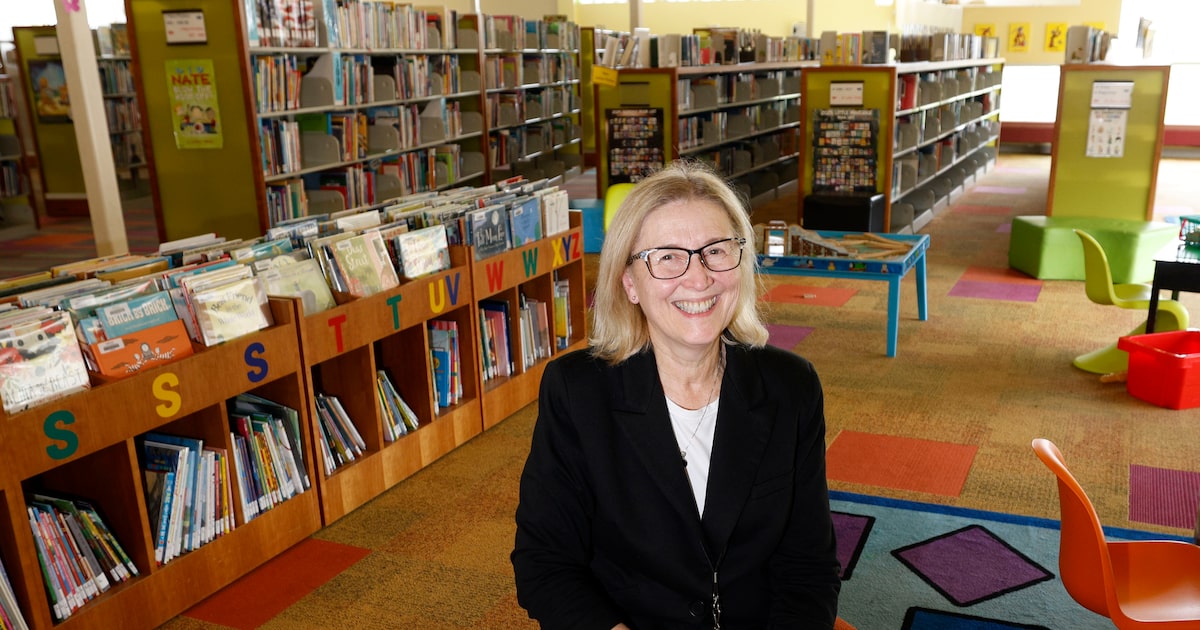
On a typical day at the Lochwood Branch Library near White Rock Lake, the doors open to a steady stream of neighbors: seniors looking for help with a password, job seekers filling out applications, parents bringing their children to story time and residents stopping by simply to connect.
Across Dallas, librarians say their jobs often look very different from what people imagine. While books remain at the center of libraries, librarians say they also help residents navigate technology, access information and find resources in their communities.
“I think people assume we sit and read books all day,” said Dianne Walker, 72, a public service specialist who has worked in the Dallas Public Library system for nearly three decades. “But there’s a lot of work behind the scenes that they don’t realize.”
There are 29 branches across Dallas. The city is undergoing a process to shift to a regional model. The library system would concentrate resources and services into fewer, larger regional libraries with expanded hours and programming, while closing several smaller neighborhood branches.
Political Points
After pushback from council members and residents, city leaders have paused closure plans and will return with revised options at the Quality of Life, Arts and Culture City Council Committee on March 23.
Related
The Dallas Morning News interviewed three library employees to learn more about what their days looks like, how the library system has evolved and why they decided to work in a library.
“Getting to help people, that’s what keeps me here,” Walker said. “So many people come back and say ‘thank you.’ They’ll say, ‘You helped me find a job,’ or ‘You told me about that children’s program.’ It keeps me involved in the community.”
Walker will mark 28 years with the library system in April, after starting part time. In 1976, Walker took her first library job at her college in Florida. Back then, she used a typewriter and card catalogs.
Now Walker says she often helps visitors print documents, apply for jobs or learn basic computer skills.
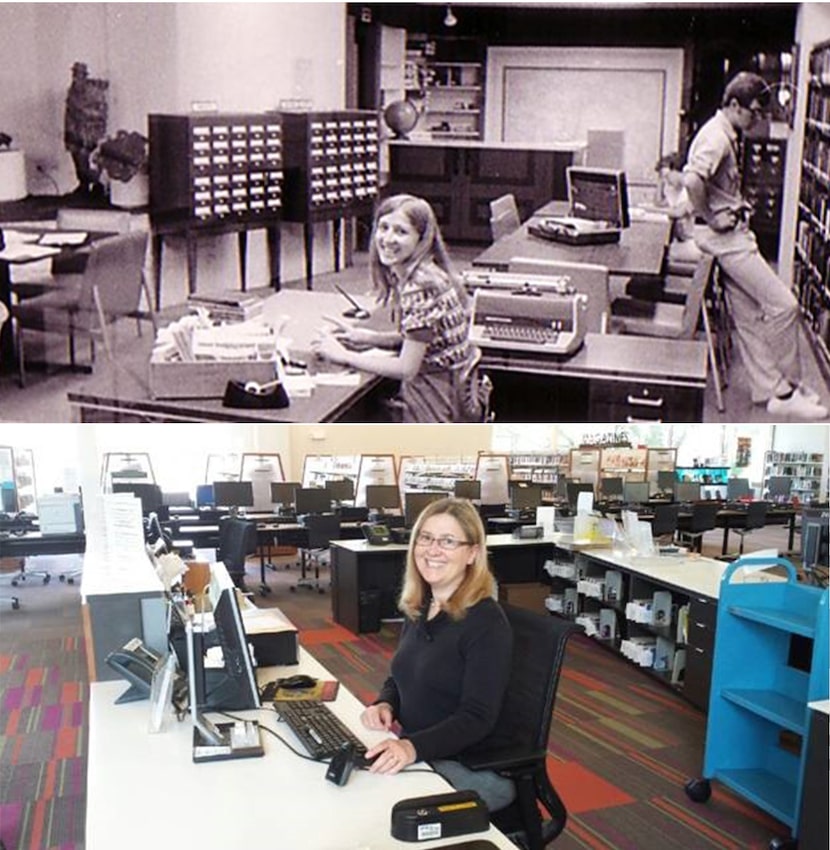
Dianne Walker, 72, public service specialist at the Dallas Public Library Lochwood Branch, is pictured at her first library job while in college in 1976, and at the Lochwood Branch in 2014.
Photo courtesy of Dianne Walker
“Not everybody knows how to do an email,” she said. “So we show them how to get into the computer, how to print. It’s those little things.”
Walker said the library is a place to be curious — a place where people can ask any questions and not feel judged. She said most of the time, the librarians have an answer and if not, at least point out where people can go for an answer.
Library’s evolving role
Nadia Ysasi, 27, manager of the Martin Luther King Jr. Branch Library, has experienced changes in services similar to Walker’s. She has also seen how the library has adjusted to serve the community.
On a slow day, the branch sees about 200 visitors. On busier days, the number can reach 500.
Ysasi joined the library system about two years ago, first working at the J. Erik Jonsson Central Library, coordinating children’s programs and field trips. She also led story times, crafted programs and designed displays before eventually becoming branch manager at the MLK location.
When Ysasi arrived, staff members developed a strategic plan by studying who visited the library and what they needed. That research helped shape the kinds of events and programs the branch now hosts, including digital skills programs, events with resources for senior citizens and programs for children.
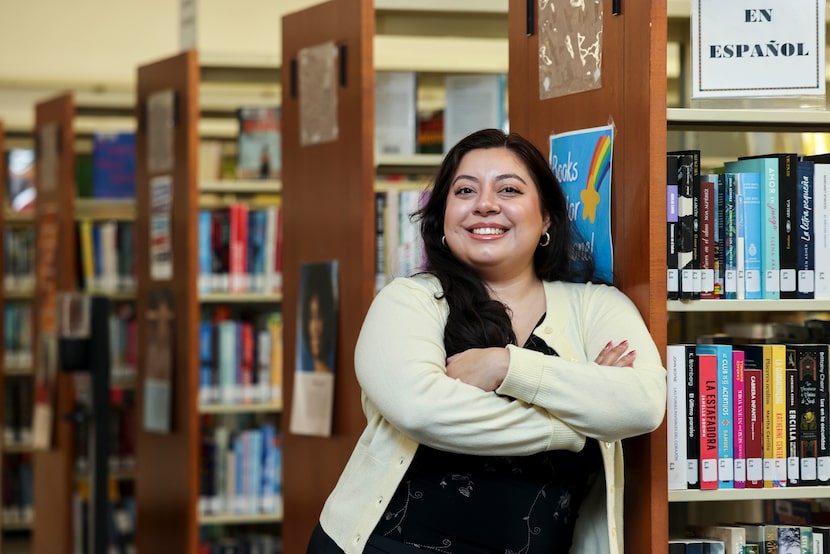
Working at the library feels personal for Nadia Ysasi, branch manager at the Martin Luther King Jr. Branch Library, who stood near shelves of books in Spanish on Thursday, March 5, 2026, in Dallas.
Shafkat Anowar / Staff Photographer
For Ysasi, working in a library feels personal. She grew up in libraries across the Dallas-Fort Worth area, often visiting with her siblings because it was a free place to spend time.
“My mom had three kids very young, and we were always looking for something free and entertaining to do,” she said. “Libraries had computers, programs and books. It was kind of all inclusive for us.”
She studied English at the University of Texas at Arlington, with minors in creative and technical writing. Before joining the library system, her career included work in customer service and corporate sales. The shift to librarianship brought a different kind of satisfaction.
Community place
Libraries have always been a community space, said Ysasi. But she says that as libraries have evolved, the focus on community needs is stronger. She said these are spaces for people to find peace of mind, to get curious or to learn something new and those looking to build community.
The MLK library has hosted events such as health fairs, small-business pop-ups and celebrations in partnership with nearby organizations.
Related

During Black History Month, the branch launched a soul food series in which staff members demonstrated how to cook traditional dishes while discussing their cultural history.
The branch also partners with groups such as the Dallas Innovation Alliance, a coalition of nonprofits and corporations focused on a holistic approach to using technology, to offer digital skills classes. Participants receive hands-on help with laptops and basic technology skills.
At Walker’s branch in the Lochwood neighborhood, story times and children’s programs often draw the biggest crowds. One recent event, a tea party for toddlers and their parents, filled the room with about 50 people and left dozens more on a waiting list.
She said people want to be part of something that is doing good in their communities, and libraries are the perfect place to start with. Either volunteering or just showing up to events to connect with people.
Trace history
At the downtown Central Library on the eighth floor, librarian David Alexander Garza helps visitors search for long-lost relatives, historical records and clues about where their families came from.
Garza, 28, works in the genealogy and history department, where researchers sift through thousands of books, maps and archival records to learn about their family histories. The collection is among the largest publicly accessible genealogy collections in the country, he said.
“People often think they can only research here if their family is from Dallas,” Garza said. “But we have materials from all over the United States and internationally.”
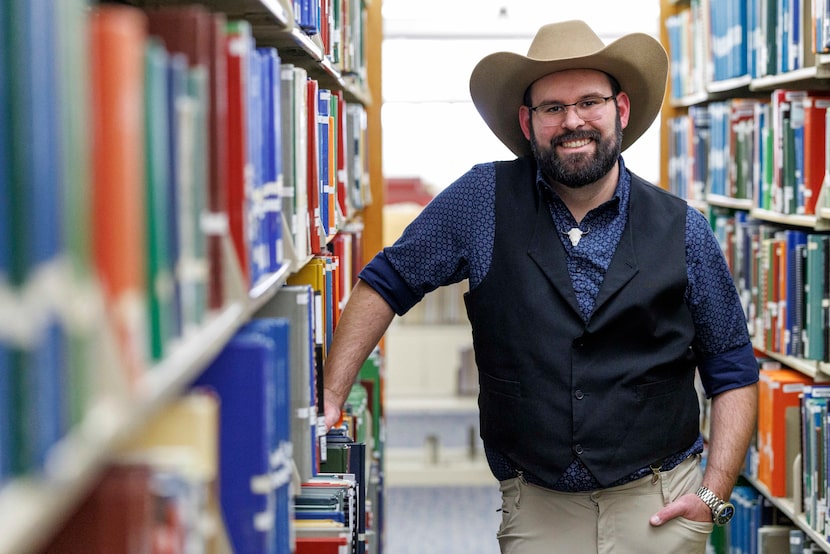
Librarian David Alexander Garza works in the genealogy and history department at J. Erik Jonsson Central Library, Thursday, March 5, 2026, in Dallas.
Elías Valverde II / Staff Photographer
A typical day for Garza begins around 8 a.m. checking research requests, emails and reservations for the department’s Heritage Lab, where visitors digitize old photographs, videotapes and family documents.
Then come the questions.
Some callers ask for help searching genealogy databases. Others need help reading maps, navigating microfilm or requesting books to be delivered to other branches.
Sometimes the results are emotional, he said.
“When people find something new, you can see the excitement in their eyes,” Garza said.
Garza’s path to librarianship wasn’t typical. He moved to Dallas for college to study video game design but struggled to break into the industry after the COVID-19 pandemic disrupted the job market.
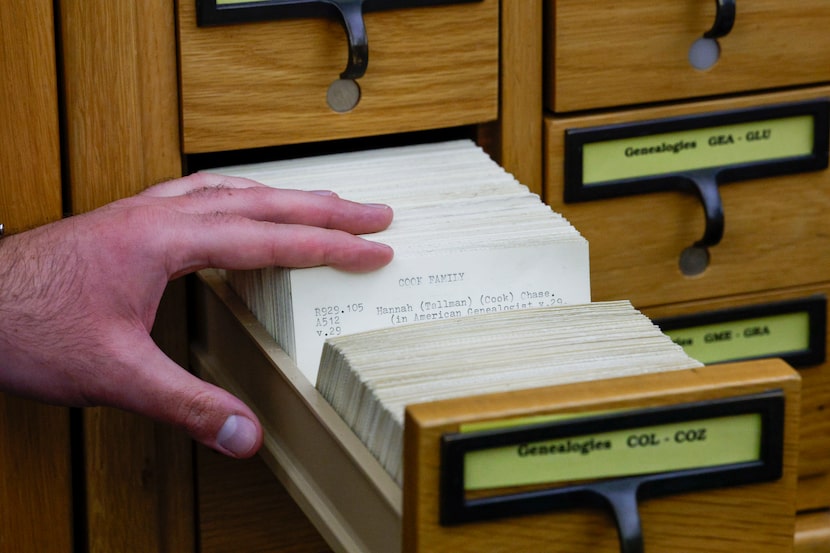
Librarian David Alexander Garza shows a card catalog used for genealogy research in the genealogy and history department at J. Erik Jonsson Central Library, Thursday, March 5, 2026, in Dallas.
Elías Valverde II / Staff Photographer
While working at a used bookstore, he realized what he enjoyed most wasn’t selling books, it was helping people discover them.
“When I saw a position open at the library, I thought, wait, here you can connect people to information and they don’t have to pay for it,” he said. “It’s free, and everyone is welcome.”
Despite the rise of digital tools and artificial intelligence, librarians say their work continues to rely on something technology can’t replace: human connection.
Libraries, Ysasi said, are about serving the people who walk through the door.
“We are the public, and we also serve the public,” Ysasi said. “And we’re always trying to do the best we can with what we’re given.”
Dallas City Council rift grows after mayor accuses critics of City Hall “silly games”Wilonsky: Drama and dysfunction are the Big D’s in those 5,000 pages of City Hall emails