
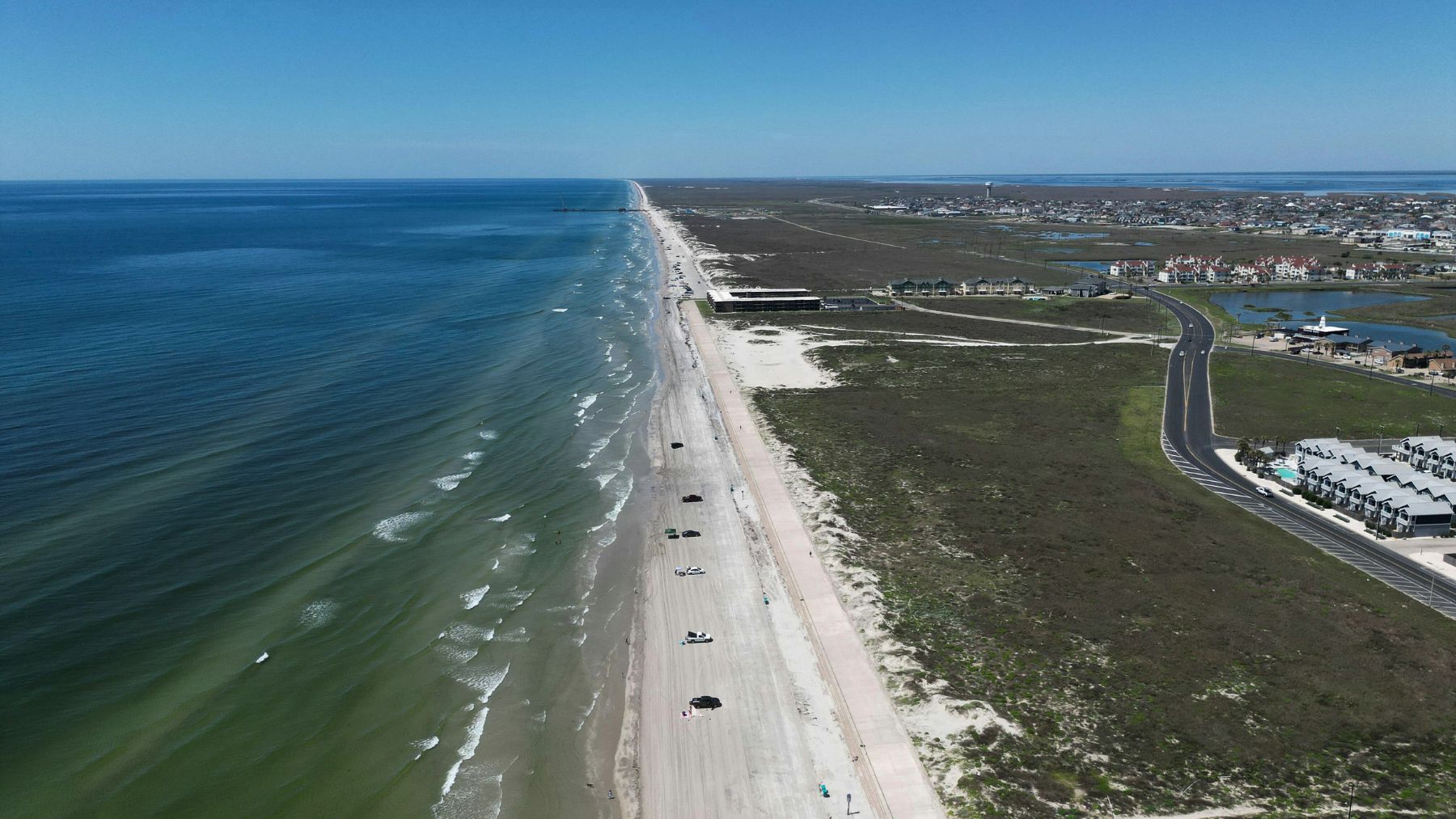
Corpus Christi is one of the nation’s busiest commercial ports, home to half a million people and a sprawling network of fuel refineries and petrochemical plants. It is also, quietly, running out of water.
With its two primary reservoirs on track to go dry next year, the city has shifted almost entirely to a single backup source: Lake Texana, 100 miles away, currently sitting at 55 percent full and falling. No significant rain has fallen in the region since July. Within weeks, a contractual trigger could force the first mandatory reduction in the city’s water draw — and that’s only the beginning of a series of cuts that grow steeper as the lake drops further.
A reservoir running on borrowed time
Lake Texana was never designed to supply Corpus Christi alone. Shared between the city and Formosa Plastics’ Point Comfort complex, the reservoir was always a contractual backup — held in reserve for emergencies. Now it’s the only resource, with pumps running at what the Lavaca-Navidad River Authority’s general manager, Patrick Brzozowski, described as “absolute full bore.”
The math is unforgiving. When the lake drops below 50 percent, the LNRA’s drought contingency plan requires a 10 percent reduction in Corpus Christi’s draw — about 7 million gallons per day. A hardware limitation at the pumphouse means the authority will likely wait until 40 percent, then impose a 20 percent cut, roughly 14 million gallons daily. That threshold could arrive in May. Without significant rainfall, the 30 percent trigger — a 35 percent reduction — could follow in June.
Corpus Christi’s two Nueces River reservoirs, Choke Canyon and Lake Corpus Christi, are projected to go dry in February and May of 2027, respectively. If nothing changes, the city’s water supply could be exhausted entirely by early 2027.
Refineries, residents, and the question no one can answer
Seven million gallons per day sounds abstract until you consider what it actually supplies: roughly 23,000 average American households, or several large refineries. Corpus Christi’s industrial sector — fuel refineries producing jet fuel and gasoline, petrochemical plants, a major commercial port — consumes water at a scale that resists easy reduction.
Refineries aren’t like households. Their cooling towers require fixed water flows; they’re effectively on or off. Partial shutdowns are technically complicated, and no established framework exists for deciding who gets cut first. Robert Mace, a former deputy executive administrator for the Texas Water Development Board, tried to address this after the 2011–2015 Texas drought. He proposed a report on emergency curtailment. “Nobody wanted to do it because it was too politically touchy,” he said. The report was never completed.
Meanwhile, citizen groups are circulating a petition to repeal a 2018 exemption that allows the region’s largest industrial water users to pay just $0.31 per 1,000 gallons during droughts rather than face restrictions. It’s, for now, the only proposal on the table that would put direct pressure on industrial consumption.
Political crisis meets water crisis
The water shortage has ignited a political conflict that may be moving faster than the reservoir is draining. Governor Greg Abbott has threatened a state takeover of Corpus Christi’s government, accusing leaders of having “squandered” $750 million in low-interest infrastructure loans from the state. No such takeover has ever occurred in Texas.
Three city council members have called for the impeachment of Mayor Paulette Guajardo. The mayor ordered an emergency meeting to re-authorize a desalination project the city canceled last September. The city is also racing to develop emergency wellfields and pursuing permits for a large groundwater import project — though none of these solutions arrive quickly. City officials expect significant water production from these efforts over the next two years, a timeline that offers little comfort when the next curtailment trigger may arrive in weeks.
Cape Town’s playbook — and why Corpus Christi is different
Cape Town in 2018 is one of the few modern precedents for a major city approaching water depletion. South African officials deployed a public countdown to “day zero,” released individual consumption data, and installed devices to enforce daily limits. The strategy worked — aggressive conservation bought time until rainfall refilled the reservoirs.
Mace points to Cape Town as a useful model, but with a significant caveat: Corpus Christi’s industrial water demand makes it a fundamentally different problem. Cape Town’s residents could cut showers and stop watering lawns. A refinery can’t do the equivalent. Charles McConnell, a former assistant energy secretary who spent three decades in the chemical industry, put it plainly: “You don’t design a refinery or a chemical plant to start squeezing off your water supply, so it’s going to be a rather awkward dance.” He added that competing companies will each expect to be compensated for any forced reduction — a dynamic that complicates any top-down curtailment order.
Former city water official Drew Molly, now chief water officer for Houston, believes the situation remains manageable. “It will be a painful, temporary thing that ends up going away once they get rain,” he said. He also acknowledged, though, that three years ago he would have considered the current situation highly unlikely.
What Corpus Christi is confronting isn’t simply a drought story. It’s a stress test of how American cities plan — or fail to plan — for the intersection of industrial dependence, political inertia, and a changing climate. The questions being asked on the Texas coast today, about who gets water when there isn’t enough and who decides, are ones that other cities in arid regions may find themselves asking sooner than they expect.