
From zoot-suited rebels and border-crossing workers to a gangster who never actually showed up, I have heard the many legends behind the Sun City’s most beloved nickname. I needed to know which of these tales was the real one.
Every city worth its salt has a nickname, and few in the American West carry the weight and swagger of El Chuco. Walk the streets of El Paso, cross the bridge into Juarez, or find yourself among the diaspora in East L.A., and you will hear it, spoken with a knowing nod, a little pride tucked into every syllable. But ask where the name came from, and you will get a different story depending on who is doing the telling.
That is the thing about El Chuco. Its origin is not a single clean fact stamped in a history book. It is a layered knot of folklore, linguistics, migration, cultural rebellion, and, yes, possibly even a shoe store. Here are the stories, in all their contradictory, colorful glory.
Theory One: Chuco Is Short for Pachuco, and El Paso Made the Pachucos
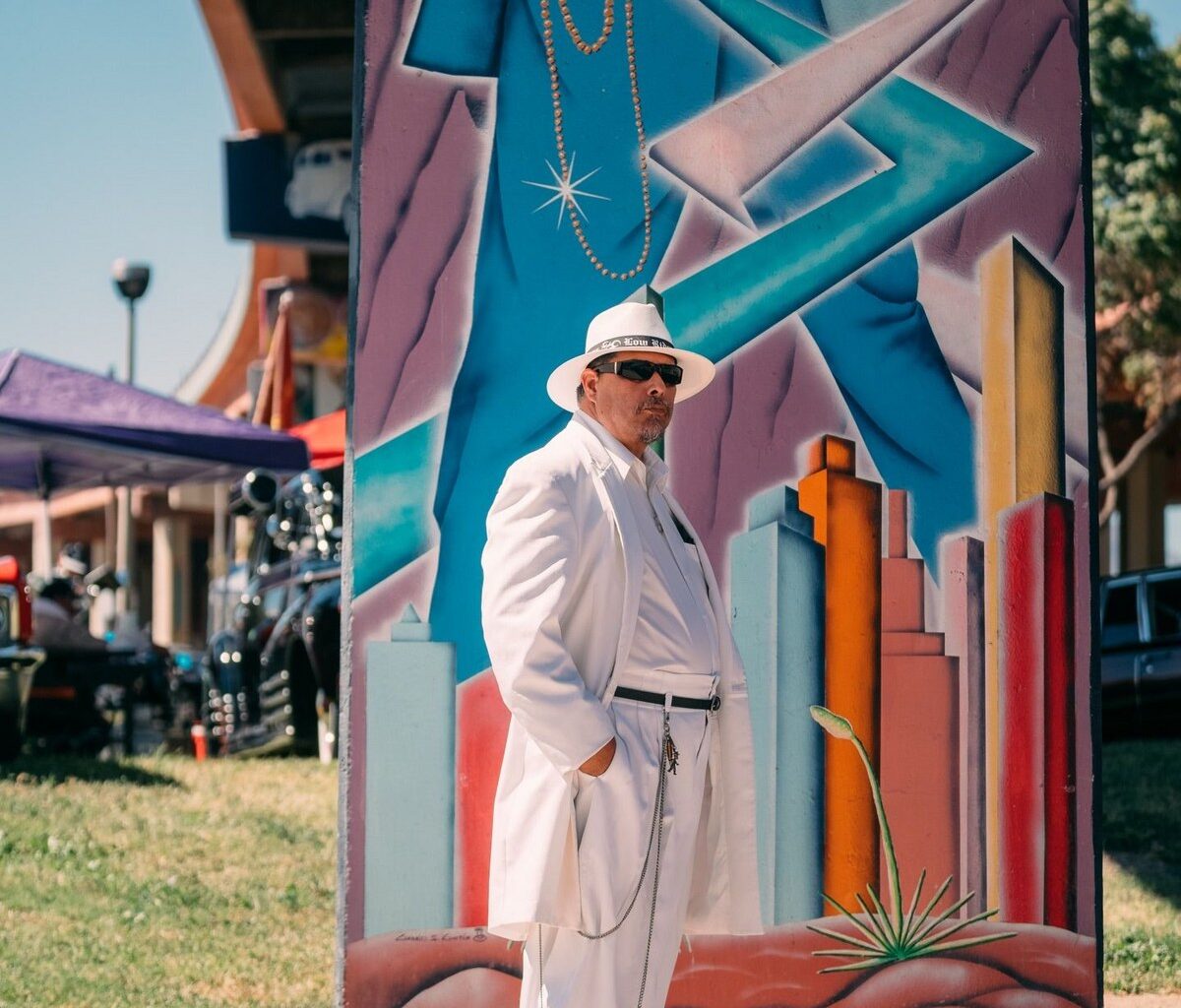
The story that most historians and cultural scholars lean on is straightforward at its core. El Chuco is simply a shortened form of El Pachuco, the name the city earned during one of the most electrifying cultural movements in Southwest history. In the late 1930s, El Paso became ground zero for Pachuquismo, a youth subculture built on defiance, style, and borderland identity.
Courtesy of Christian Churches Photography
Courtesy of Christian Churches Photography
The young men and women who made up this movement, known as Pachucos and Pachucas, were not interested in blending in. They wore wide-shouldered, dramatically tailored zoot suits called tacuches, with high-waisted trousers pleated deep and long jackets that swept across the body. They slicked their hair into sculpted pompadours. They danced to swing and jump blues. They spoke Calo, a patois with roots in Spanish Romani brought over by the Spanish, blended at the border with English, Nahuatl, and the creative slang of the barrio. It was, in every sense, a border language for a border people.
“Chuco is short for Pachuco, and El Paso did not just host this culture. It created it.”
As young Pachucos rode the Southern Pacific railroad westward toward wartime jobs in Los Angeles, they carried their music, their slang, and their style with them. When people in California asked where these sharply dressed young men were from, the answer, El Chuco, followed them all the way to the coast. The nickname stuck to the city the way a good press crease holds in a quality suit.
Today, organizations like the 915 Pachucos & Pachucas Unidos keep this legacy alive in El Paso, pushing back on decades of media-driven caricature. “Some people have this image of Pachucos, that they’re bad people or they’re in a gang,” member Yvonne Patino has said. “We’re very humble people and we’re here to help the community and at the same time keep our culture alive.”
Theory Two: Pa’ El Shoe Co., the Tale of a Sign and a Slurred Phrase
This one has the most character. In the 1930s and 1940s, the story goes, a building in downtown El Paso displayed a sign reading Shoe Co., a shoe company where many Mexican migrant workers found employment. Workers crossing the river from Juarez, when asked where they were headed, would reply in Spanish: “pa’ El Shoe Co.”, meaning roughly “off to The Shoe Company.” Said quickly and naturally in the rhythm of border Spanish, those words slur together into something remarkably close to pachuco.
It is a delightful piece of folk etymology, and it has real staying power in the community. There is a poetry to it, a nickname born not from rebellion or art, but from the daily grind of working-class migrants making their way across the border for a day’s wage. Some versions of the story say these workers, always dressed in their best to make a good impression at the border crossing, became associated with a particular put-together look that evolved into the Pachuco style itself.
Historians tend to be skeptical. No definitive photographic proof or firsthand eyewitness accounts have been documented. As one observer noted, the Shoe Co. story “sounds like it could have been a joke made up after the fact.” But the absence of hard proof has not dimmed the story’s appeal one bit, and in border culture, a good story often carries as much truth as a document.
Theory Three: From Pachuca, Hidalgo, Loose Pants and Long Migrations
A third theory reaches south of the border entirely, tracing the word pachuco not to El Paso at all, but to Pachuca, the capital of the Mexican state of Hidalgo. This theory notes that Hidalgo sits in the Central Plateau region of Mexico, historically one of the most significant sources of migration northward into the United States. Men from Pachuca had a distinctive preference for loose-fitting trousers. As Hidalguenses moved into border cities, they and their style became associated with the name of their home city, which morphed over time into pachuco.
Courtesy of Christian Churches Photography
Courtesy of Christian Churches Photography
It is worth noting that this theory and the El Paso theory are not necessarily at odds. Migration from Hidalgo flowed through El Paso, which was, for much of the early twentieth century, the primary entry point for Mexicans coming north. It is entirely plausible that migrants from Pachuca passed through El Chuco and left a linguistic fingerprint on both the city and the culture.
Theory Four: Pa’ El Chuco, Heading North on the Southern Pacific
Some historians offer a simpler reading of the pa’ prefix. In Spanish slang, pa’ is a contraction of para, meaning “to” or “toward.” If El Paso already carried the informal nickname El Chuco, then migrants and travelers heading to the city would naturally say they were going “pa’ El Chuco.” Over time, Pachuco became the name for a person from, or associated with, El Chuco. The city made the word, not the other way around.
This is arguably the most circular of all the theories, but it may also be the most accurate reflection of how language actually works. Nicknames beget nicknames. Slang loops back on itself. The border has always been a place where words travel faster than people, and meaning accumulates like sand.
The Myth: Al Capone and the El Paso Tailor
Courtesy of Christian Churches Photography
Courtesy of Christian Churches Photography
Now we arrive at the most outlandish thread in the El Chuco tapestry: the story, whispered in certain corners of the city, and from my Tio after a few beers, that Al Capone himself had his suits made by tailors in El Paso. The Prohibition-era crime lord was famously obsessed with his appearance, wearing custom three-piece suits in bold colors with wide lapels and full-cut trousers. The overlap in aesthetic between Capone’s flamboyant gangster tailoring and the zoot suit silhouette is real enough that the legend has an internal logic to it.
The historical record, however, does not cooperate. Capone’s documented tailors were based in Chicago and New York. When Robert De Niro prepared to play Capone in The Untouchables, he personally tracked down Capone’s original tailors and found them in New York City, not anywhere near the Texas-Mexico border. Capone operated along the Atlantic seaboard and the Great Lakes. El Paso was not part of his orbit.
But folklore rarely lets geography stand in the way of a good story. The connection between Capone’s wide-lapeled excess and the Pachuco zoot suit is real in spirit, if not in fact. Both aesthetics were rooted in a certain defiant extravagance. Pachucos boldly chose not to follow wartime fabric restrictions, demonstrating rebellious attitudes and pride in their culture. Whether or not Capone ever set foot in El Chuco, the image of him sending a telegram to a border-town tailor for a purple silk suit is exactly the kind of myth a city like El Paso earns after decades of style.
“Both the gangster and the Pachuco shared a defiant extravagance, a refusal to dress like someone who knew their place.”
What Remains
The honest answer is that no single theory has won. While the origins of the name “El Chuco” still remain obscured, the history of the Pachuco and its connection to El Paso continues to be celebrated and honored by groups like the 915 Pachucos & Pachucas Unidos. Linguists and historians lean toward the Pachuco-as-shortened-form explanation, with roots in the border migration of the 1930s and 1940s. The Shoe Co. story lives on as cherished community lore. The Pachuca, Hidalgo connection reminds us that the Southwest’s identity was always shaped by deep Mexico as well as the border. And the Capone legend says more about El Paso’s sense of itself than about any Chicago gangster.
What is not disputed is this: El Chuco is not just a nickname. It is a badge of cultural pride that carries within it the whole history of the borderlands, the migrants, the zoot suiters, the Sleepy Lagoon trial, the Zoot Suit Riots, the Calo language, and the generations of El Pasoans who refused, in their own particular style, to be invisible. As one member of the 915 Pachucos & Pachucas Unidos put it, “In a way, it is a secret fantasy of every vato that grew up in the barrio to put on a zoot suit and play the myth of our elders. It’s paying homage to a group that, most of them are already gone. But their style, their music, is still here.”
As the Texanist once put it, El Chuco has panache, and a healthy dose of historical resonance. It is a great nickname for a city that birthed a subculture and left an indelible mark on Texas and the world beyond.
Pachuco Style In El Paso
A few shots of Pachuco or Zoot Suit style here in the Sun City courtesy of Christian Churches Photography
Gallery Credit: Christian Churches
The Oasis Outside of El Paso: Cornudas, Texas
This Guy Bought a Whole Texas Town & Turned It Into a Wild West Party Oasis.
Gallery Credit: Courtesy: Jon Jasniak via YouTube
The Beauty Of El Paso Dust Storms
Christian Churches Photography perfectly captures the feel of West Texas windstorms. A little chaos and a little beauty!
Gallery Credit: Grizz