
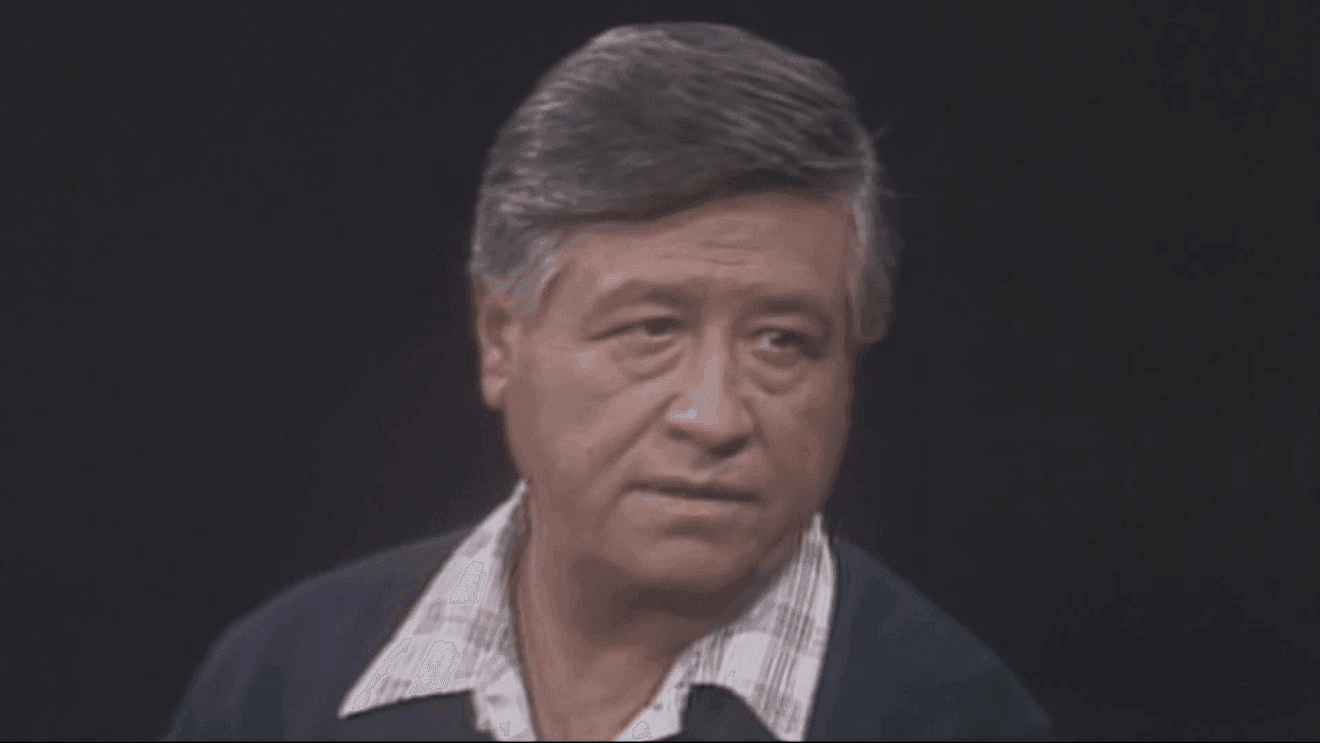
EL PASO, TEXAS (KFOX14/CBS4) — Allegations involving civil rights leader Cesar Chavez are prompting renewed debate nationwide and in El Paso, where artists at Lincoln Park have begun altering a mural that was originally intended to honor him.
At the park in South Central El Paso, Chavez’s name was covered on a mural that was originally designed to honor Chavez.
The artists did not want to speak on camera, but the change comes as the allegations involving Chavez gain national attention.
Julia Spencer reports on UTEP professor says Chavez allegations spur broader reassessment of movement’s history (Credit: KFOX14)
Dr. Hilda Ontiveros-Arrieta, a professor of women’s studies and women’s health at the University of Texas at El Paso, said the moment reflects a broader reassessment of how history is told and who gets centered in it.
“We constantly examine how power, gender, and leadership intersect to form experiences and to form historical narratives,” Ontiveros-Arrieta said. “So moments like this are part of a broader cultural shift, where hopefully more people are able to safely speak about sexual violence.”
For decades, Chavez has been recognized as a key leader in the farm worker movement, with schools, murals and a national holiday honoring his legacy.
Now, Ontiveros-Arrieta said, some long-held perceptions are being reexamined, and she urged a wider view of the movement beyond a single figure.
“This movement is not defined solely defined by Cesar Chavez,” she said. “There are many other leaders within this movement and one of the great, great leaders is Dolores Huerta.”
READ MORE: Institutions consider renaming Cesar Chavez landmarks amid allegations
Ontiveros-Arrieta said focusing too heavily on one person can overshadow the broader movement and the many people behind it, and she called for a reassessment that recognizes both impact and harm.
“And so as society, I think we need to make that shift where we reassess historical narratives and look at the broader picture and acknowledge that great things did happen that impacted the rest of society,” she said. “However, we do need to acknowledge that harm was caused and that calls for a greater interrogation of our historical narratives.”
She added that acknowledging harm does not mean erasing history.
“I know it’s possible to separate an entire movement with the harm someone has caused,” Ontiveros-Arrieta said.
Sign up to receive the top interesting stories from in and around our community once daily in your inbox.