
More people are dying in the Dallas County jail now than in recent history, and many were likely preventable deaths that raise questions about patterns of delayed care, according to an analysis of 16 years of records by The Dallas Morning News.
During Sheriff Marian Brown’s first eight years in office, 71 incarcerated people have died — about a 50% higher death rate than the same period before her administration, state and county data show.
The Dallas County Jail has seen a double-digit increase in deaths under Sheriff Marian Brown and wrongful death lawsuits are piling up. Most people in jail have not been convicted of a crime, and the conditions of the jail are a community concern.
Three medical experts who reviewed The News’ findings pointed to an alarming trend of likely avoidable fatalities since 2018 that autopsies and state in-custody death reports attributed to accidental, natural and undetermined causes, including:
Five deaths from blood clots in the lung, which typically have warning signs and are often treatable when addressed. Three deaths by low blood sodium — two resulting from men with mental illness drinking excessive amounts of water in their cells, a rare and avoidable condition, while the third was likely the same cause.Two fatalities from sepsis, generally survivable with treatment. A diabetic whose death the medical examiner concluded was likely from a lack of insulin.
One of those cases was Laura Westmoreland, 51, who had bipolar disorder and was found unresponsive on the floor of her unit Nov. 4, 10 days after being booked into jail after an arrest. She had not been convicted of a crime.
Crime in The News
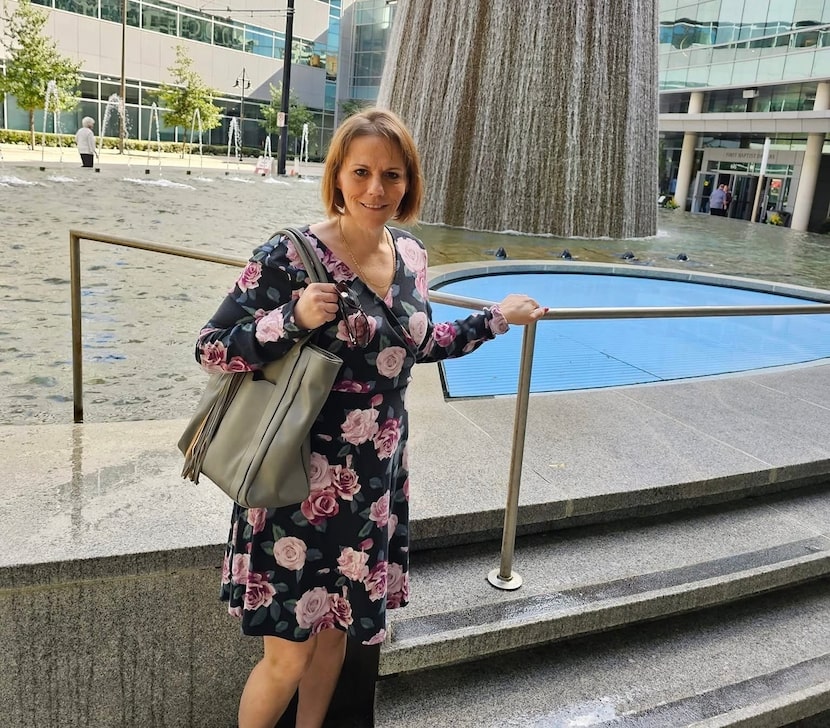
Laura Westmoreland, shown in a photo taken in 2023, died in the Dallas County jail Nov. 4, 2025.
Jaden Westmoreland / Jaden Westmoreland
An autopsy concluded she died of sepsis due to a bowel obstruction. This is an excruciating condition that should have been treated in hospital care, said Dr. Robert B. Greifinger, a correctional health expert who monitored facilities for the U.S. Department of Justice Civil Rights Division and reviewed The News’ findings.
“It’s such a significant increase,” Greifinger said of the jail’s death spike, “that it warrants very close professional attention to the reason.”
Dallas County is not alone with fatalities in jails rising across Texas over this time. Criminal justice advocates point to a woeful lack of medical and mental health resources for vulnerable people in the community and failures by jails to care for them once behind bars.
Deaths in the Lew Sterrett Justice Center jumped despite a medical-mental health facility opening inside the jail in 2015, run by nearly 400 staff from Parkland Health, the county’s public health system.
The jail’s average population between 2018 and 2025, when 71 incarcerated people died, was 5,805 per month; in the eight years before, under former Sheriff Lupe Valdez, 48 died while the average monthly population was higher at 5,998, according to county data.
Sheriff Brown declined to discuss these findings in an interview. In a statement, she said fatalities are “unfortunate but statistically likely” in a jail the size of a small city, especially because many arrive in severe need of medical and mental health care.
“Obviously, the Dallas County Sheriff’s Department would prefer no one die in custody,” Sheriff Brown said. “However, with a population ranging from 5,000 to 7,000 people, it is not statistically practical to assume that of that number of people no one will die.”
A lack of space in state mental health facilities can keep detainees in need of treatment waiting months for a hospital bed, which Brown said makes the jail “the default mental health facility.”
In each year since 2018, 40% to 57% of people booked into Lew Sterrett had received state mental health services within the prior three years, according to Continuity of Care Query data provided to The News by county administration. The Texas Commission on Jail Standards declined to confirm how many of the 71 who died in that period had behavioral treatment histories, citing confidentiality.
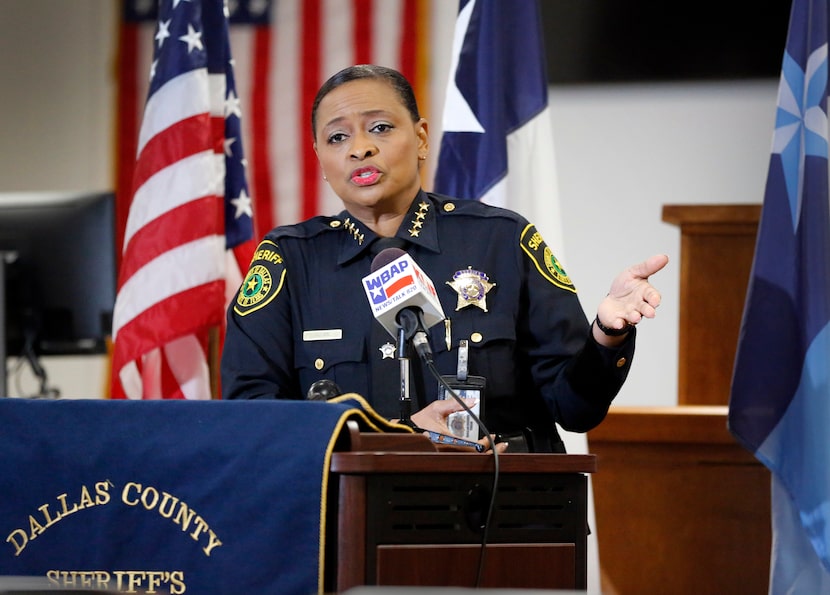
Dallas County Sheriff Marian Brown announces during a press conference at the Frank Crowley Courthouse, Wednesday, March 25, 2020, that a Dallas County jail inmate who had been in custody since December tested positive for the new coronavirus.
Tom Fox / Staff Photographer
Most who died at Lew Sterrett over the past eight years had been behind bars for weeks or months, according to The News’ analysis of in-custody death reports.
COVID is cited as a cause or contributor to four jail fatalities over three years, which does not account for the increase in the death rate. Fentanyl exploded in the general public, but those overdoses are attributed to three deaths at Lew Sterrett since 2018. Causes of three deaths from 2025 are pending release.
Nearly two-thirds died the same day or one day after being taken to an outside emergency room, suggesting they were transported on the verge of death.
“The thing that is very striking is how many people died on the day they’re going to the hospital,” said Dr. Chris Beyrer, an epidemiologist and director of Duke Global Health Institute, who reviewed The News’ findings. “That just says to me people are getting to hospital care very late.”
Any death too many
Michael Malaise, a senior vice president of Parkland Health, which runs the jail’s medical facility, said any death is too many but suggested the increase of about three fatalities a year since 2018 is not enough to identify a trend.
In a statement to The News, Malaise said Parkland nurses screen people to ensure they are not booked into jail in life-threatening conditions. He said he was not qualified to answer if there were delays in detention officers connecting people to the care.
Like jails across the country, staffing shortages have persisted under Sheriff Brown’s tenure, and the department spent more than $73 million on overtime for employees over the past three years.
Related
Malaise pointed to how the number of people with behavioral health issues in the region has grown, which can hinder one’s ability to advocate for themselves while incarcerated.
“A lot that goes on outside the infirmary and even outside the jail can impact a person’s health within it,” Malaise said.
Federal lawsuits allege negligence and a lack of basic care in the jail.
The Dallas County Commissioners Court in 2024 settled one of the water intoxication lawsuits for $1 million. At least three ongoing federal complaints allege problems in the jail led to preventable deaths of vulnerable people since 2022. In December, the county paid $90,000 to settle a civil rights case that alleged jail officials failed to give two diabetic men their insulin in 2022 until both almost died despite their pleas for help over several days.
County Judge Clay Lewis Jenkins did not respond to multiple emails and calls for this story but the county has denied liability in court filings.
People who end up incarcerated typically have poorer baseline health and higher rates of substance abuse, mental illness and poverty. Greifinger, the correctional health expert, said the sheriff’s office should commission an independent mortality review to study whether any jail operations, staffing or other shortcomings are exacerbating external factors and resulting in preventable deaths.
“It merits conclusions and accountability,” said Greifinger, “not just hiding under a defensive cover of irrational conclusions.”
“She shouldn’t have died”
Westmoreland was arrested on a family violence charge after an altercation with her mother last year, a fate her loved ones deeply regret.
She was in and out of mental health hospitals much of her life and had a decades-old gastric bypass surgery but was nowhere near deathly ill when she was booked into Lew Sterrett, said her sister Susan Deloach.
Her death was one of four at the jail in November, the most in a single month since October 2012, according to state records.
“She shouldn’t have died,” said Deloach. ”They should have known she was in dire need of help.”

Jennifer Westmoreland, sister of Laura Ann Westmoreland, 51, who died in the Dallas County Jail 10 days after her arrest, shows old photos of her sister, on Friday, Jan. 16, 2026, in DeSoto.
Shafkat Anowar / Staff Photographer
Dr. William Weber, an emergency physician and co-founder of the nonprofit Medical Justice Alliance focusing on care in jails and prisons, reviewed Westmoreland’s autopsy. He said a blockage in her bowel created so much pressure it caused her intestine to burst, releasing feces and over half a liter of pus into her abdomen. It led to death from sepsis.
This process typically takes multiple days, Weber said, and would have been highly painful before and after the intestine burst. He said people with prior stomach surgery are especially at risk and should receive a CT scan and treatment when experiencing pain.
“I would be surprised if she hadn’t sought help for severe abdominal pain in the days before her death,” Weber said. “It’s highly probable that her death was preventable if they had evaluated her and referred her to the ER in a timely manner.”
Little scrutiny
While more people are dying in county jails across the state, with natural causes the lead factor, there is little analysis into how many were preventable. Advocates in Texas have pushed for more through mortality reviews without success.
“If somebody dies from systemic failures that caused a medical problem, that’s going to be listed as a natural death,” said Dr. Marc Robinson, a Houston internal medicine physician and board member of Texas Jail Project, a nonprofit that advocates for incarcerated people.
The Texas Commission on Jail Standards requires a third-party law enforcement agency to investigate all deaths of incarcerated people in the state. The Tarrant County Sheriff’s Office is investigating Westmoreland’s case, which was classified as natural.
These findings can take months or years to be released and don’t always answer what happened in the days and hours before a fatality, said Krish Gundu, executive director of Texas Jail Project.
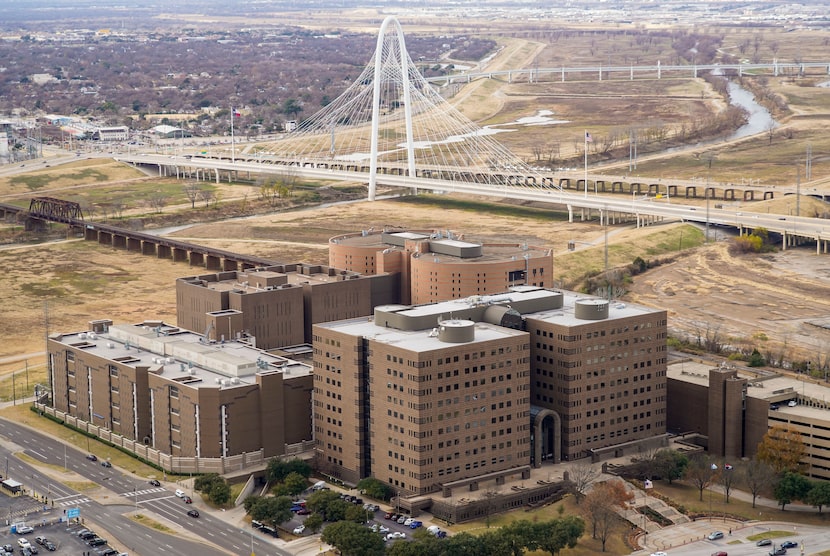
The Margaret Hunt Hill Bridge is seen above the Lew Sterrett Justice Center with North Tower Detention Facility and Frank Crowley Courts Building as seen from the roof of Reunion Tower on Tuesday, Dec. 29, 2020, in Dallas.
Smiley N. Pool / Staff Photographer
During the 2025 legislative session, Gundu’s organization drafted a bill that would have created an advisory panel to review all in-custody deaths, identify which could have been avoided and recommend policies to improve community health resources and make jails less lethal.
The bill did not get a hearing. Reforms imply incarcerated people have rights and are worthy of public concern, Gundu said, making them a tough sell in a system focused on punishment even for those not yet convicted.
“Transparency can undermine punitive narratives that justify budgets, expansion and authority,” Gundu said. “Opacity then becomes a feature, a tool of governance, not a bug in the system.”
Last year, Tarrant County District Attorney Phil Sorrells asked the state to clarify when in-custody deaths must be investigated.
Attorney General Ken Paxton issued an opinion in February favoring less oversight. He concluded third-party investigations are only required when deaths occur inside a jail, meaning cases of incarcerated people who die in an ambulance or after transfer to a hospital would not be scrutinized.
It drew widespread condemnation and the jail commission issued a memo the next day stating the agency would continue investigations of all in-custody deaths no matter where they occur.
“On their watch”
If counties are serious about saving vulnerable people in their custody, they must invest more into both the care inside jails and alternatives to incarceration for people with serious mental illness and medical issues, said Robinson, the Houston physician.
“Counties just have to invest more and more resources above what is available to the general public if they’re going to make a difference,” Robinson said. “Otherwise, you have to divert them out and make sure they don’t get in jail in the first place.”
Dallas County has two deflection centers, with a combined 24 beds, where police can take people accused of low-level crimes for stabilization instead of being arrested. Last year, County Administrator Darryl Martin formed a task force to explore an expansion.
County Commissioner Elba Garcia called the recent spate of jail deaths “alarming and unacceptable.”
She said oversight is critical, but while the Commissioners Court funds Brown’s $238 million budget, operations are controlled by the elected sheriff.
“Every individual in our care deserves safe and humane conditions,” Garcia said.
While living with bipolar disorder, Westmoreland worked jobs such as waiting tables and answering phones at a car dealership and had a son in 2001, whom she adored.
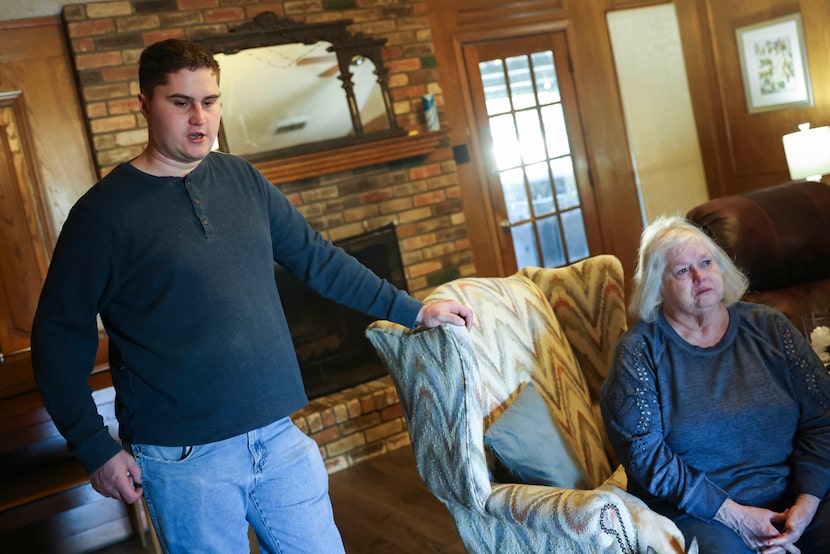
Jaden Westmoreland (left), son of Laura Ann Westmoreland, 51, who died in the Dallas County Jail 10 days after her arrest, talks about his mother, on Friday, Jan. 16, 2026, in DeSoto. Laura had bipolar disorder and took medication for stomach issues but was no where close to deathly ill, leaving her family baffled at how their loved one died in Dallas County custody.
Shafkat Anowar / Staff Photographer
She most recently lived with her elderly parents in Desoto, where she loved journaling and watching cardinals in their yard.
Things got out of hand Oct. 25, when she and her mother argued over medicine.
Sherry Westmoreland said her daughter went behind her to grab the bottle, put her in a bear hug and let go, causing the 78-year-old to fall and hit her head.
A family member called police, who charged Laura Westmoreland with felony injury to an elderly individual.
Jennifer Westmoreland thought time in jail might regulate her sister.
“We thought it was the safest place she could have gone,” she said. “We thought they wouldn’t want something to happen on their watch.”
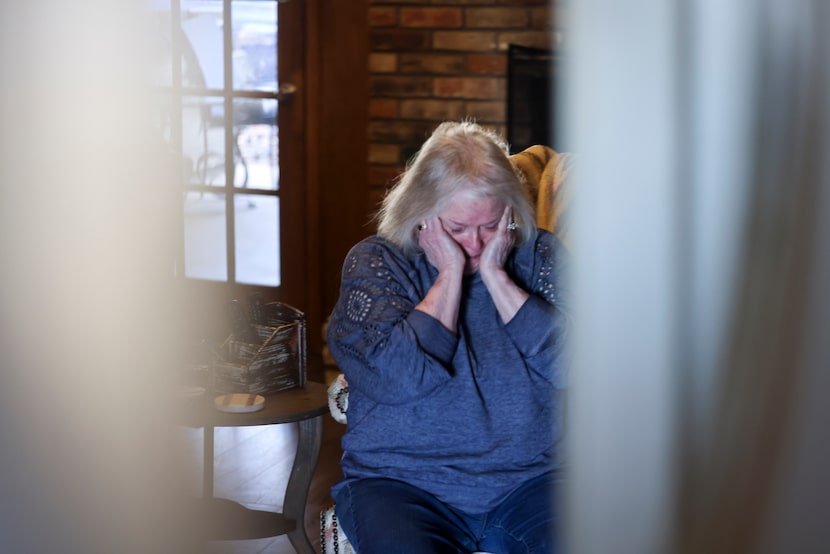
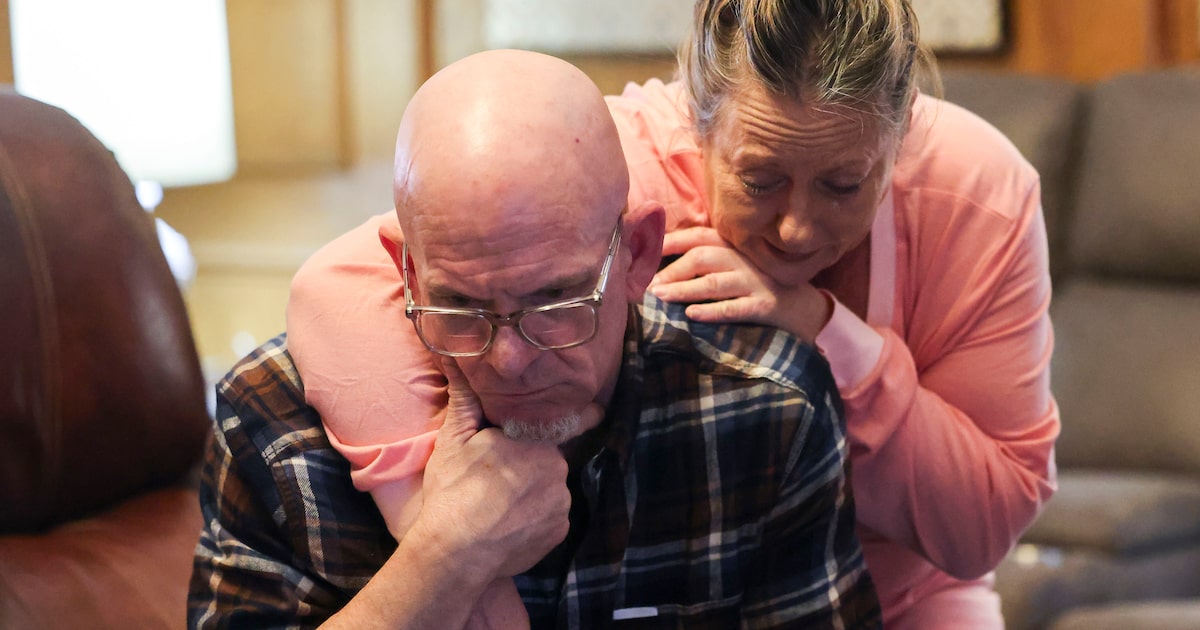
Sherry Westmoreland, mother of Laura Ann Westmoreland, 51, who died in the Dallas County Jail 10 days after her arrest, gets emotional while reflecting on her daughter, on Friday, Jan. 16, 2026, in DeSoto.
Shafkat Anowar / Staff Photographer
Ongoing lawsuits
Understaffing can have critical impacts on incarcerated care, and Dallas County has had hundreds of detention officer vacancies through Sheriff Brown’s tenure. The sheriff’s office could not provide vacancy data prior to 2019.
Detention officers working demanding jobs and extra hours to fill gaps can “fall into a trap” of writing off valid complaints from incarcerated people as seeking drugs or attention, said Greifinger, the correctional health expert. He estimates most preventable jail deaths are due to “cynicism and stigmatization about their motivations.”
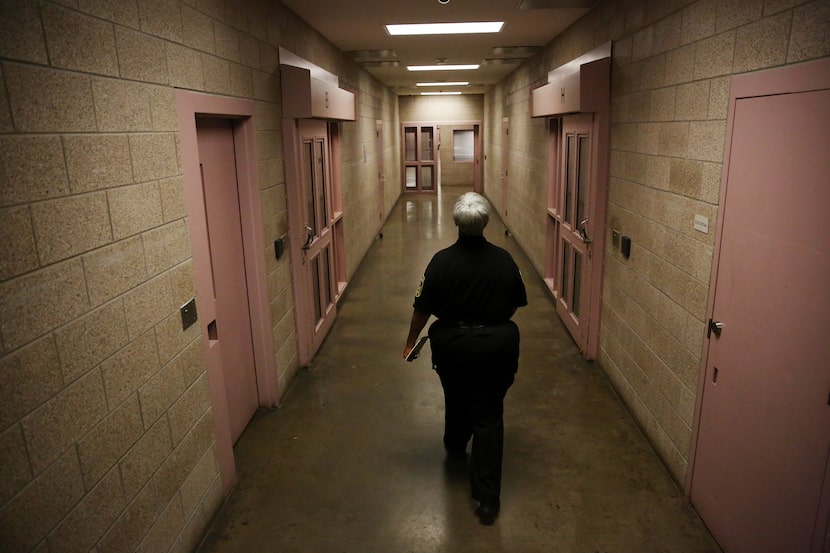
Inside the Kays Tower at Lew Sterrett Jail in Dallas Tuesday September 12, 2017. (Andy Jacobsohn/The Dallas Morning News)
Andy Jacobsohn / Staff Photographer
Wrongful death lawsuits allege inadequate staffing, negligence by officers and failures to implement sound policies led to fatalities.
In 2024, the Commissioners Court paid $1 million to settle with the family of Paul French, a 31-year-old with mental illness who died in 2020 after ingesting so much water his blood sodium dropped to deadly levels.
At the time he died, French was awaiting transfer to a state hospital for competency restoration, according to his family’s lawsuit. Between 2018 and 2023, 2,677 people in the Dallas County jail were on a wait list for a state mental health bed, the highest in Texas, according to a state audit.
Two related lawsuits are ongoing. Spencer Swearnger, 52, died from water intoxication in 2023 and was also in a mental health crisis, according to the complaint.
Swearnger had been in and out of jail and state hospitals, according to his family’s complaint. Between 2018 and 2024, Lew Sterrett had 808 people who reappeared on the mental health bed waitlist after receiving new charges, the highest of any county in Texas, according to a state audit.
Taylon Dickerson died one day before his 31st birthday in 2022 from low blood sodium, but the medical examiner could not determine whether it was from drugs, disease or drinking too much water. Motions filed by Dallas attorney Dean Malone on behalf of his family state Dickerson’s toxicology report showed no drugs and he was producing enormous amounts of diluted urine, pointing to water intoxication.
“This is deliberate indifference,” Malone, who is representing all three families, wrote in a filing. “And unless something is done, more people will die.”
Another ongoing federal lawsuit alleges Shamond Lewis, who had schizophrenia, died in 2022 at the hands of detention officers. Guards had restrained Lewis, 24, in a changing room moments before he died and hospital records note he likely suffered a brain injury, according to the complaint. Lack of video footage from the room led the medical examiner to classify the cause of his death as undetermined.
The not-knowing
Deloach said her sister went to jail with prescriptions for bipolar disorder, acid reflux, high blood pressure and stomach ulcers.
Westmoreland’s toxicology report shows her prescribed gabapentin for pain, along with antihistamines and a muscle relaxer her family did not recognize.
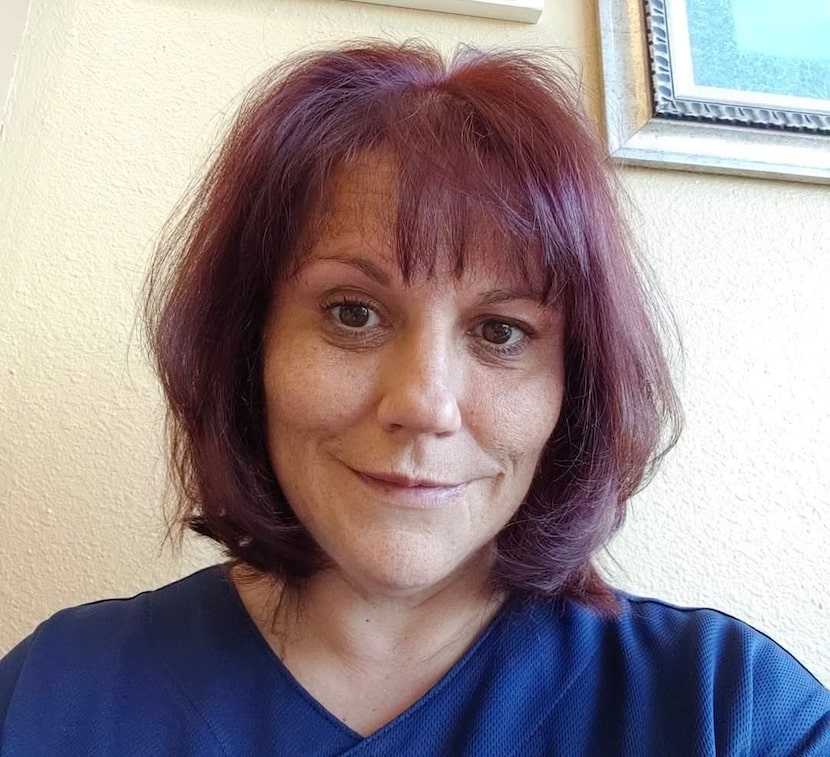
Laura Westmoreland, shown in a photo taken in 2021, died in the Dallas County jail Nov. 4, 2025.
Susan Del
Westmoreland had a low pain tolerance and would have raised the alarm if she was in agony, her mother said, leaving the family wondering if detention officers did all they could to help.
“It’s guilt and just the not-knowing,” Sherry Westmoreland said. “The sheriff’s department, they should have took care of her when they had her.”
A custodial death report states detention officers found Westmoreland unresponsive at 6:58 a.m. Nov. 4 during face-to-face rounds.
She was on the floor with her legs crossed and torso leaned forward, according to the report.
Officers called for Parkland jail medical staff, the report states, who began chest compressions four minutes later. Dallas Fire and Rescue came and pronounced Westmoreland dead at 7:57 a.m.
Two sheriff’s deputies arrived at the family’s Desoto home around 8 p.m. to inform them of Westmoreland’s death, according to her mother. They couldn’t explain what happened.